Pustevny: Jurkovič's Mountain Chalets, the Chairlift and Radhošť
Pustevny is a Beskydy saddle with Jurkovič's folk-style chalets, a chairlift and the path to Radhošť. Here is what stands there and how to reach it.
On this page
Pustevny is a mountain settlement on a saddle at 1,018 meters in the Moravian-Silesian Beskydy, and you come here for two things: Dušan Jurkovič's folk-style wooden chalets and the ridge walk toward Radhošť. Allow a half day if you ride the chairlift and stay around the buildings, and most of a day if you add the walk to the Radegast statue and the summit.
Where Pustevny sits and what the settlement is
The saddle belongs to the village of Prostřední Bečva in the Vsetín district, close to Radhošť, the mountain that gives the area its identity. It is a cluster of wooden buildings, a lift station and open ground rather than a town, so there is no square to wander and no old core to explore. Plan your time around the buildings and the paths out of the saddle, not around streets.
The name comes from a hermitage set up in the mid-18th century near the first wooden Radhošť chapel, where a single hermit lived. The best known of them, Felix, is said to have died in his refuge around 1784. That history explains the name but leaves no hermitage to tour today, so treat it as context while you look at the chalets.
Libušín and Maměnka: Jurkovič's chalets from 1899
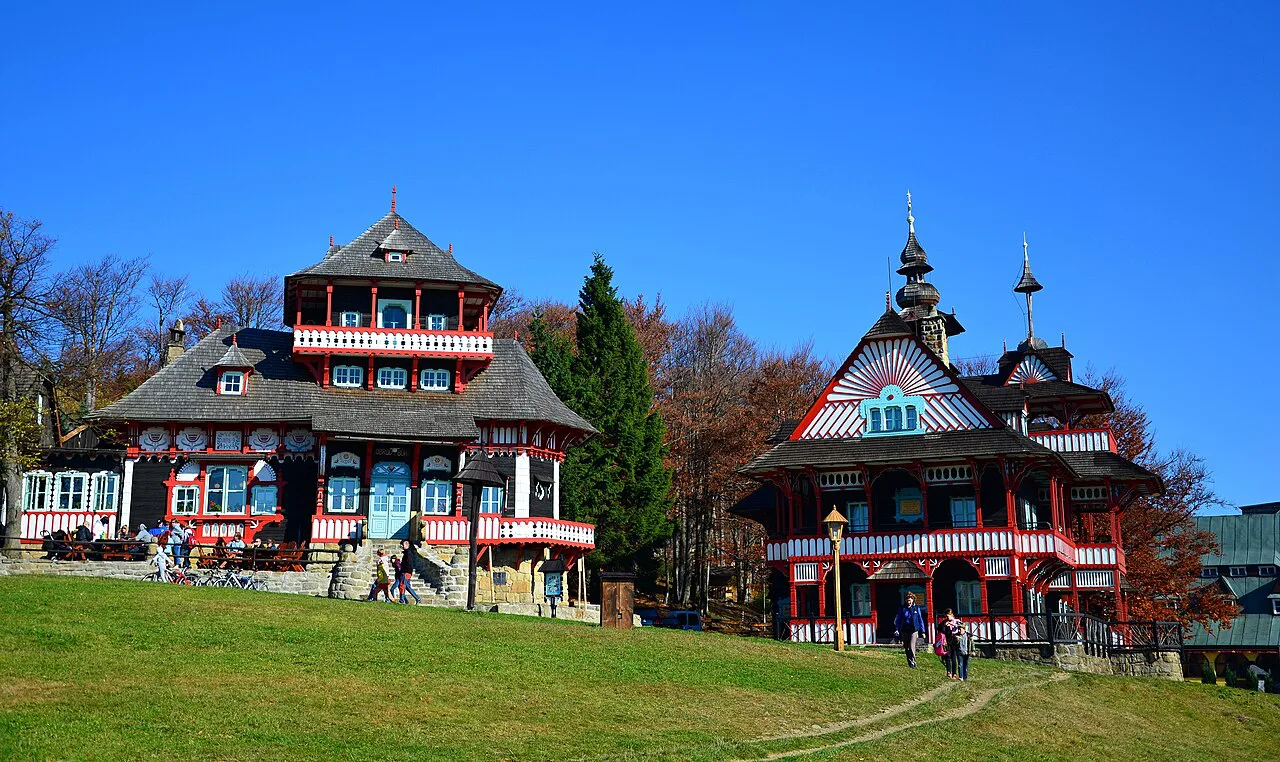
The centerpiece of Pustevny is the pair of timber buildings designed by the Slovak architect Dušan Jurkovič in a folk-art nouveau style. Libušín and Maměnka opened in 1899, built to raise the settlement's capacity for food and lodging as tourist numbers grew. They are the reason Pustevny appears in architecture books rather than only in hiking guides.
Libušín works as a restaurant and Maměnka as a hotel, both under the Valašské muzeum v přírodě, the Wallachian open-air museum in Rožnov pod Radhoštěm. The museum carried out a fundamental reconstruction that began in 1995, reopened the Libušín restaurant in 1999 and made the Maměnka hotel accessible in 2003. Read the carved timber gables and painted detail from outside before you go in.
On the night of 2–3 March 2014 a large fire broke out in Libušín and damaged mainly its right-hand section, which held the most artistically valuable dining room. Rebuilding of the historic chalet was under way afterward, and the museum publishes progress on its own pages. Ask at the Libušín restaurant or the museum before you build a meal into your plan.
The bell tower and the other buildings
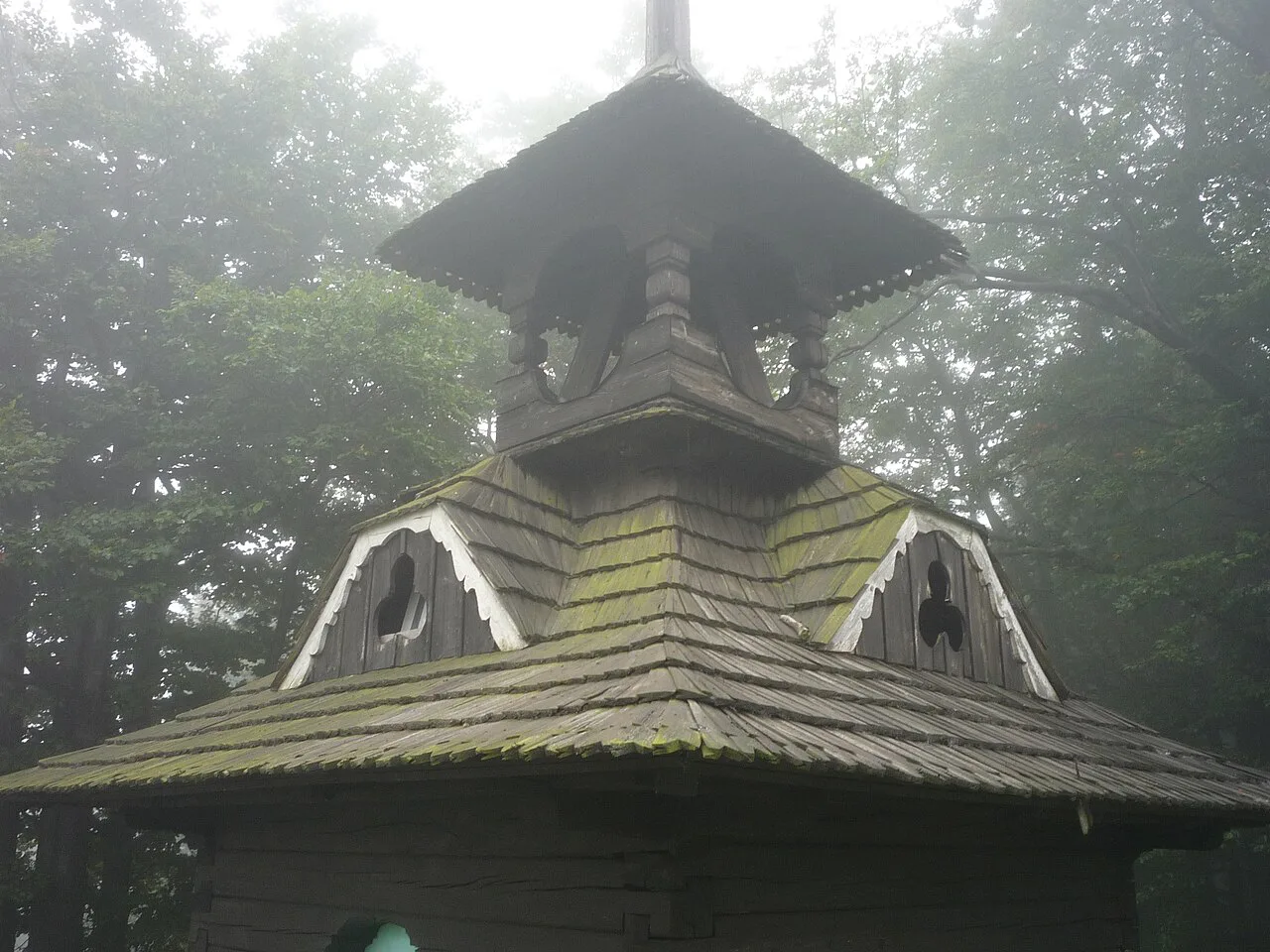
A wooden bell tower about a century old also belongs to Jurkovič's group of buildings at Pustevny. Its colored decoration, designed by the architect, has not survived, but the tower was rebuilt in 1997 to his original plans, which are held in the Slovak State Archives in Bratislava, and covered with new shingles. It is a small structure and easy to walk past, so look for it deliberately between the chalets.
Two earlier shelters came before the Jurkovič pair. The Pohorská jednota Radhošť association set out to open remote places in the Beskydy, mark trails and build a network of mountain hotels and hostels, and it put up the Pústevňa shelter in 1891 and the Šumná shelter three years later. Building resumed after the First World War: the mountain hotel Tanečnice was finished in 1926, and the Radegast hotel followed on the ridge between Pustevny and Radhošť six years later. The whole Pustevny area was declared a national cultural monument during the reconstruction period.
Pustevny is not a castle or a chateau, so there is no guided circuit with a ticket window and a set tour route. The chalets are visited by walking up to them, looking at the exteriors and using the restaurant or hotel as they operate.
The chairlift and the 2017 upper station
You can reach the saddle by chairlift, on foot, on a bike in summer or on skis in winter, which is why Pustevny works in more than one season. The upper station in operation today opened in 2017, replacing an original building demolished in 2016 because of its poor condition. It is a modern structure of stone, wood and glass by the Kopřivnice architect Kamil Mrva, designed to sit inside the surrounding landscape rather than dominate it.
Buy lift tickets in advance through the Pustevny operator, which publishes the current price list and timetable on its own site, because fares and operating times change with the season. The same operator runs the upper station facilities, and its site is the place to confirm whether the lift is running on the day you plan to travel.
The new station also gives you a dry, enclosed base when cloud drops on the ridge, which happens often on a mountain saddle above a thousand meters. If the weather closes in, you can still see the station architecture and the chalets within a short walk, so build in the option of cutting the day short.
The walk to Radhošť and the Radegast statue
From Pustevny you can head out toward Radhošť, the mountain that has become the symbol of the region. On the way stands the best known symbol of the Moravian-Silesian region: the statue of the pagan god of fertility, Radegast, by the Frenštát-born sculptor Albín Polášek. Many visitors come up for the chalets and turn back; the statue is the reason to keep going.
Route records for the area list a loop from Pustevny over the Stezka Valaška walkway to Radhošť and back at about 9.4 kilometers and roughly three hours. A shorter variant through the Stezka Valaška, Tanečnice and Čertův mlýn comes in around 7.1 kilometers and two and a half hours. Use those figures to choose your effort level, and treat them as map distance and time rather than a report on conditions on the day.
Stezka Valaška appears in route records as a named path near Pustevny, so the name is worth recognizing when you read signs at the saddle. Pick up the marked route at the information boards and choose the loop that matches the hours you have.
Getting there and how it fits an Ostrava trip
Pustevny is a mountain excursion rather than a city stop, which makes it a natural second day if you are basing yourself in Ostrava for its industrial heritage, castle and center. The drive and the lift ride eat into the morning, so give the mountain its own day instead of squeezing it between city sights.
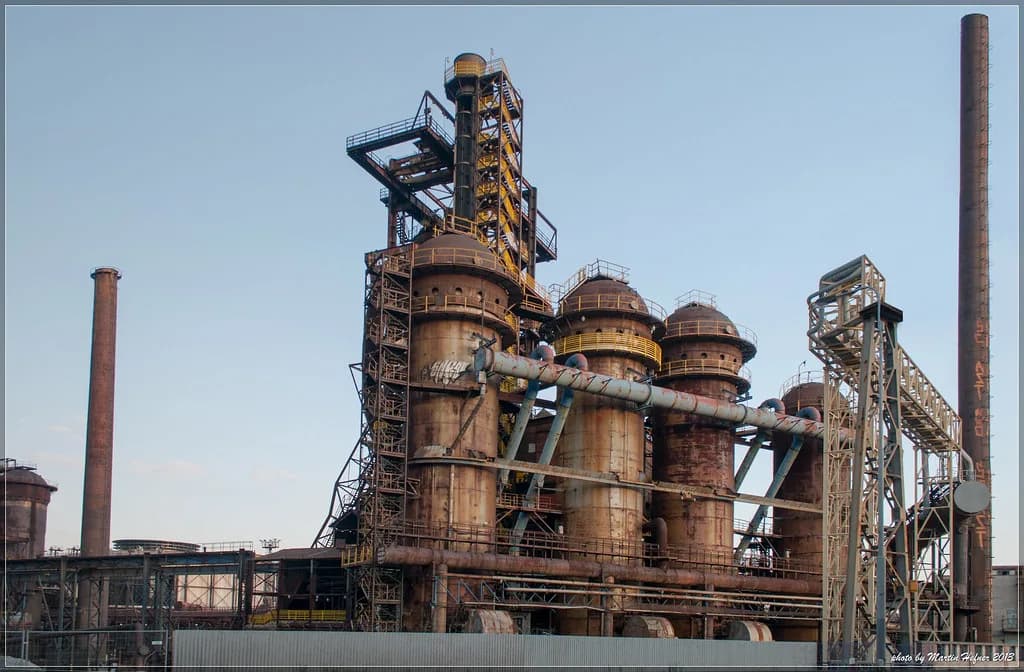
If you are working through the region's industrial sights, Dolní Vítkovice is the anchor: the former ironworks with its blast furnaces, gas holder and mining museum. Pairing it with a Beskydy day works because the two are different kinds of spectacle, one made of iron and one of timber.
Closer to the mountain, Kopřivnice is the town of the Tatra truck works and its technical museum, and its architect Kamil Mrva also designed the Pustevny upper station, which gives the two places a link beyond geography. If you are driving from Ostrava toward the Beskydy, a stop in Kopřivnice breaks the trip and adds a manufacturing story to a nature day.
Where to eat on the mountain
The obvious place to eat is the Libušín restaurant, which is the chalet's working restaurant and part of the reason the 1999 reopening mattered. Other dining options operate within the settlement and around the upper station, and the operator's site carries current information on them. Menus and prices change with the season, so check at the building.
Mountain food here is hearty rather than refined, and that suits the setting: you are eating in a national cultural monument at over a thousand meters, not in a city dining room. If you want a sit-down meal, go early, because the chalets fill up around midday when walkers and lift riders arrive together.
Weather, seasons and honest trade-offs
The saddle sits at 1,018 meters, so the weather is a mountain forecast, not a lowland one, and cloud can sit on the buildings while Ostrava is sunny. Bring a windproof layer even in summer and check the operator's webcams before you set out. The settlement works in rain because the chalets and the upper station give shelter, but the Radhošť walk does not.
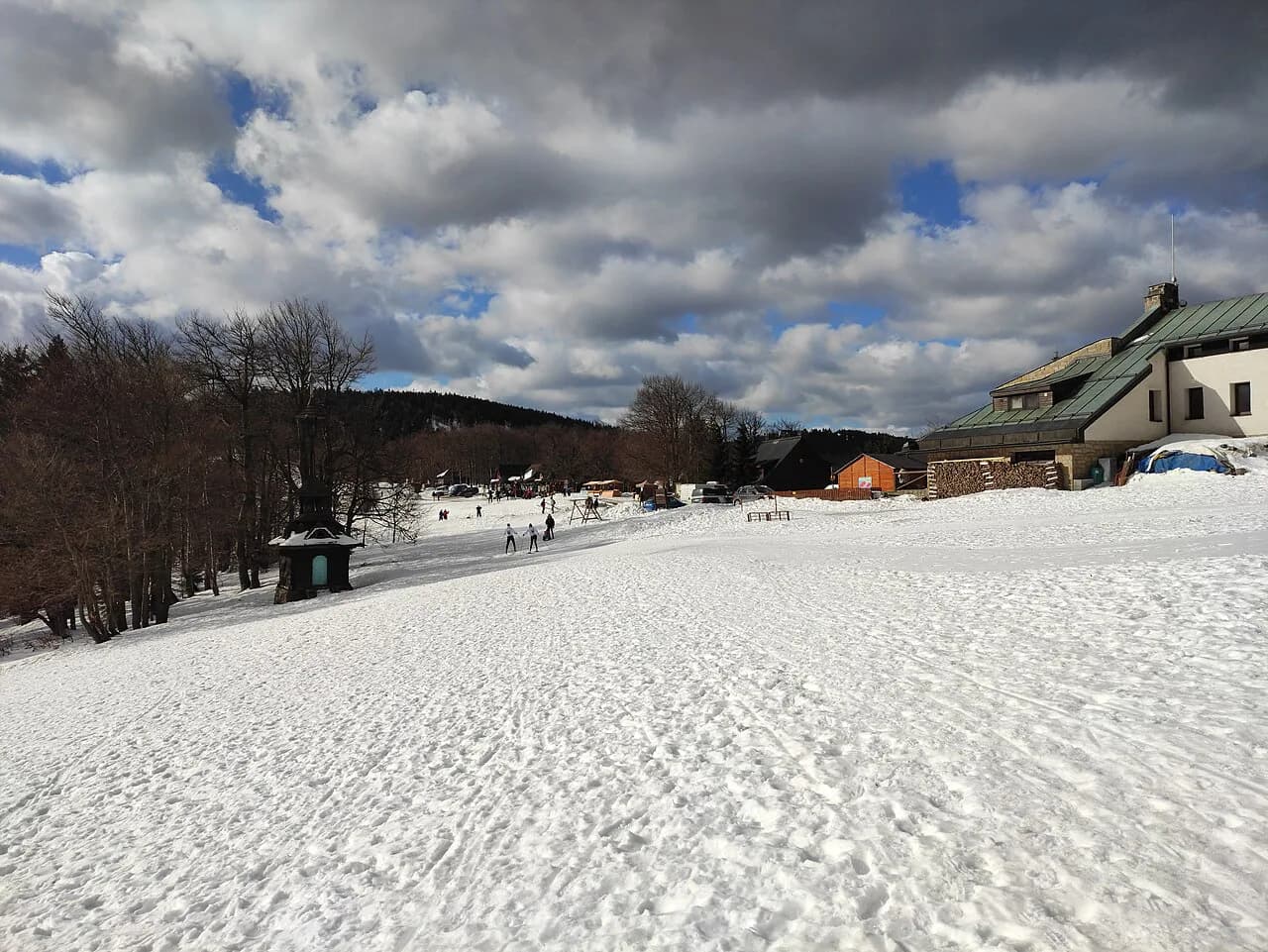
Winter turns Pustevny into a ski and cross-country base, and the operator advertises winter options including cross-country skiing, snowshoeing and winter hiking. Spring and autumn are the in-between months, when the lift may operate on a reduced schedule and the ridge paths can be wet. Decide your season first, then your transport, then your walking plan.
What Pustevny is not
Pustevny is not a castle or chateau tour, so do not arrive expecting a ticket window, a set circuit and a guide in period costume. It is not a museum with fixed opening hours either; the chalets operate as a restaurant and a hotel, and you visit them by walking up.
It is also not a gentle stroll from a parking lot with guaranteed close access; the approach is by lift, on foot, by bike or on skis, and each option takes different time. Choose your mode before you leave and you avoid arriving at the base station without a plan.
Lift up or walk up?
Take the chairlift if you want the chalets, the upper station and the Radegast statue without spending your legs on the approach, and walk up if the climb is the point of the day. Either way, put the buildings first and the ridge second, because weather on the saddle decides how far you get.
Confirm the day's lift operation, fares and restaurant opening at the Pustevny operator's site before you travel, since all three vary by season. Then treat the mountain as its own day, with a warm layer in the bag and a fallback in Ostrava if the cloud refuses to lift.
Explore more Ostrava guides
Frequently Asked Questions
Is Pustevny free to visit?
Walking around the settlement and looking at the Jurkovič chalets from outside costs nothing. The chairlift, the restaurants and the hotels charge separately, and the operator publishes current fares and menu prices on its own site.
Can you drive to Pustevny?
The operator lists road approaches to the saddle, but parking capacity and conditions vary with the season and weather. Check the operator's site and webcams before driving up, and be ready to use the chairlift from the valley instead.
How far is Radhošť from Pustevny?
Route records put a loop from Pustevny over the Stezka Valaška walkway to Radhošť and back at about 9.4 kilometers, or roughly three hours of walking. The shorter variant through Tanečnice and Čertův mlýn comes in around 7.1 kilometers.
Sources
Notes for your Czech trip
Optional updates to our Czech town guides.
You might also like
Continue reading
More guides you'll find useful