
Ghetto Museum Terezín: A Visitor's Guide to the Muzeum ghetta
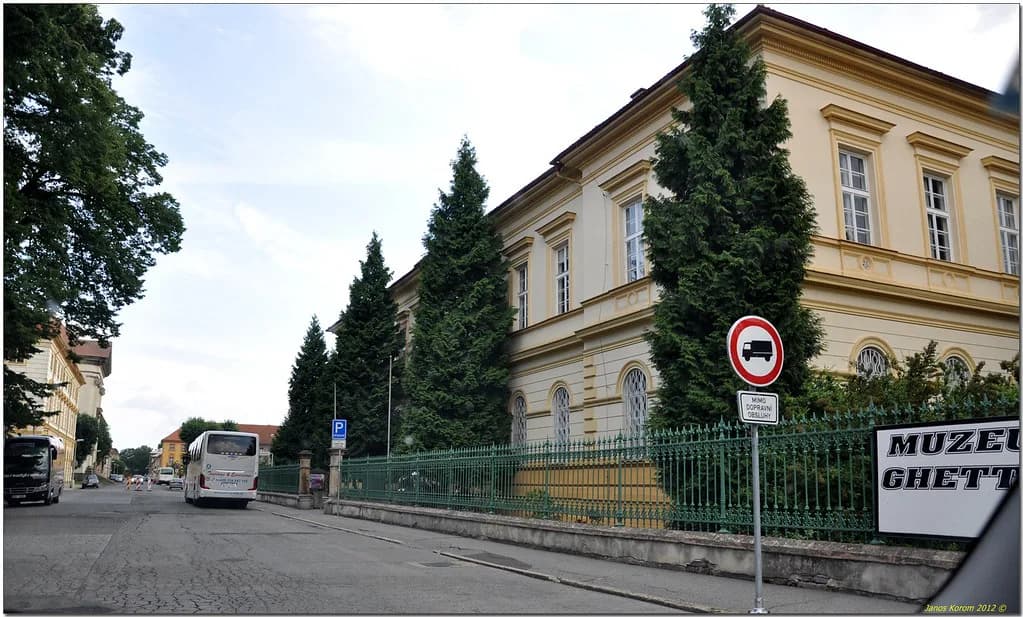
The Ghetto Museum is an indoor exhibition in Terezín, run by the Terezín Memorial and housed in a former school building. Allow about an hour for the displays, then walk to the Magdeburg Barracks or continue to the Small Fortress for the prison route. This guide covers what the museum holds, how to reach Terezín from Prague, and how the town's Memorial sites fit into one visit.
What the Ghetto Museum is and where it sits in Terezín
Terezín is a fortified garrison town laid out on a grid, with a large central square and straight streets running to the ramparts. The Ghetto Museum is one of the Memorial sites inside the town itself, which makes it a sensible first stop if you arrive by bus or car. The Small Fortress stands on the edge of town, reached from the main gate and the Prague road. Plan the order before you set out, because the town is bigger on foot than it looks on a map.

Getting there from Prague and from the Memorial's other sites
Most travelers reach Terezín from Prague by bus or car; the town has no direct main-line rail station of its own, and the nearest useful rail points are Litoměřice and Bohušovice nad Ohří. Buses serve Terezín and Litoměřice from Prague, and the trip takes over an hour depending on the service. Check the current timetable with the operator before you commit, since departures thin out in the evening.
Litoměřice, six kilometers away, is the larger town on the Elbe and Ohře confluence and a useful base or lunch stop. Its historic core holds the Cathedral of St. Stephen on Dómský vrch, a Saxon Renaissance town hall and a 366-meter underground route through the old cellars. If you are combining Terezín with a wider north Bohemian loop, Litoměřice makes the more comfortable overnight.
The garrison town setting
The museum sits inside the planned fortress town of Terezín, whose grid of straight streets and large central square runs out to the ramparts. Walking through the town to the exhibition is part of the experience, and it sets the tone better than a purpose-built gallery would. Keep your voice low and expect school groups at mid-morning on weekdays.
What the exhibition covers: the Terezín ghetto in the Nazi camp system
Theresienstadt was a Nazi camp in the occupied Czech lands where Jews from the Protectorate of Bohemia and Moravia and from across Europe were concentrated before deportation further east. The Memorial's own research describes how Czech Jews who were not sent to Terezín were deported to ghettos, labor and extermination camps elsewhere in occupied territory. That wider system is the context for the ghetto's history, which is why the museum works better before you walk to the Small Fortress.
The database behind much of this research covers 1938 to 1945 and drew on records from Auschwitz-Birkenau, Majdanek, Bergen-Belsen, Ravensbrück, Mauthausen and Gross-Rosen, among other archives. That breadth is the reason the museum can show individual names and dates rather than only general figures. Read the panels slowly; the density is high.
Art made in the ghetto
Art made in the ghetto is among the most affecting material associated with Terezín. The United States Holocaust Memorial Museum, for instance, catalogues a drawing made by Alfred Bergel of Marie Kleinova while both were prisoners in the Theresienstadt ghetto-labor camp. If you want to see ghetto-era art during your visit, check ahead with the Memorial about which works are on display.
How much time to allow and how it fits with the Small Fortress
Budget about an hour for the Ghetto Museum and two to three hours for the small fortress Terezín on the edge of town, where the Memorial's sightseeing route runs about 90 minutes and covers the guards' offices, prison cells, showers, hospital and execution place. The route includes a 500-meter corridor built as part of the former fortification; it was not used during the war. The Small Fortress served as a Prague Gestapo prison for opponents of the Nazi regime between 1940 and 1945.
Do the museum first and the fortress second. The exhibition context makes the prison blocks legible, and the walk between them gives you air before the heaviest part of the day. If you have two hours, stay in the town and combine the museum with the Magdeburg Barracks.
Tickets, opening hours and combined admission for the Memorial sites
The Terezín Memorial publishes opening hours and admission charges for its individual sites, and the Small Fortress lists daily opening with longer summer hours (9am–5pm) than winter (9am–4pm). Whether a single ticket covers the Ghetto Museum, the Magdeburg Barracks and the Small Fortress depends on the option you choose at the ticket desk, so read the Memorial's admission page before you travel rather than assuming one ticket covers everything. Language of exhibits is another thing to confirm there.
Other Memorial sites within walking distance
The Magdeburg Barracks in Terezín, a short walk from the museum, is another of the Memorial's sites inside the town and the natural companion to the museum; unlike the fortress, it sits within the garrison grid.
If you are short on time, pick one of the two rather than rushing both. The Litoměřice forced labor camp, tied to underground factories Richard I and II, is documented at the Small Fortress rather than in the town.
The National Cemetery and the Jewish Cemetery and Crematorium
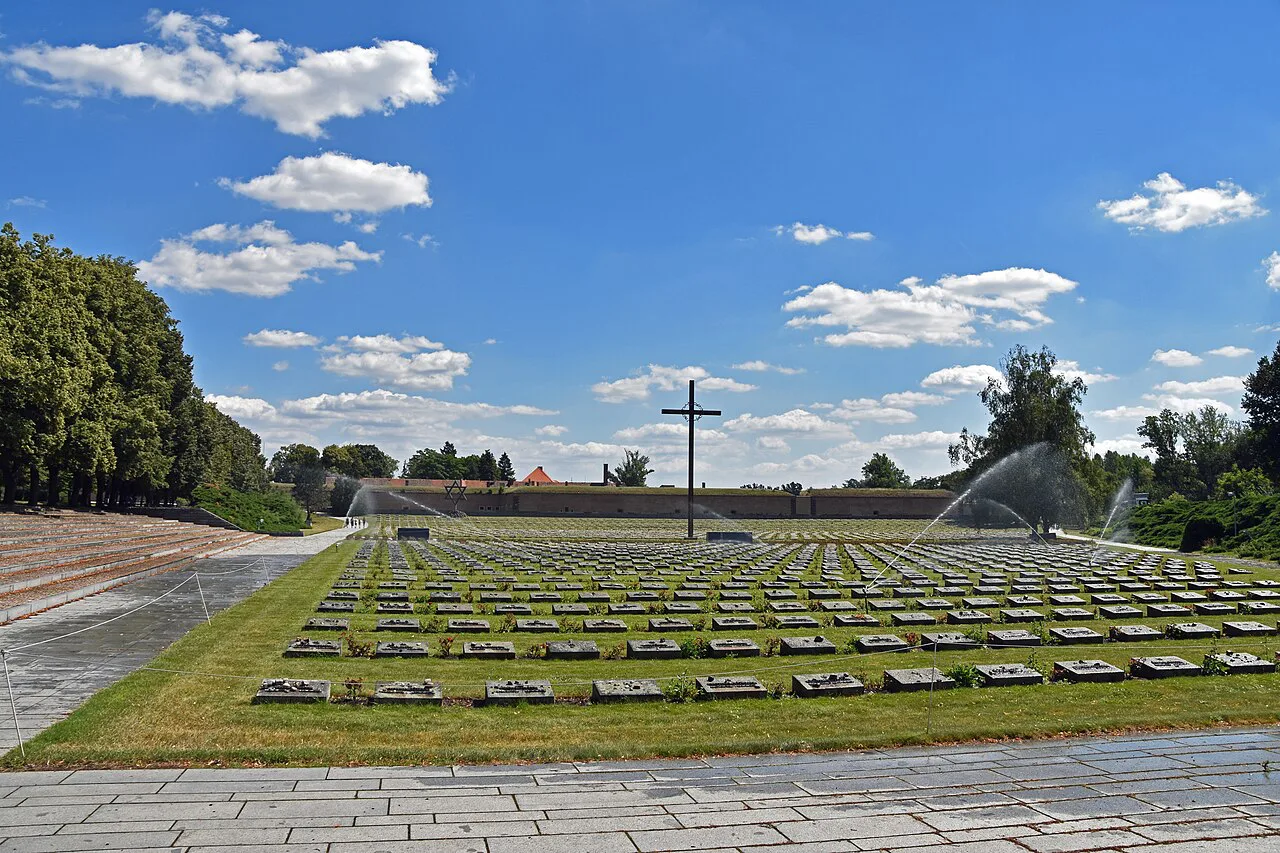
The National Cemetery holds 2,386 graves, but only about half carry names, because remains recovered from mass graves after the war often could not be identified. The database of people buried there records 1,133 victims of Nazi persecution. Section 7 holds 789 graves of inmates from the Litoměřice concentration camp, and Section 8 holds 886 urn graves of ghetto prisoners who died between January and March 1945 or during the typhus outbreak at the end of the war.
Section 4 of the National Cemetery marks the burial place of the ashes of 52 inmates of the Terezín Police Prison shot during the last execution in the Small Fortress on May 2, 1945. Two pylons in Section 5 cover ashes of several thousand victims cremated in Terezín. The Jewish Cemetery and the crematorium sit nearby and complete the quiet, outdoor half of a Terezín day.

Practical points: sober subject matter, group visits and language of exhibits
This is a memorial, not a heritage attraction: no food or drink in the exhibition rooms, no flash photography where signs prohibit it, and no climbing on the cemetery markers. Group visits can be arranged through the Memorial, and school parties are common on weekday mornings. Documentary films at the Small Fortress run in Czech with English subtitles, starting at 9:00 and repeating every 30 minutes according to the Memorial's site page.
The museum is not the whole Memorial, and treating it as such undersells the day. See the Terezín Attractions: 4 Visitor Guides overview before you go, then decide whether to add the fortress and the cemeteries. Confirm current hours and admission at the Memorial's own site before traveling.
Should the museum come before or after the fortress?
Start with the Ghetto Museum, then walk to the Magdeburg Barracks, and finish at the Small Fortress and the National Cemetery. That order gives you context before the prison blocks and ends outdoors, which is easier to absorb. If you only have two hours, the museum plus the barracks is the more coherent town visit.
Explore more Terezín guides
Frequently Asked Questions
Is the Ghetto Museum the same as the Terezín Memorial?
No. The Terezín Memorial is the institution that runs several sites in and around the town, including the Small Fortress, the National Cemetery and other memorial buildings. The Ghetto Museum is one of the sites it administers.
Do you need to book Ghetto Museum tickets in advance?
The Memorial publishes its admission charges and reservation channels on its own site, so check there for group bookings and any advance-booking requirement before you travel.
Are the exhibitions in English?
Documentary screenings at the Small Fortress run in Czech with English subtitles, from 9:00 and then every 30 minutes according to the Memorial's site page. Confirm the current language options for each building when you arrive at the ticket desk.