
Small Fortress Terezín: What You'll See Inside the Gestapo Prison
The Small Fortress in Terezín is the walled fort on the town's edge that served as a Prague Gestapo prison for opponents of the Nazi regime between 1940 and 1945, and it is visited on a single marked sightseeing route rather than as a free-standing monument. The route runs through the guards' offices and prison cells, a sick room and hospital, the execution place, and a 500 m corridor built as part of the old fortification. This guide covers where the gate sits, what the route actually passes, the permanent exhibitions and film inside, how long to allow, and which other sites in town pair with it.
What the Small Fortress was
The Small Fortress is not the ghetto itself. It is a separate fortress of the Terezín complex that the Prague Gestapo used from 1940 to 1945 to hold political prisoners and other opponents of the Nazi regime, many of whom were later deported to other camps within the German Reich. The Memorial describes the site through its permanent exhibition, which traces the persecution of Czech prisoners and records where they were sent. Keep that distinction in mind when you plan: the Small Fortress, the Ghetto Museum and the Magdeburg Barracks are separate sites with separate opening arrangements.
The fortress itself predates all of this; it was built from 1780 to 1790 and named by Emperor Joseph II after Empress Maria Theresa, and in the second half of the 19th century it also served as a prison. During World War I political prisoners were held there, including Gavrilo Princip, who was sentenced to 20 years and died of tuberculosis after about four years. Reading the site only as a WWII camp misses the layered history of the walls you walk through, so the exhibition panels are worth slow attention rather than a passing glance. The material is grave throughout and the route is exposed, so build in pauses.

Where it sits in Terezín and how to reach the main gate
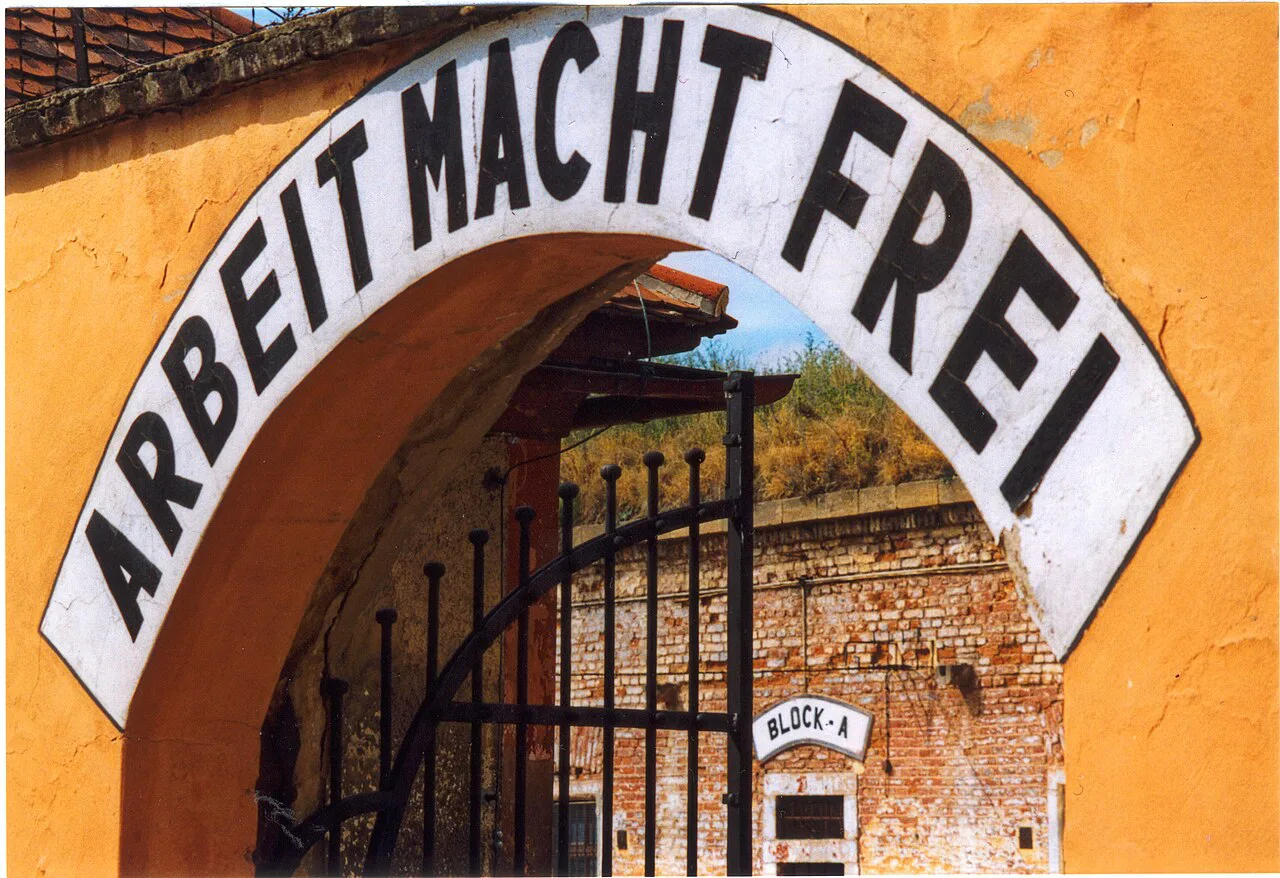
The Small Fortress stands on Principova alej in Terezín, marked as Principova alej 304 with the coordinates 50.513895, 14.165206 on the Memorial's own listing. The site lies outside the historic core of the fortress town, roughly a short walk from the town center and its other memorial buildings. If you arrive by car or bus, the parking area is about 200 m from the main gate; bicycles can be left inside the fortress.
Most travelers reach Terezín from Prague by car, bus or train, and the Memorial publishes directions on its own site rather than tying the town to one operator or timetable. Because connections change with the season, check the current bus and train schedules for your travel date instead of relying on a remembered departure. The town is compact enough that once you arrive, the Small Fortress and the Ghetto Museum can be combined on foot, which is the practical way to see both without a car shuffle.

The sightseeing route in order
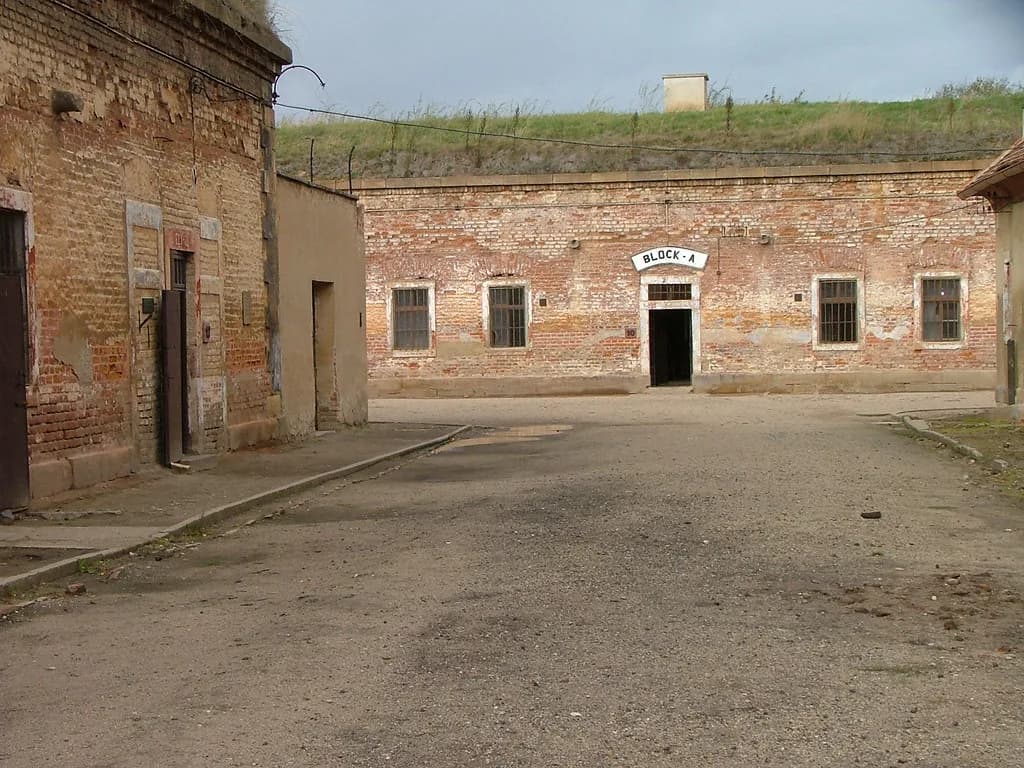
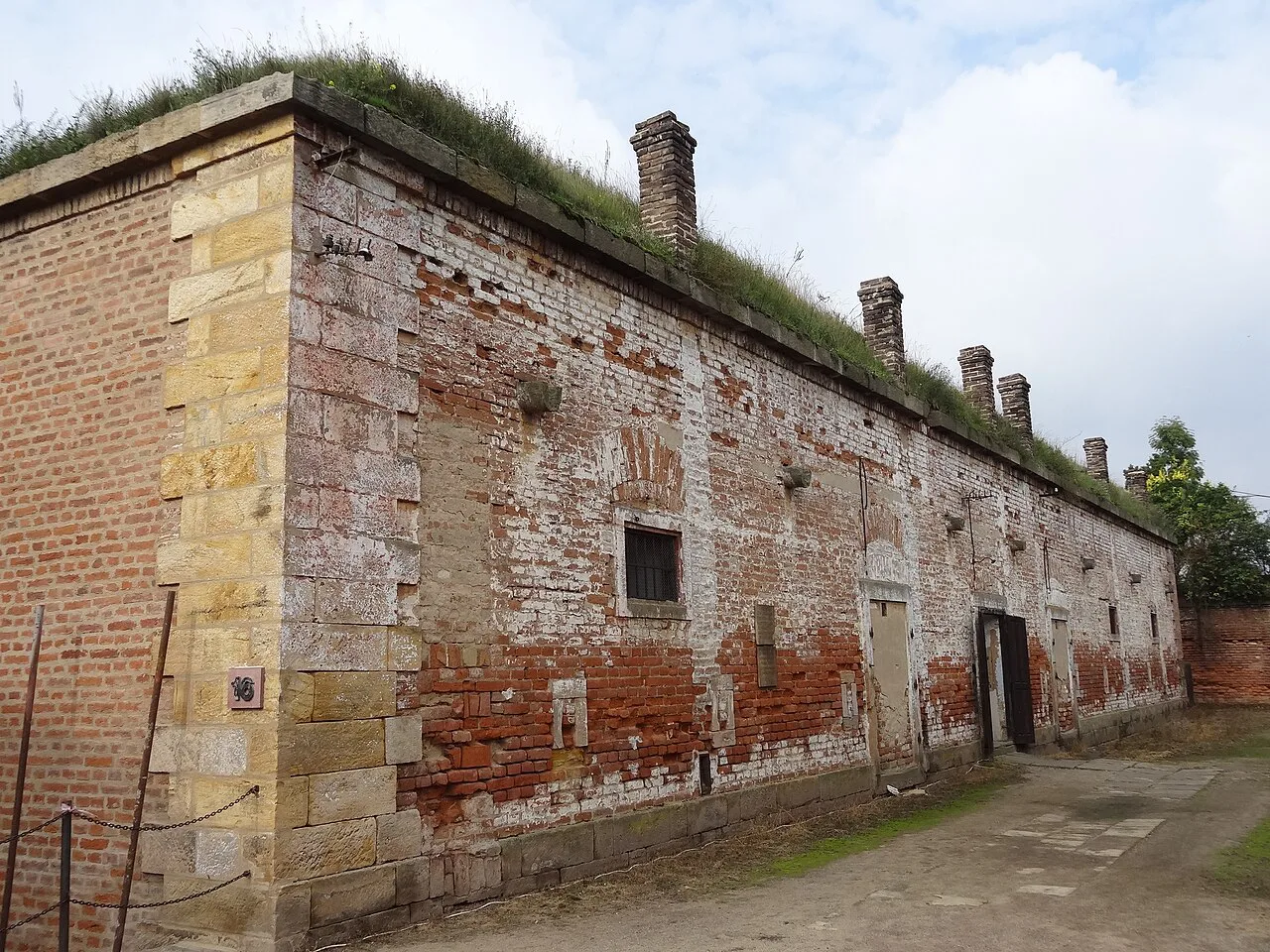
The route begins with the guards' offices and the prison cells, many of which retain part of their original fittings, and continues past the showers, the sick room and the hospital before reaching the execution place. Because the order is fixed and one-way in spirit, you cannot easily skip a section and come back later, so decide at the start how much time you want to give the cells. Groups move through in blocks, and the courtyards are where you feel the scale of the place most sharply.
Beyond the prison buildings, the route includes a 500 m corridor that formed part of the original fortification and was not used during the war; it is presented as an exposition of the fortress architecture rather than as a wartime space. Walking it is a useful corrective to the assumption that everything on site dates from the occupation. The contrast between the military engineering and the prison history is the reason the route is worth doing in full rather than cherry-picking the cells.
Permanent exhibitions inside the route
The main exhibition, The Small Fortress 1940–1945, occupies the ground floor of the site museum and is devoted to the history of the political prison, documenting the persecution of Czech prisoners and the fates of those transferred to other concentration camps. A separate gallery on the first floor holds the art exhibition Art against fascism and war, which is also available as a video tour in Czech with English subtitles. Both are included in the walk-through rather than staged as a separate ticketed visit, so plan your time around them.
Several smaller displays sit in the third prison yard and the former prison hospital, covering the Litoměřice forced labor camp, the SS staff at Terezín and Litoměřice, and the postwar internment camp for Germans that operated in the Small Fortress from 1945 to 1948. A display on Milada Horáková, covering her resistance activity and her 1950s trial, is in the former prison hospital. Reading these panels in sequence gives you a fuller picture of how the site was used across a decade, not only during the occupation.
The documentary film and its English subtitles
A short documentary on the history of the Small Fortress screens in the on-site cinema, starting at 9:00 and then every 30 minutes, in Czech with English subtitles. That schedule makes the film a practical anchor for your visit: if you arrive near opening, watch it first to set the context for the cells, and if you arrive later, time your walk so you catch a screening before you leave. Subtitles carry the narration, so non-Czech speakers lose nothing essential.
How long to allow and what to expect from the terrain
The Memorial gives the duration as approximately 90 minutes, and that is a realistic minimum for the route plus the main exhibition, with more time needed if you read the panels and watch the film. The route is not completely free of barriers, though it is described as accessible with a little help; the museum, cinema and toilets are without barriers. If anyone in your group uses a wheelchair or has limited mobility, plan the courtyards and corridor as the demanding part and treat the indoor spaces as the reliable rest stops.
Guided tours are available and are booked through the Memorial; the booking line is listed on its contact details. The exhibitions carry English translation and the film has English subtitles, so if you want a guided tour, arrange it with the Memorial in advance rather than assuming one will be running in your language when you arrive.
Opening hours, seasons and admission
The Memorial publishes the Small Fortress as open daily, with summer hours of 9am to 5pm and winter hours of 9am to 4pm; the calendar dates that switch between the two are set by the Memorial, so confirm the current season before you travel. Admission charges are listed separately on the Memorial's website, and prices are among the details most likely to change year to year. Book through the official site rather than a reseller.
Facilities at the gate
On-site facilities are deliberately basic: a souvenir and book shop, refreshment machines for drinks and food, an ATM, toilets and parking for cars and buses about 200 m from the main gate, with bike parking inside the fortress. There is no café culture here, which suits the purpose of the site; eat before or after your visit rather than expecting a break mid-route. Bring water in warm weather, since the courtyards offer little shade.
What else in Terezín pairs with the Small Fortress
The Ghetto Museum in the town center is the natural companion, because it covers the Theresienstadt ghetto that the Small Fortress sat beside, and the two together explain the difference between the police prison and the ghetto. The Magdeburg Barracks in Terezín, another Memorial building, holds further exhibitions on the ghetto's cultural life. If you are working out how the Terezín sites fit together, the Terezín Attractions: 4 Visitor Guides page maps the four main stops.
Outside the town walls, the Terezín Crematorium and Columbarium and the National Cemetery complete the picture of how the dead of the ghetto were handled, and they sit outside the historic core. Adding them makes a long day, so decide whether you want the Small Fortress in depth or a broader sweep of the memorial sites. Both are managed by the Memorial, and you can check their opening arrangements on the Memorial's own site.
Should the Small Fortress anchor your Terezín visit?
Yes, if you want to understand the police prison itself rather than the ghetto: the Small Fortress is the site that holds the cells, the execution place and the fortification corridor, and the 90-minute route is self-contained. Go early in the day to catch the film near opening and to walk the courtyards before groups build up. If your interest is the ghetto's cultural and administrative history, start at the Ghetto Museum and come here second.
Frequently Asked Questions
How far is it from Prague to Terezín?
Terezín lies northwest of Prague in the Bohemian lowlands, and the Memorial publishes its own travel directions for visitors arriving by car, bus or train. Journey times vary by connection, and schedules change with the season, so check the current timetable for your date rather than relying on a remembered departure. Once in town, the Small Fortress and the town-center sites are reachable on foot.
Do I need to book the Small Fortress in advance?
The Memorial takes reservations and lists a booking phone line for guided tours, and the site can be visited on the self-guided sightseeing route without joining a tour. Booking matters most if you want a guided tour, especially in English, because those run on set arrangements rather than continuously. Check the Memorial's reservation information for your date.