Hradec Králové: Old Town Square, Modernist Center and Museums
Hradec Králové pairs an old town square with interwar modernist streets. See the Museum of East Bohemia's building and collections and the Gallery of Modern Art.
On this page
Hradec Králové is worth a full day, and the reason is the pairing: a compact old town square on a sandstone spur above the Elbe, and a ring of interwar modernist streets built on a plan rather than by accident. Most travelers pass through on the way to somewhere else, which is why the center stays calm even in high season. This guide covers what to see, how the center is laid out, how long it needs and how it slots into a route east of Prague.
Plan around one hard constraint: the Museum of East Bohemia closes on Mondays and runs Tuesday to Sunday, so a Monday arrival should lean on the square and the modernist streets instead. The rest of the day is walking, and the distances are short enough that you never need a tram inside the center.
What Hradec Králové is and where it sits in East Bohemia
Hradec Králové sits in eastern Bohemia, roughly on the axis between Prague and the Polish border. The name splits cleanly: Hradec is an old Czech word for a small castle or fortified town, and Králové means "of the queen," a reference to its history as a dowry town of Bohemian queens. That double meaning is the fastest way to remember the place.
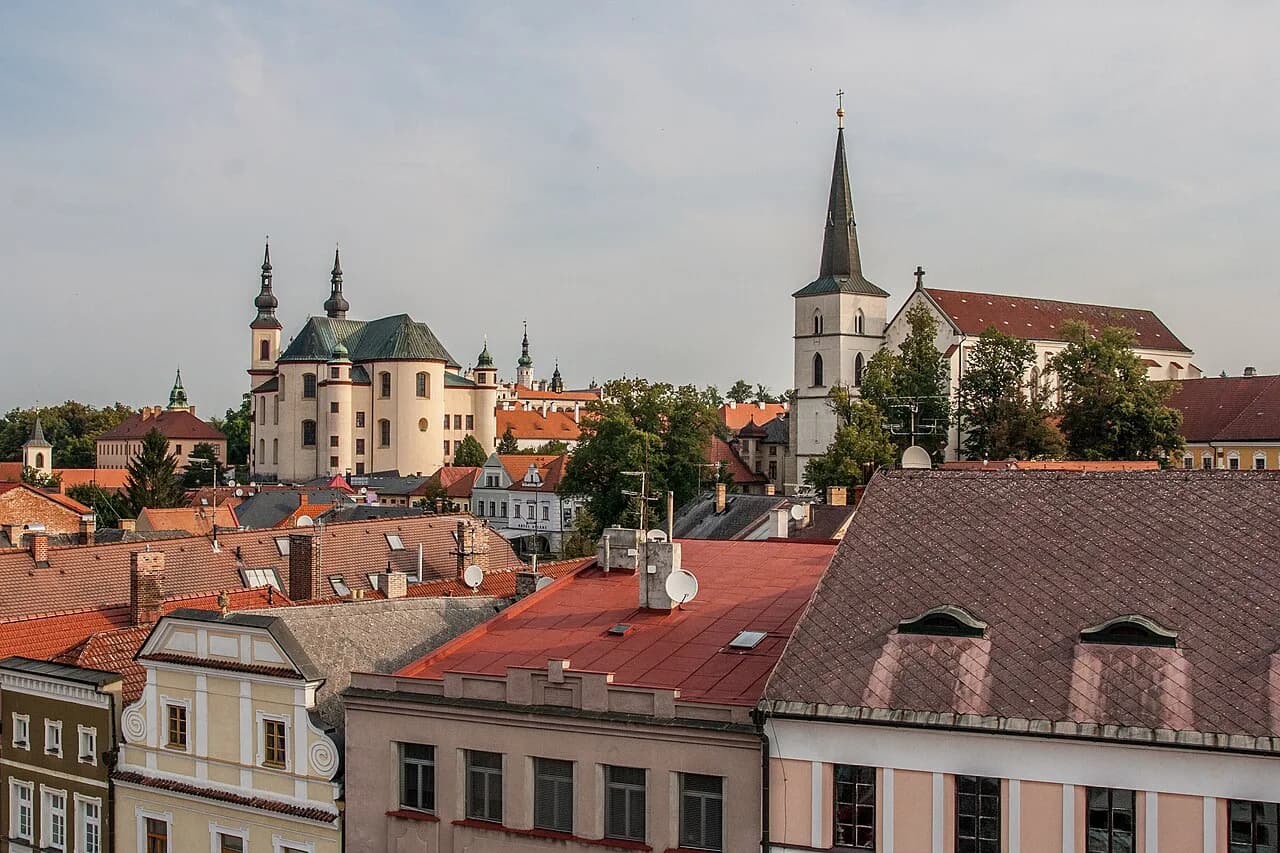
The old center occupies a flat spur above the river, and the 19th-century fortifications that once ringed it were demolished, freeing a wide band of land that planners used for the modernist new town in the 1920s and 1930s. The result is unusual in the Czech Republic: a historic core and a planned modern core sitting side by side, both walkable within minutes of each other.
For a traveler heading east, Hradec Králové works as a natural overnight or long lunch stop between Prague and the foothills of the Krkonoše, or as a base for the Baroque hospital and church at Kuks and the UNESCO-listed chateau town of Litomyšl. Treat it as a stop with real content, not a place to tick off from a bus window.
Velké náměstí: the old town square and its buildings
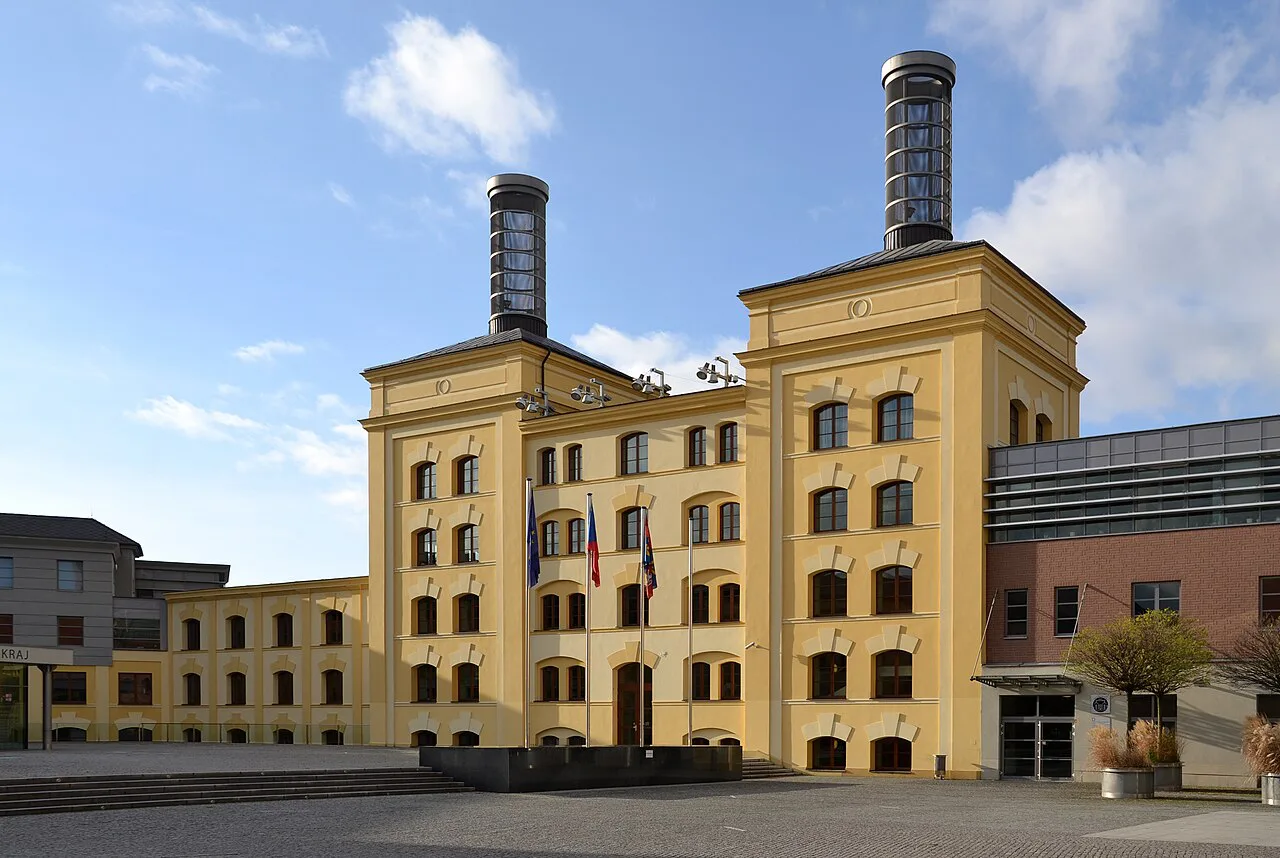
Velké náměstí is the old town's main square, a long, open space lined with burgher houses. It is the natural place to start, because every street in the historic core leads back to it. Give it twenty minutes to orient yourself before choosing a direction.
The square is also where the town's institutions cluster. The Gallery of Modern Art gives its address as Velké náměstí 139/140, which makes it easy to combine a look at the square with an hour inside the collection. Because the gallery sits directly on the square, you can treat it as a rain plan without rearranging the day.
The square functions as the town's living room rather than a museum piece. Markets, seasonal gatherings and everyday errands happen here, and the cafes along the edges fill at midday. If you want photographs without crowds, come early; by mid-morning in summer the light is flat and the terraces are busy.
The modernist new town: how the interwar center is laid out and where to walk it
The modernist center is the reason Hradec Králové deserves more than a quick stop. After the fortifications came down, the town commissioned a series of urban plans that shaped a new town of wide boulevards, freestanding buildings and generous public space. The interwar streets you walk today are functionalist and clean, with flat roofs, horizontal window bands and unornamented facades.
The walking logic is simple: from Velké náměstí, cross toward the river and the Eliščino nábřeží embankment, where the Museum of East Bohemia stands at Eliščino nábřeží 465. From there, follow the broad streets inland and you pass a continuous run of interwar buildings rather than isolated landmarks. The pleasure is in the ensemble, so keep moving rather than hunting single addresses.
Allow about an hour for this loop at an unhurried pace. The streets are level, the sidewalks wide, and the scale is small enough that you will recognize buildings on the return leg. If architecture is your main interest, do this before the museums, while your attention is fresh.
Museum of East Bohemia (Muzeum východních Čech): the building and exhibitions
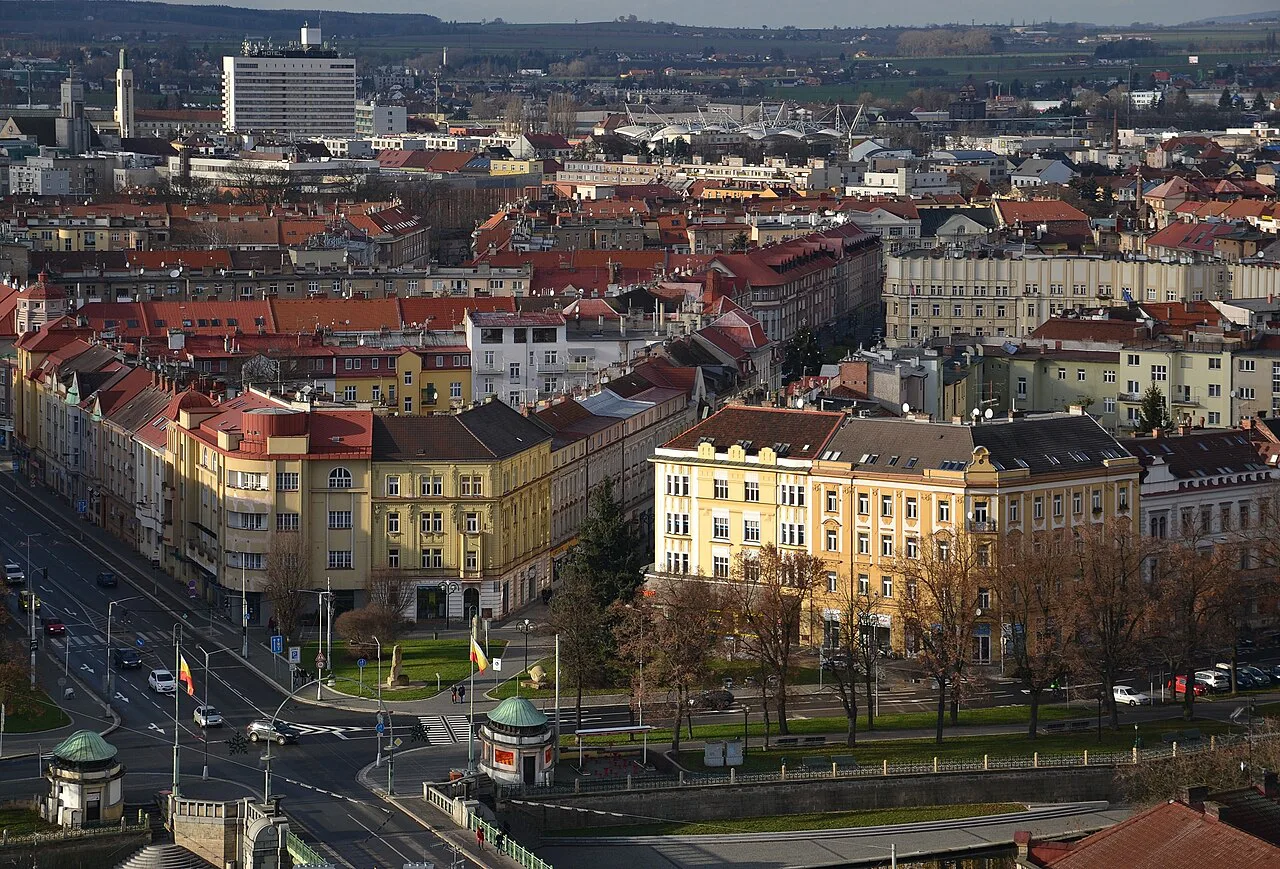
The Museum of East Bohemia occupies a monumental building on Eliščino nábřeží at number 465; the exterior and the riverside setting are part of the modernist walk. Inside, the museum covers the region's archaeology, history and natural science.
The permanent exhibitions are organized around the town's own story. The museum's standing displays include one tracing the town's growth as a city of Bohemian queens ("Cesta k městu českých královen"), one on the town's development as a fortress ("Cesta k pevnosti"), and one on the First Republic period ("K salonu Republiky"), when the modernist center took shape. Together they give you the historical frame for the streets you have just walked.
Temporary exhibitions run alongside the permanent displays at the museum, which also runs lectures, workshops and family programs, so a visit can stretch well beyond an hour if something on the calendar suits you. Check the program before you go if you want a specific talk.
Budget around ninety minutes to two hours for the museum, depending on how much you read. It is the kind of collection that rewards a focused visit: pick two of the three permanent exhibitions and leave the third for a return trip. The historic building itself, on Eliščino nábřeží, is worth a look before you go in.
Gallery of Modern Art (Galerie moderního umění): Czech modern art from the 20th and 21st centuries
The Gallery of Modern Art at Velké náměstí 139/140 focuses on Czech modern and contemporary art from the 20th and 21st centuries. Its collections follow the development of Czech modernism, with particular strengths in modern painting and in moving image work. For a town of this size, the collection is unexpectedly serious.
The gallery's holdings include a collection of art from Central and Eastern Europe and a collection of moving image, alongside individual collections built around specific artists. Exhibitions rotate, so the rooms you see depend on the season. The building itself, a historic house on the square, is part of the appeal.
The gallery also runs a public program of lectures, drawing workshops and discussions, several of which require advance reservation by email. If you are traveling with an interest in art education, check the calendar before your visit. Otherwise, treat the gallery as a one-hour stop that pairs naturally with the square.
Opening hours and ticket prices in CZK for the museum
The Museum of East Bohemia opens Tuesday to Sunday from 10:00 to 18:00 and stays closed on Mondays. On the last Wednesday of each month it stays open until 20:00, which suits a late afternoon arrival. Admission to the permanent exhibitions and temporary exhibitions is 170 Kč, with a reduced rate of 90 Kč for visitors aged 65 and over. Children and young people under 19 enter free.
Those prices make the museum one of the better-value indoor stops in the region, particularly for families, since under-19s pay nothing. Buy at the desk when you arrive. The museum also operates the separate Museum of the War of 1866 at Chlum, which has its own visitor information.
For the gallery, check the current opening days and admission before you build a day around it, since exhibition changeovers affect access. The gallery publishes its own visitor information on its website. Keep the gallery flexible and treat the square around it as the fixed part of the day.
The Museum of the War of 1866 at Chlum and how it connects to the town
The Battle of Hradec Králové in 1866, fought at Chlum just outside the town, gave its name to the museum at Chlum, and the site covers the battle and its aftermath. The Museum of the War of 1866 at Chlum, at Chlum 66 near Všestary, is run by the Museum of East Bohemia and is a separate site with its own address and visitor arrangements.
The Chlum site includes a lookout tower and a surrounding landscape of memorials, and the museum publishes walking and cycling routes through the former battlefield. That makes it an outing of its own rather than a quick detour. If you have a car, it combines easily with the town; without one, check the connection before committing.
History-minded travelers often rate this the most affecting stop in the area, because the battlefield is preserved rather than built over. Set aside the better part of an afternoon if you go, and read up on the battle beforehand so the landscape makes sense. The town museum provides the context you need.
A short walking route through the center: square, museum, gallery
Start on Velké náměstí, then walk the short distance to the Gallery of Modern Art for an hour inside. Return across the square and head downhill toward the river to reach Eliščino nábřeží and the Museum of East Bohemia. The whole route is short and takes about four hours with museum time included.
Do the museum first if you are visiting on a day when it closes at 18:00, then finish at the gallery and the square, where cafes stay open into the evening. If your visit falls on a Monday, reverse the emphasis: the museum is closed, so the square and the modernist streets carry the day, and the interiors wait.
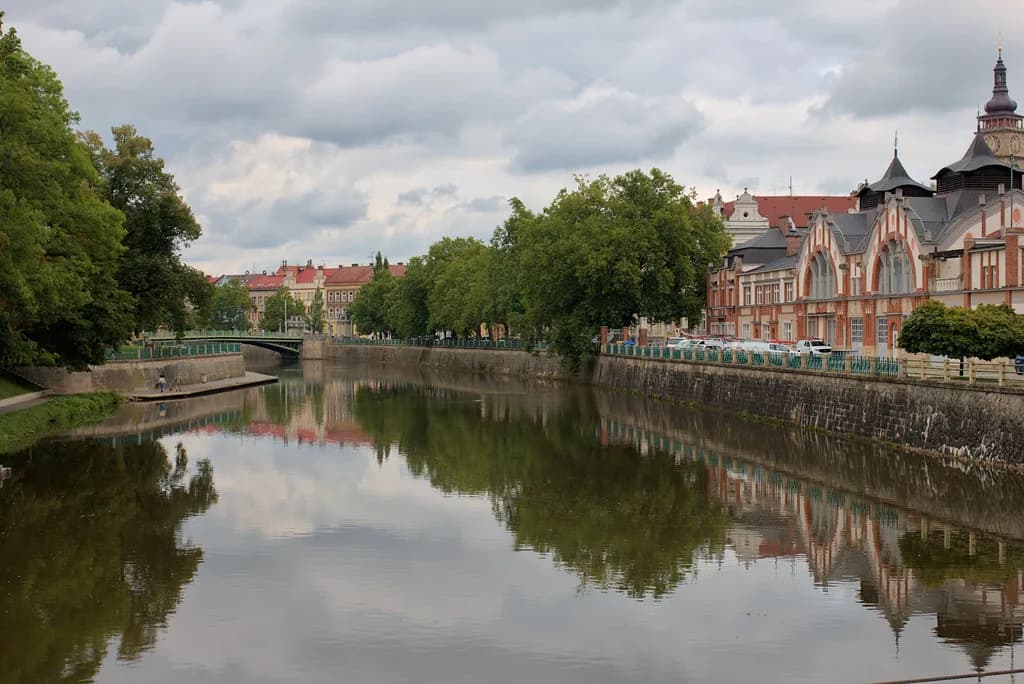
Wear shoes for pavement rather than trails; the route is entirely urban. Add the river embankment as a slow finish, since the walk along the Elbe and Orlice gives you the town's setting in one view. Photographers should save the embankment for late light.
How long Hradec Králové needs and how it fits a route from Prague
One full day covers the square, the modernist center, the museum and the gallery at a comfortable pace. If you add the War of 1866 museum at Chlum, give the town two days or plan Chlum as a separate half-day. A half-day stop works only if you pick either the museums or the architecture, not both.
On a route from Prague, Hradec Králové sits naturally on the eastern leg, and it pairs well with Kuks and Litomyšl, both of which reward a stop of their own. Travelers continuing toward Moravia can treat the town as a hinge between eastern and southern Bohemia, with onward guides for Brno and Jihlava. Check current train and bus connections on the national timetables before fixing your plan, since services and journey times change.
The trade-off is straightforward: Hradec Králové is not a postcard town, and it does not try to be. Its appeal is spatial and architectural, and it rewards a traveler who wants to understand how a Czech regional city arranged its center between the wars. If you want castle-and-square scenery, Litomyšl delivers that more directly.
Getting there and onward: train and bus links to Kuks and Litomyšl
Hradec Králové functions as a regional center, with rail and bus connections from Prague and from other East Bohemian towns. The main station sits outside the historic core, so plan a short walk or a local tram ride to reach Velké náměstí.
For Kuks and Litomyšl, the practical approach is to check connections for your specific date rather than assume a frequent service. Kuks lies in the countryside and benefits from a planned arrival; Litomyšl is a larger town with a preserved square and chateau. Both work best as an overnight or as a carefully timed day out.
A car gives you the most flexibility for Chlum and for the smaller stops between the towns. Without one, build the trip around the rail and bus spine and accept longer waits. Either way, buy tickets locally and keep cash for smaller stations.
Practical trade-offs: Monday closures, late-opening Wednesdays, programs in Czech
The single biggest planning risk is Monday. The Museum of East Bohemia is closed that day, and the gallery's hours vary with its exhibition schedule. Arrive on a Monday and you get the streets, the square and the riverside, which is a good day in itself but not the full town.
The late-opening last Wednesday of the month is the best slot for a museum visit after a day of travel. Lectures, workshops and guided programs at both institutions run mostly in Czech, and some require advance booking by email. If a specific talk matters to you, write ahead; otherwise, the exhibitions need no language preparation.
Crowds are mild compared with Český Krumlov or Kutná Hora, and midday is the busiest window on the square. Early morning and late afternoon give you the modernist streets almost to yourself. That quiet is part of the case for stopping here rather than pushing on.
Build Hradec Králové into an East Bohemia loop
Treat Hradec Králové as the hinge of an East Bohemia route: one day for the square, the modernist center, the museum and the gallery, with Chlum and Kuks as separate outings. Plan the museum for Tuesday through Sunday and keep the last Wednesday of the month free for the late opening.
If you are heading toward Moravia afterward, the same trip logic carries into Brno and Jihlava, with onward city guides for both. Book your onward train or bus before you leave the town, and the rest of the loop falls into place.
Explore more Hradec Králové guides
Frequently Asked Questions
What does Hradec mean in Czech?
Hradec is an old Czech word for a small castle or fortified settlement, and it appears in the names of several Czech towns. In Hradec Králové, the second word, Králové, means "of the queen" and refers to the town's history as a dowry town held by Bohemian queens.
In which country is Hradec Králové located?
Hradec Králové is in the Czech Republic, in the eastern part of the country known as Bohemia.
When is the Museum of East Bohemia open and what does it cost?
The museum is open Tuesday to Sunday from 10:00 to 18:00 and closed on Mondays; on the last Wednesday of each month it stays open until 20:00. Admission is 170 Kč, 90 Kč for visitors aged 65 and over, and free for children and young people under 19.
Sources
Notes for your Czech trip
Optional updates to our Czech town guides.
You might also like
Continue reading
More guides you'll find useful