Kladruby nad Labem: The Old Kladruber Stud Farm
Kladruby nad Labem is home to the National Stud, founded in 1579 and breeding the rare Old Kladruber horse. Here is what the UNESCO site is and how to fit it in.
On this page
Kladruby nad Labem is a small Czech village and the home of the National Stud, a horse-breeding farm established in 1579 by Emperor Rudolf II and still raising the Old Kladruber, one of the oldest horse breeds in the world. The horses were bred for the Habsburg court as ceremonial carriage animals, not for riding into battle, and that purpose explains what the breed is. This guide covers what the stud is, why the two coat colors mattered, and what makes the Kladruber distinctive.
Two things trip up first-time visitors: the site is a working stud farm, not a theme park or a riding stable, and its name is shared with an unrelated village in the Vysočina region. A visit is about the breeding tradition and the breed itself rather than a visitor show. Check the stud's own published visitor information before you set out.
What Kladruby nad Labem is: the stud farm, not the village
The name Kladruby nad Labem refers both to a village and to the National Stud based there, and the stud is the reason travelers come. The farm has operated for more than four centuries, and the source of its name is the old Czech word for hewing logs, a reminder that the first settlers here used horses for forestry work. That double meaning is worth holding onto: you are visiting a working agricultural institution with a long history, not a museum piece.
A separate village called Kladruby also exists in the Vysočina region, and it is not the same place. The Vysočina village appears on map listings as a small settlement with its own seasonal character, while the stud farm is the one tied to the Old Kladruber horse. If you are plotting a route or booking transport, make sure your destination is Kladruby nad Labem and not the Vysočina Kladruby.
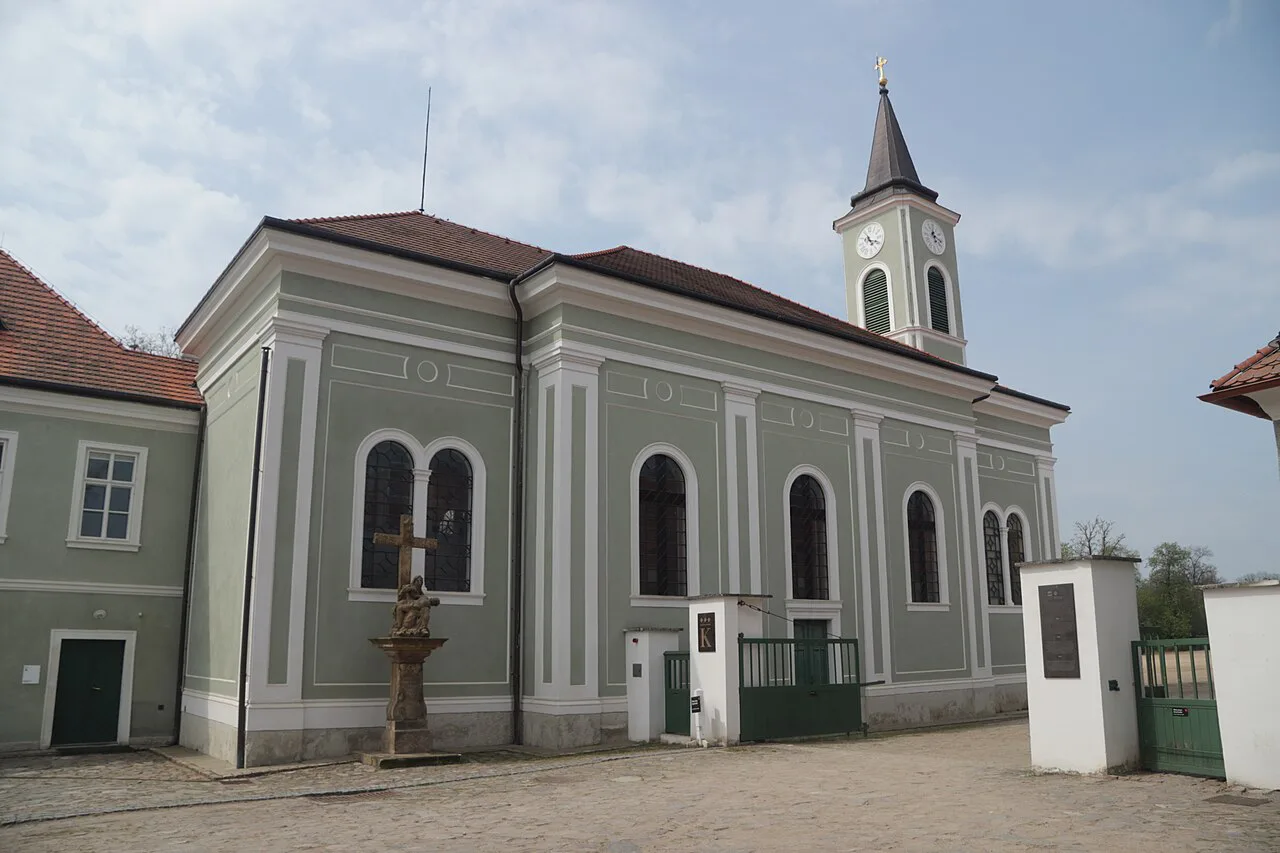
Where Kladruby nad Labem sits
Kladruby nad Labem lies in the Czech Republic, and the stud farm there is the breed's founding home. The farm is a working institution rather than a walk-up attraction, so plan the visit around the stud's own schedule.
If you are building a broader East Bohemia itinerary elsewhere in the region, the Hradec Králové guide covers the regional capital, while Kuks: The Baroque Hospital, Braun's Statues and How to See the Site covers the hospital complex and the sculpted landscape. Those are separate stops in East Bohemia; treat the Kladruby stud as its own destination and plan travel between them accordingly.
Most travelers reach a rural stud farm by car rather than on foot from a station, so plan your transport in advance. Confirm the connection on a current timetable before you book, and keep the drive between stops realistic rather than assuming the farm sits on a convenient rail line.
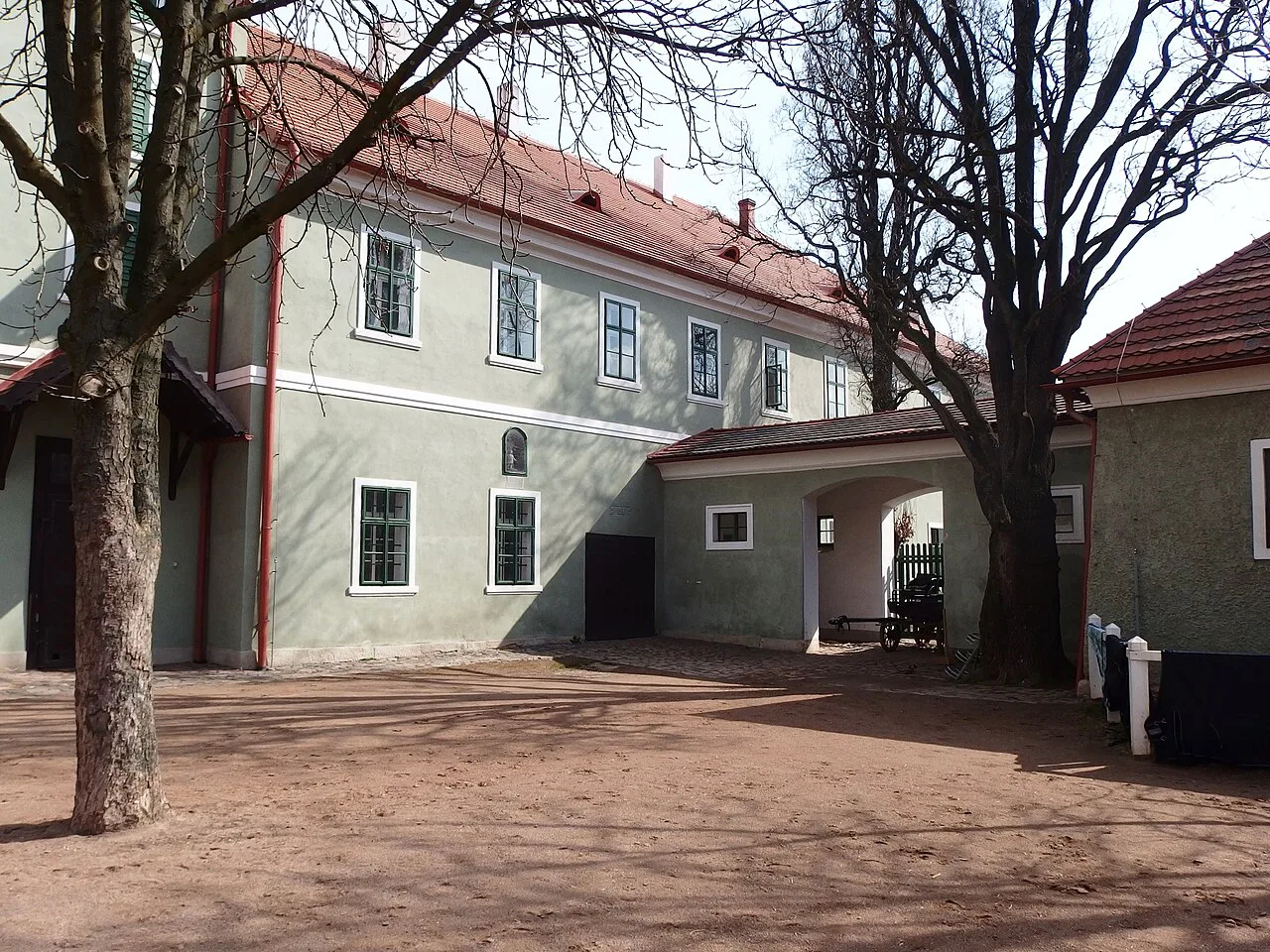
Why the stud exists: Rudolf II and the Habsburg court
Emperor Rudolf II established the stud farm at Kladruby nad Labem in 1579, and the Habsburg monarchy used it to supply horses for ceremonial and high-ranking carriage driving. This was a court institution, not a private farm, and the breeding program was designed around the visual impression a team of matched horses made pulling a state carriage. Understanding that brief makes the horses themselves easier to read: the emphasis is on presence, uniformity and calm temperament.
The ceremonial role goes back at least to the fourteenth century in Habsburg practice, and the stud farm supplied it for centuries. Carriage horses had to stand quietly for long ceremonies, tolerate crowds and noise, and match their partners in height and color. The breed's calm and willing temperament is the direct result of that selection pressure, and it is the quality breeders still protect.
The two coat colors and what they were used for
Old Kladrubers come in two coat colors, black and grey, and the difference was ceremonial rather than cosmetic. Black horses were used in funerary processions, while grey horses were favored for royal and ceremonial occasions, so the color of a team told onlookers what kind of event they were watching. That is why the stud's breeding lines are organized around color as well as conformation.
The breed's distinctive look comes from a high-set neck, an expressive head with a strongly convex Roman nose, and a sturdy frame descended from imported Spanish horses such as Andalusians crossed with Danish, Holstein, Irish, Oldenburg and heavy Czech blood. The result is a horse built for carrying itself proudly in harness rather than for speed. If you are used to sport horses, the Roman profile and heavy neck will be the first thing you notice at the fence line.
The Kladruber today: a rare breed and its UNESCO recognition
Today the Old Kladruber is a rare breed, with an estimated population of around 1,200 animals, and the National Stud of Kladruby nad Labem remains its founding home. Demand for ceremonial carriage horses collapsed during the twentieth century as royal courts disappeared and mechanization replaced horse transport, which is why the population is so small. The breed survives because the stud farm kept a selective breeding program running for more than four hundred years.
The breed and stud are closely associated with the UNESCO listing of the Czech Republic's landscape for breeding and training of ceremonial carriage horses at Kladruby nad Labem. In practical terms, that status is why the farm is presented to visitors as a heritage landscape as well as a working stable. Expect a site that reads as a historic estate rather than a modern equestrian center.
Kladrubers still appear in dressage and driving competitions, in tourism and leisure riding, and in cultural events and historical reenactments that lean on their royal heritage. That continuing use matters for the breed: visibility at public events and in sport supports the breeding program alongside government funding. When you see a Kladruber in harness at a show, you are looking at the same tradition the stud farm was built to serve.
What a visit to the stud farm covers
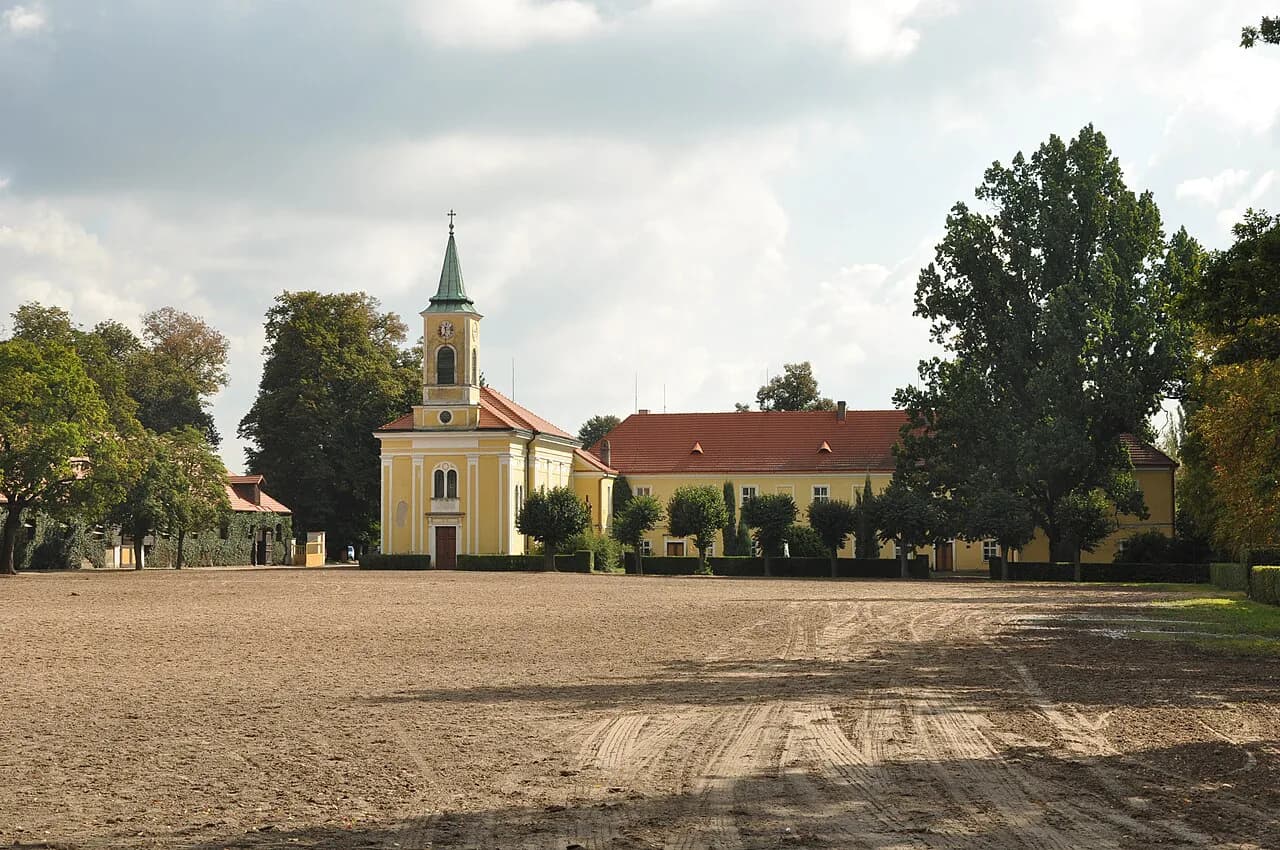
A visit to the National Stud of Kladruby nad Labem centers on the working farm and its horses, with the historic yards and stables as the setting. Because the stud is a functioning breeding operation, access is organized by the farm itself rather than left to free-range wandering, so plan around how the stud arranges its own visiting.
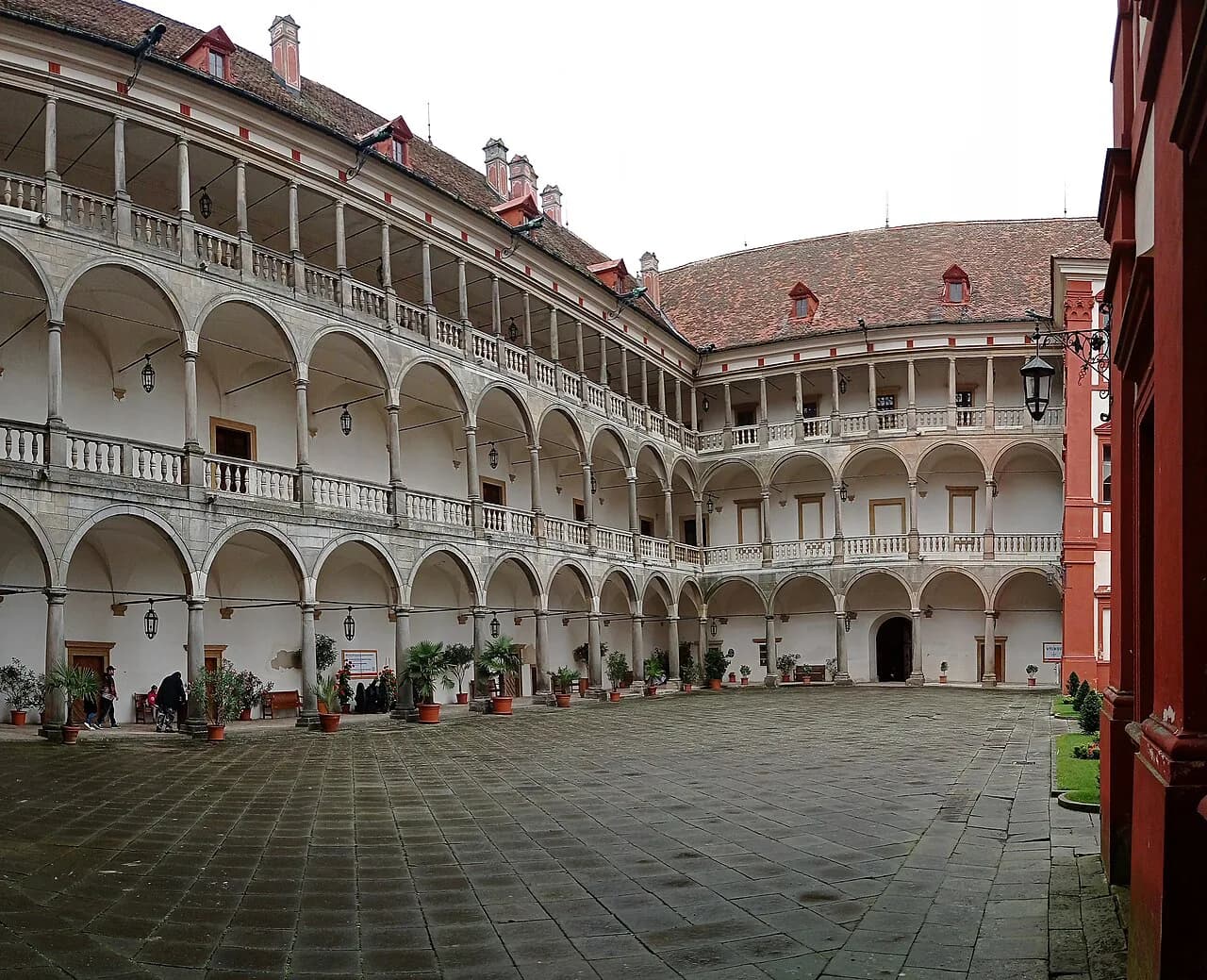
If you are combining the stud with other Czech sites on a longer trip, the Opocno Castle page covers a castle with a park, and Kunětice Mountain Castle covers the hilltop castle outside Pardubice. Both work as second stops on a broader itinerary. For a town stop with a central square, Pardubice is another practical pairing.
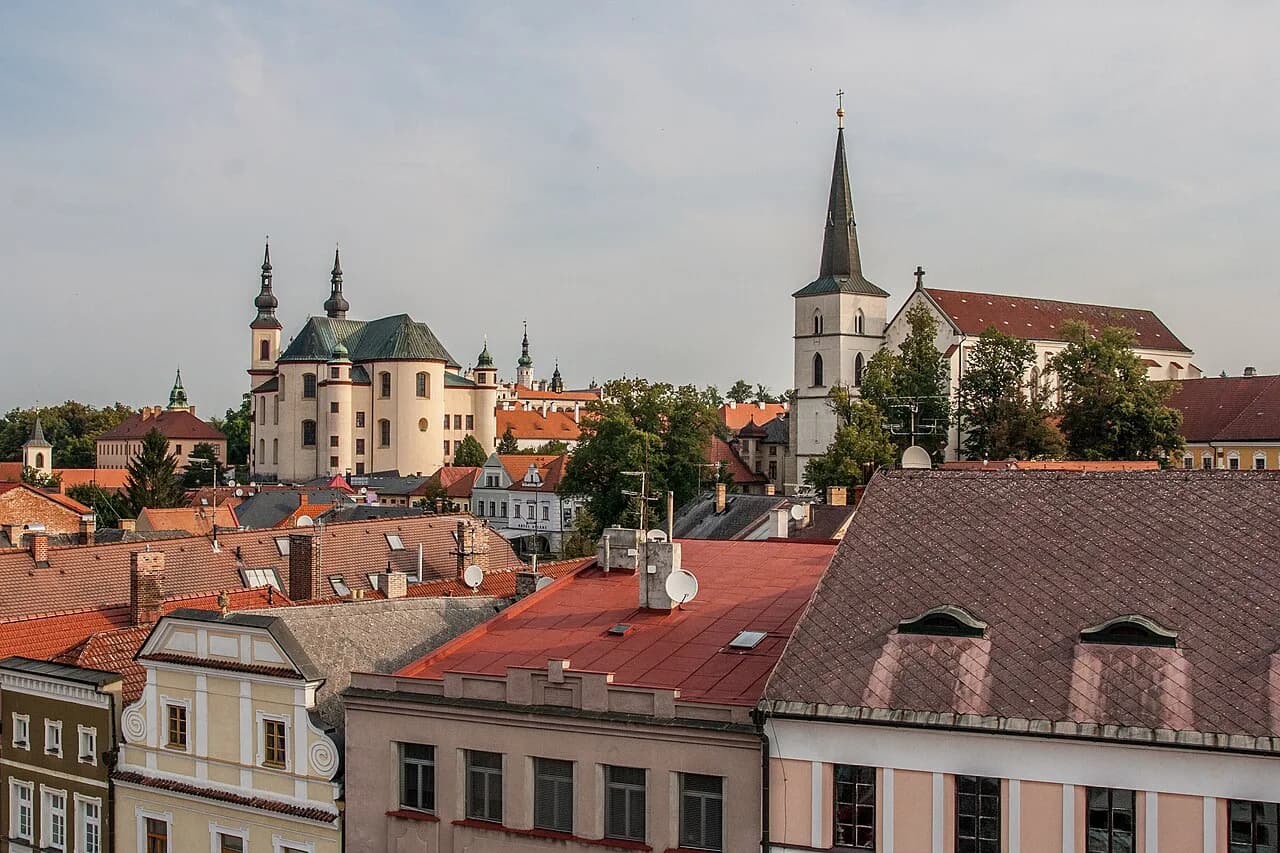
Travelers often add Litomyšl, a historic town with a chateau and a compact center, on a wider East Bohemia trip. Given the distances involved, it fits better as a stop in its own right than as a rushed afternoon add-on. Treat the Kladruby stud as the horse-history anchor of the trip and the eastern towns as the architectural bookends.
Practical constraints: season, tours and booking
The stud farm is a working breeding institution, so visiting depends on how the farm organizes public access, and that can change with the season and the breeding calendar. Plan around the stud's own published schedule rather than assuming the stables are open on a casual drop-in basis. Check current opening arrangements directly with the stud before you book transport.
Allow time for the drive and for a full visit, and do not try to squeeze the stud between two other stops on the same morning. Because the site is rural, plan your arrival against the stud's own visitor information rather than turning up unannounced. Build the day around one visit and keep the rest of the schedule flexible.
Is the stud farm worth the detour?
Yes, if you care about horses or about how a Habsburg court supply chain worked. The National Stud at Kladruby nad Labem is a rare chance to see a centuries-old breeding program in its original setting, and the Old Kladruber's story of ceremonial use and near-loss is compelling. Treat the farm as a working institution rather than a quick walk-up attraction, and plan around its own visiting arrangements.
Arrange your visit around the stud's own visitor information, sort out your own transport, and pair the stud with other Czech stops on a longer trip. Confirm current opening days, visit formats and ticket prices in CZK with the stud before you travel, since these change with the season. If you want a linked detour in the region, Kuks: The Baroque Hospital, Braun's Statues and How to See the Site is a natural second stop in East Bohemia.
Sources
Notes for your Czech trip
Optional updates to our Czech town guides.
You might also like
Continue reading
More guides you'll find useful