
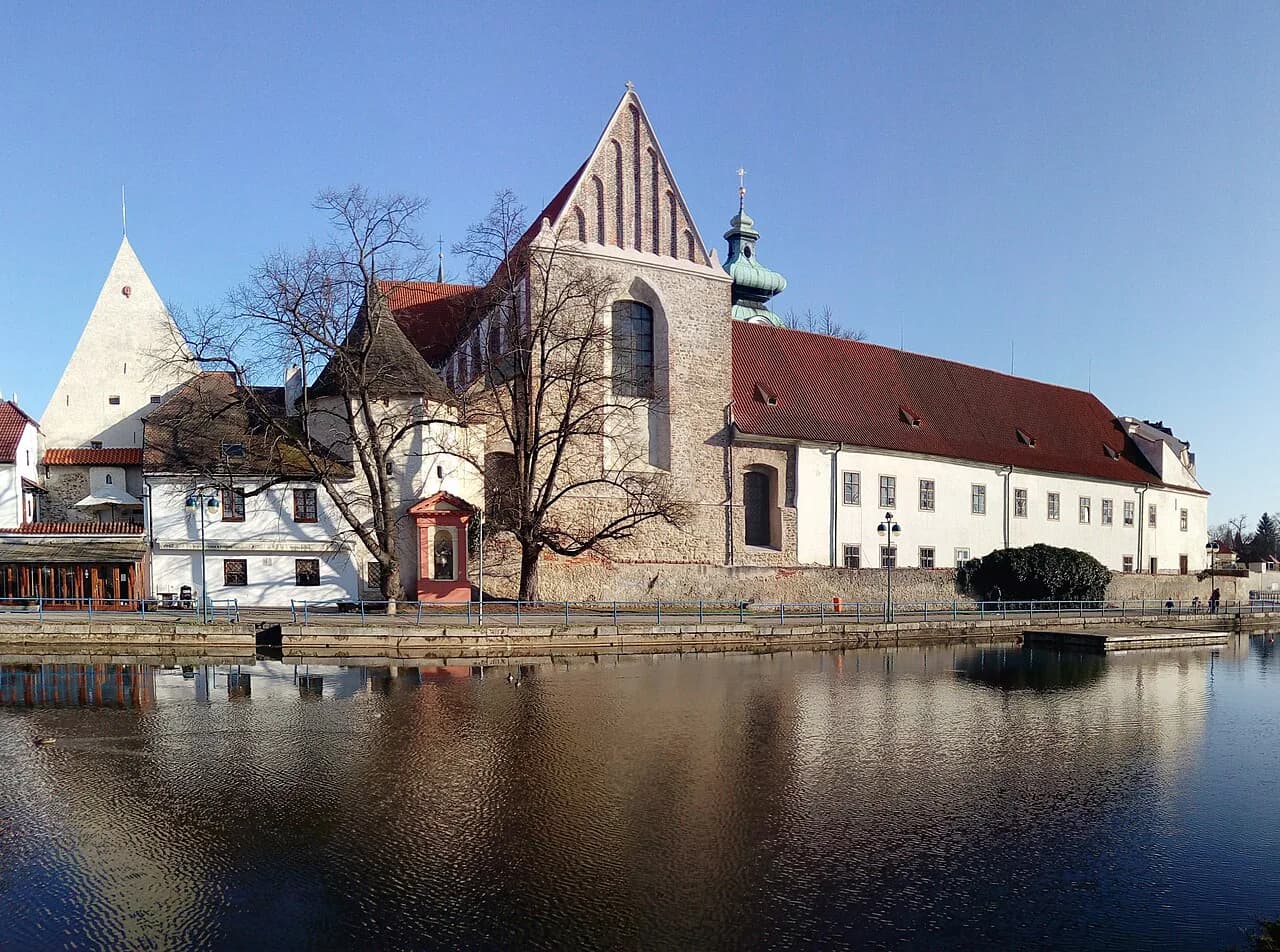
Dominican Monastery, České Budějovice: What to See and How Long to Allow

The Dominican Monastery is a short, focused stop in the old center of České Budějovice rather than a half-day sight, and it pairs naturally with the main square a few minutes away. Allow roughly half an hour to an hour for the monastery and its adjoining spaces. This guide covers where it sits, what the interior holds, and how to slot it into a walk through town; see also České Budějovice Attractions: 6 Visitor Guides for the wider picture.
What the Dominican Monastery is and where it sits
Piarist Square is where České Budějovice itself was founded in 1275 on a greenfield site, and the Dominican Monastery on that square is counted among the city's oldest buildings. Because it belongs to the town's founding footprint, the monastery is best understood as part of the historic core rather than a separate monument you travel out to see. It sits within easy walking distance of the main square in the old town.
The monastery is also described as the oldest Gothic construction in the city, which places its origins in the thirteenth century alongside the town's founding. Read this as a label for the building's age and style, not a promise of a Gothic interior throughout, since later rebuilding shaped much of what you see. For orientation, start from the main square, náměstí Přemysl Otakar II, and walk to Piarist Square; more on the town is in the České Budějovice guide.

What to see inside: frescoes, sculptures and decoration
The monastery holds valuable frescoes, sculptures and decoration, and these are the specific draws worth slowing down for. Treat the frescoes as the priority if your time is short, since painted cycles are the element most easily missed on a quick pass through a former monastic building. The adjoining spaces are also impressive and are part of the visit rather than an afterthought.
Visitors describe seeing some of the monastery rooms as well as the church, so expect a sequence of interiors rather than a single hall. Keep the building's monastic origin in mind as you move between spaces: the layout reflects a community's daily life, which is why the rooms read differently from a purpose-built museum.

The adjoining spaces and the Solnice opposite
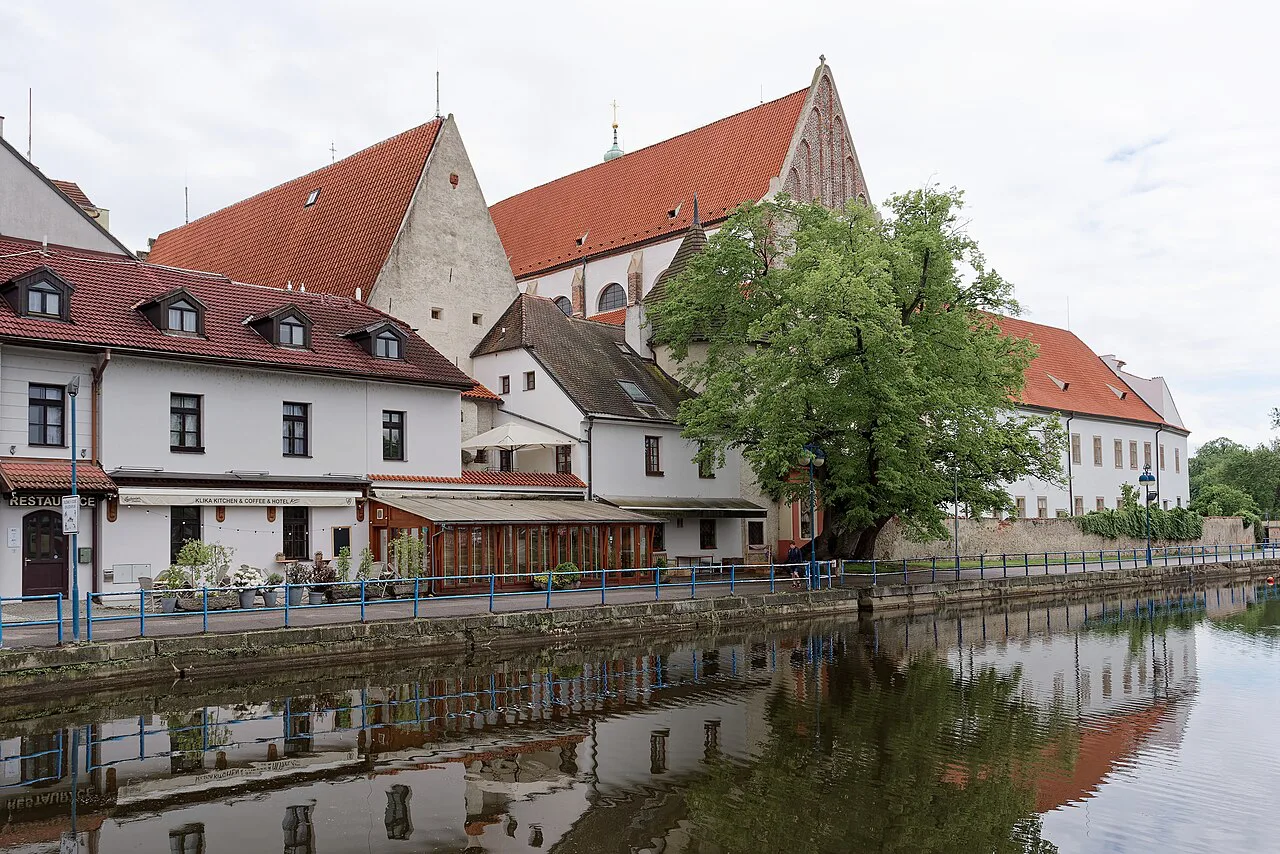
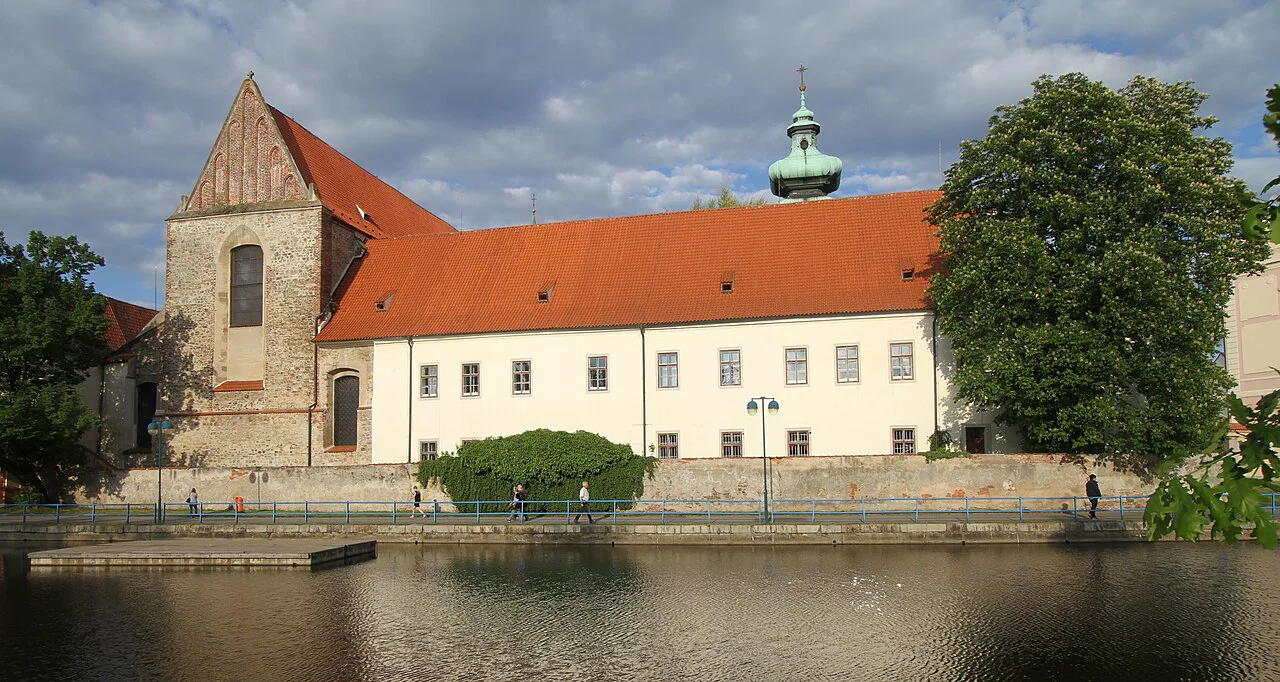
Beyond the monastery's own rooms, the neighboring spaces are worth a look and round out the visit. Across the way stands Solnice, the old salt house, whose roof is the fourth oldest in the country; treat it as a paired look from outside rather than a separate attraction. Together the two buildings give you a sense of how this corner of the old town was built up over centuries.
How much time to allow
Plan on about half an hour to an hour at the monastery, which is enough to take in the frescoes, sculpture and adjoining spaces without rushing. That range assumes you are visiting independently and reading as you go, not joining an organized program. If you only have twenty minutes, go straight to the painted interiors and skip the surrounding rooms.
Because the monastery is small enough to fit between other stops, build your old-town walk around it rather than making it the anchor of a day. A practical sequence is the main square first, the monastery second, then a climb up a tower for the view, which keeps travel time near zero.
Getting there on foot from the old town
The monastery is a walk of a few minutes from Přemysl Otakar II Square, so no tram or bus is needed once you are in the center. Use the square as your fixed point and ask for Piarist Square if the street signs are unclear, since the monastery fronts the square itself. Comfortable shoes matter more than transport planning here, because the surrounding lanes are cobbled.
If you arrive by train or bus from Prague or Vienna, walk from the station into the old town and head for the main square first; the monastery then comes as part of the same stroll. The compact center makes the whole stop easy to combine with a brewery visit or a museum in the same afternoon.
Nearby: Samson's Fountain and the Black Tower
On the main square, the Samson Fountain (Samsonova kašna), České Budějovice is the natural first stop after the monastery, and it anchors the open space at the center of the old town. It is a short walk from Piarist Square, so add it to the same loop rather than a separate outing.
The Black Tower (Černá věž), České Budějovice rises beside the square and gives you the elevated view that the monastery, being a low building, cannot. Pair the two: monastery interiors first, then the climb for a look back over the rooftops of the old center.
If you want to extend the walk, the South Bohemian Museum near the square covers the region's history and natural setting and suits a rainy hour. Keep it as an optional addition, since the monastery and square already fill a comfortable morning.
Where to confirm opening hours and entry details
Opening hours, entry arrangements and any guided access are set by the operator rather than fixed nationally, so check the monastery's own listing or the local tourist information office before you go. The same applies to whether the church and specific rooms are open on the day you visit. Build the monastery into your walk with some flexibility and confirm details that morning.
Make the Monastery Part of Your Old-Town Loop
The Dominican Monastery earns its place in a České Budějovice walk as a compact, genuinely old building with painted interiors, best seen in under an hour before or after the main square. Go for the frescoes and sculpture, glance across at Solnice and its early roof, then finish on the square at the Samson Fountain or up the Black Tower. Confirm the day's opening details first, and the stop fits neatly into a half day in the old center.
Explore more České Budějovice guides
Frequently Asked Questions
In which country is České Budějovice?
České Budějovice is in the Czech Republic, in the South Bohemian region. It is the city whose founding in 1275 is tied to Piarist Square, where the Dominican Monastery stands.
Is the Dominican Monastery a working monastery today?
The site is visited as a historic Dominican monastic building in the old town, known for its frescoes, sculptures and decoration and for its adjoining spaces. Check the current operator's details before you go to confirm which interiors and the church are open on the day of your visit.