Olomouc History: A Walk Through the City's Past, Building by Building
Olomouc history for visitors: the Holy Trinity Column, the town hall clock, the Baroque fountains, and the churches that carry the city's past.
On this page
Olomouc history is best read outdoors, because the city's main periods survive as squares, fountains, columns, and church walls rather than as a single museum. The city holds the second-largest monument reserve in the Czech Republic after Prague, and it is a UNESCO World Heritage Site thanks to the Holy Trinity Column, listed in 2000. This walk links each period to a specific building you can find, starting on Horní náměstí and ending near Wenceslaus Square.
Expect a compact route through the center rather than a full day of interiors. Several sights are churches and chapels with limited access, so part of the walk is an exterior one, and the rewarding interiors are the ones you plan around. The sequence below also works as an outline for the things to do in Olomouc beyond the headline monuments.
A Former Center of Moravia
Olomouc served for centuries as the natural center of Moravia, drawing artists, scholars, and merchants on the strength of its location, its old university, and its spiritual and craft traditions. Today it is the administrative center of the Olomouc Region in the Haná region of Moravia, in the eastern part of the Czech Republic. That framing matters for a visitor: this is a working regional city with a monumental core, not a museum town.
The monument reserve gives the old center its coherence, and the density of surviving buildings is why a single afternoon on foot covers so much ground. If you want the wider set of individual sights before you commit to a route, start with the Olomouc Attractions guide and pick the ones that match your interests.
Start on the Upper Square (Horní náměstí)
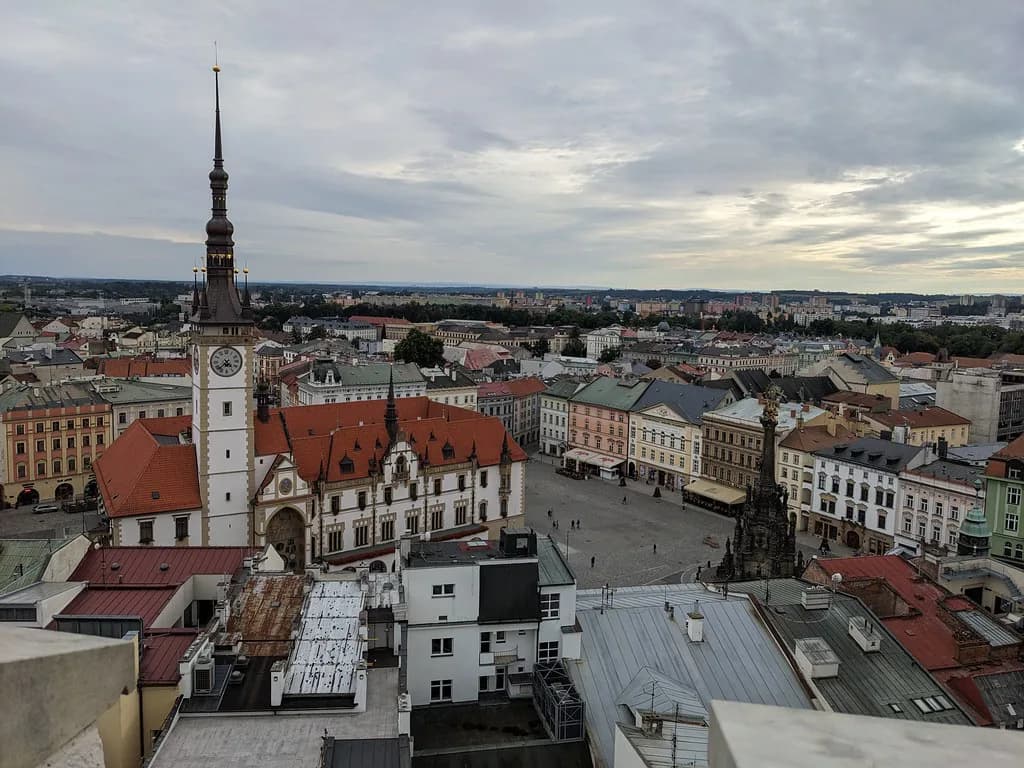
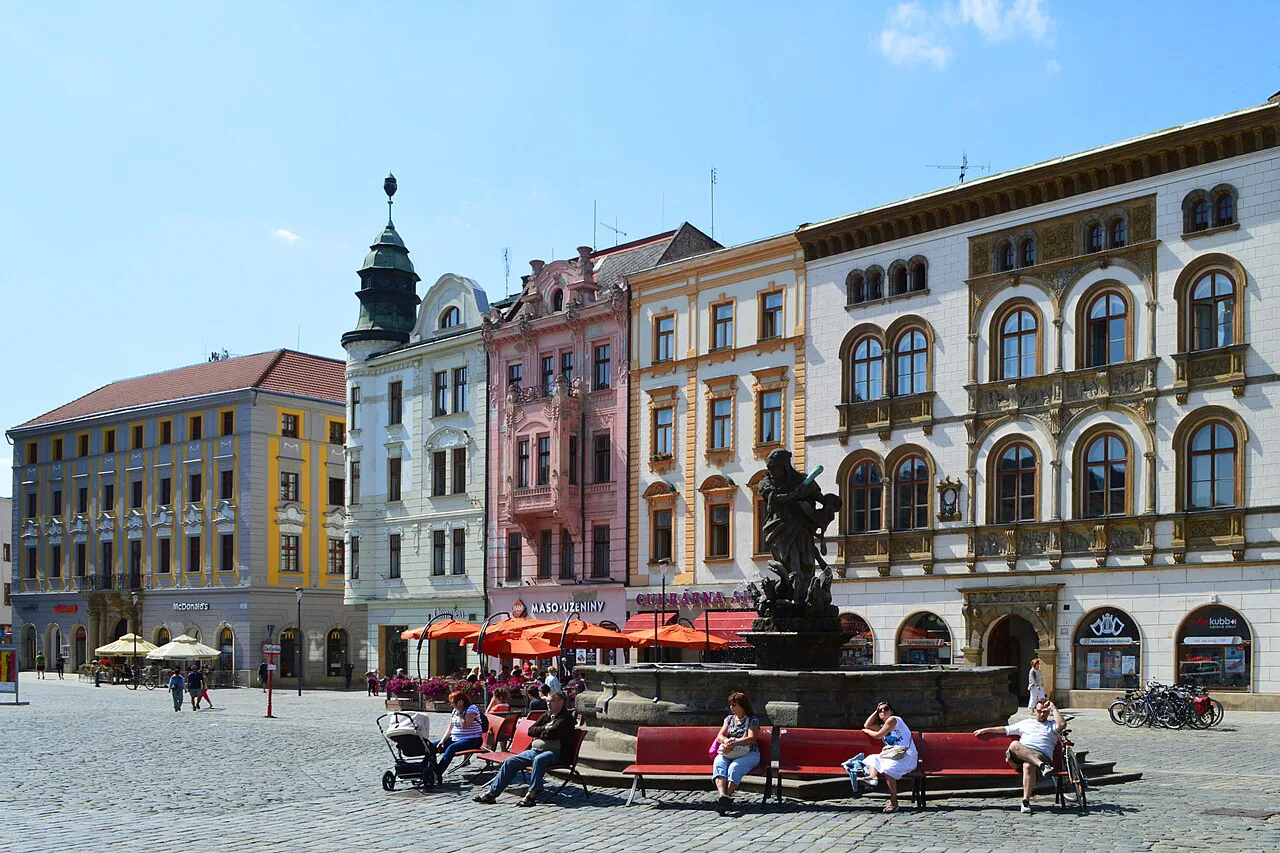
The Town Hall dominates the Upper Square, with a bay window from St. Jerome Chapel projecting from its southern facade and a Renaissance loggia on the eastern side. The building holds an exhibition on the town's history, the astronomical clock, and the Town Hall itself, and the exhibitions are freely accessible during the magistrate's working hours and on the guided tour that also lets you climb the tower. That tour is the practical way to see the interior and get above the square in one stop.
The astronomical clock is the square's most photographed object, and its current appearance reflects socialist realism, based on a design by K. Svolinský. It runs every day beginning at 12pm, so time your arrival around midday if the mechanism is the reason you came. Otherwise the facade and the surrounding burgher houses are the draw.
The Holy Trinity Column
The Holy Trinity Column was built from 1716 to 1754, initiated by Václav Render, and stands 32 meters tall. It was inscribed on the UNESCO World Cultural Heritage list in 2000, which is the reason the city's monument reserve carries international weight. Walk around the base before you move on: the sculpture program is dense and rewards a slow circuit.
A chapel sits inside the bottom section of the column, and it is seasonally open with a guide available Tuesdays to Saturdays from 9am to 5pm during the summer season. That window is narrow enough to plan around, and outside it the column is an exterior monument only. Treat the chapel as a bonus rather than the core of your visit.
The Baroque Fountains
Olomouc's fountains turn the squares into an open-air sculpture gallery, and each has a date worth noting. The Hercules Fountain from 1687 carries the ancient hero, the Neptune Fountain from 1683 shows the Roman god of the sea, the Mercury Fountain from 1727 is considered the most artistically accomplished of the Baroque set, and the Jupiter Fountain from 1735 is the last of them. Reading the dates as you go gives you a rough chronology of the city's Baroque rebuilding.
Two more complete the group. The Caesar Fountain is the most popular and artistically distinctive, with sculptures presenting the town's great founder as Gaius Julius Caesar, and the Arion Fountain from 2002 was built by the Olomouc-born sculptor Ivan Theimer, completing the group of ancient-mythology fountains with a modern hand. That modern fountain is the clearest signal that the city keeps adding layers rather than freezing itself in the Baroque.
The Lower Square (Dolní náměstí)
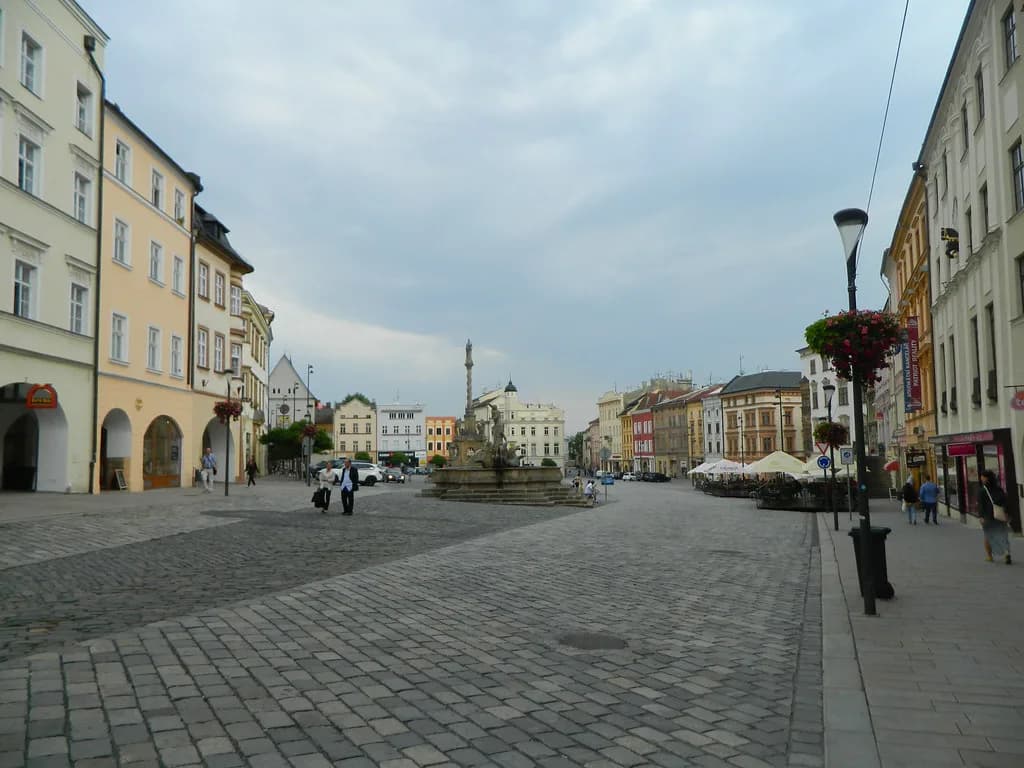
The Marian Column dominates the Lower Square, erected after the plague epidemic of 1713 to 1715 and initiated by the stonemason Václav Render, the same figure behind the Holy Trinity Column. Seeing both columns in one walk shows how plague and faith shaped the city's public space in the same decades. The Lower Square is also quieter than the Upper Square, which makes it a better place to stop and look up.
St. Maurice Church
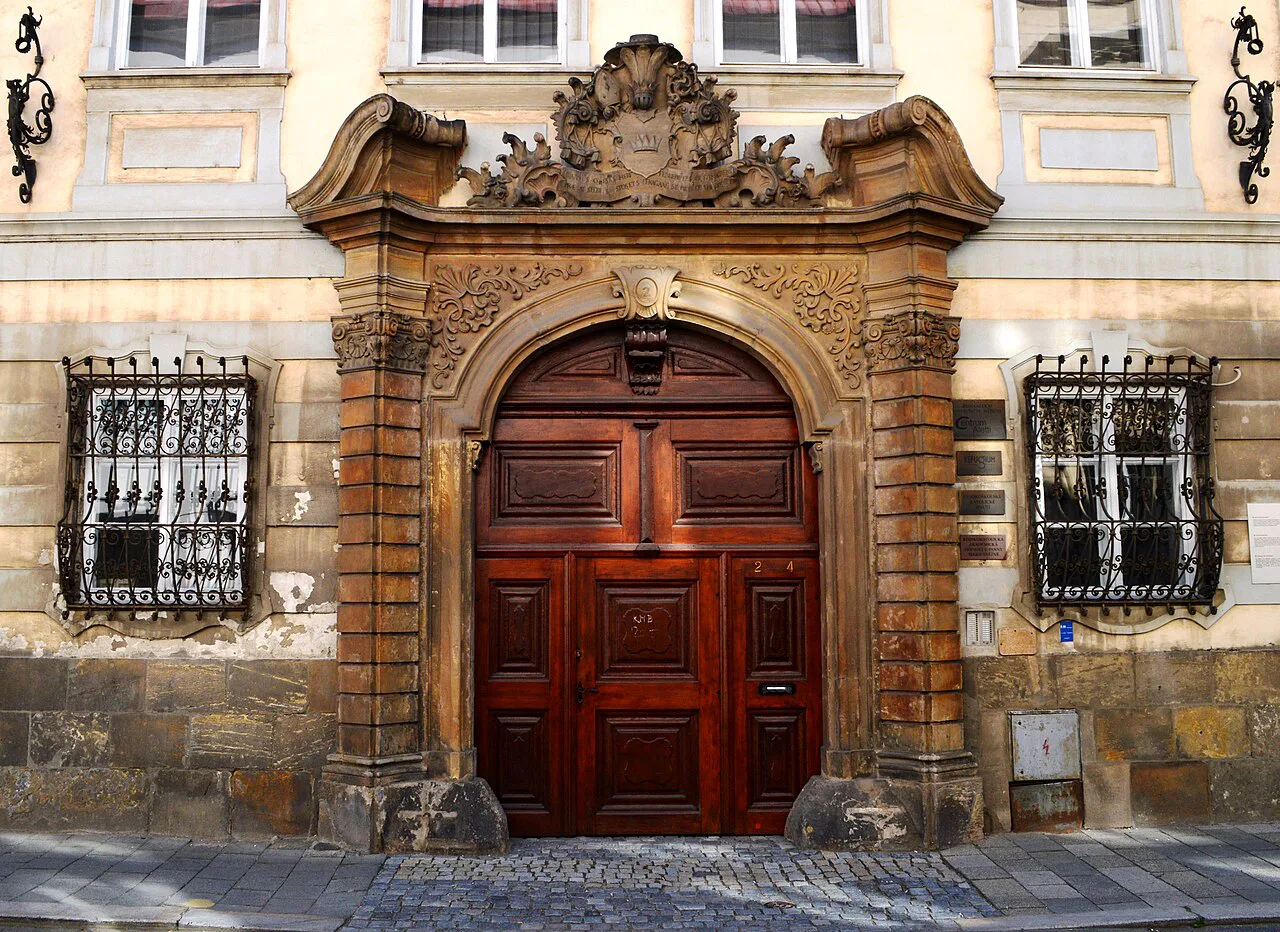
St. Maurice Church is one of the most valuable Late-Gothic buildings in Moravia, and its southern wall holds a Late-Gothic sculptural group of Christ on the Mount of Olives from the mid-15th century. The organ dates to 1745 and was made by Michael Engler, a master from Vratislav. Together with the fountains, the church shows the medieval town underneath the Baroque overlay.
Toward Wenceslaus Square
St. Michael Church is first mentioned in 1260, and the Baroque building you see was built by G. P. Tencalla between 1676 and 1699. The accessible areas include the cloister, St. Alexius Chapel, the Paradisiacal Yard with a children's play area, the cellar vault with an underground lake and hermitage, and the tower with a parish museum. That combination of cloister, cellar, and tower makes this the most rewarding interior stop on the route.
The St. John Sarkander Chapel stands on the site of a town jail where the priest John Sarkander was interrogated and tortured to death in 1620; he was canonized by Pope John Paul II in 1995. The Neo-Baroque chapel was rebuilt to its current appearance by the architect E. Sochor. It is a small, sober stop that ties the city's religious history to a specific act of violence.
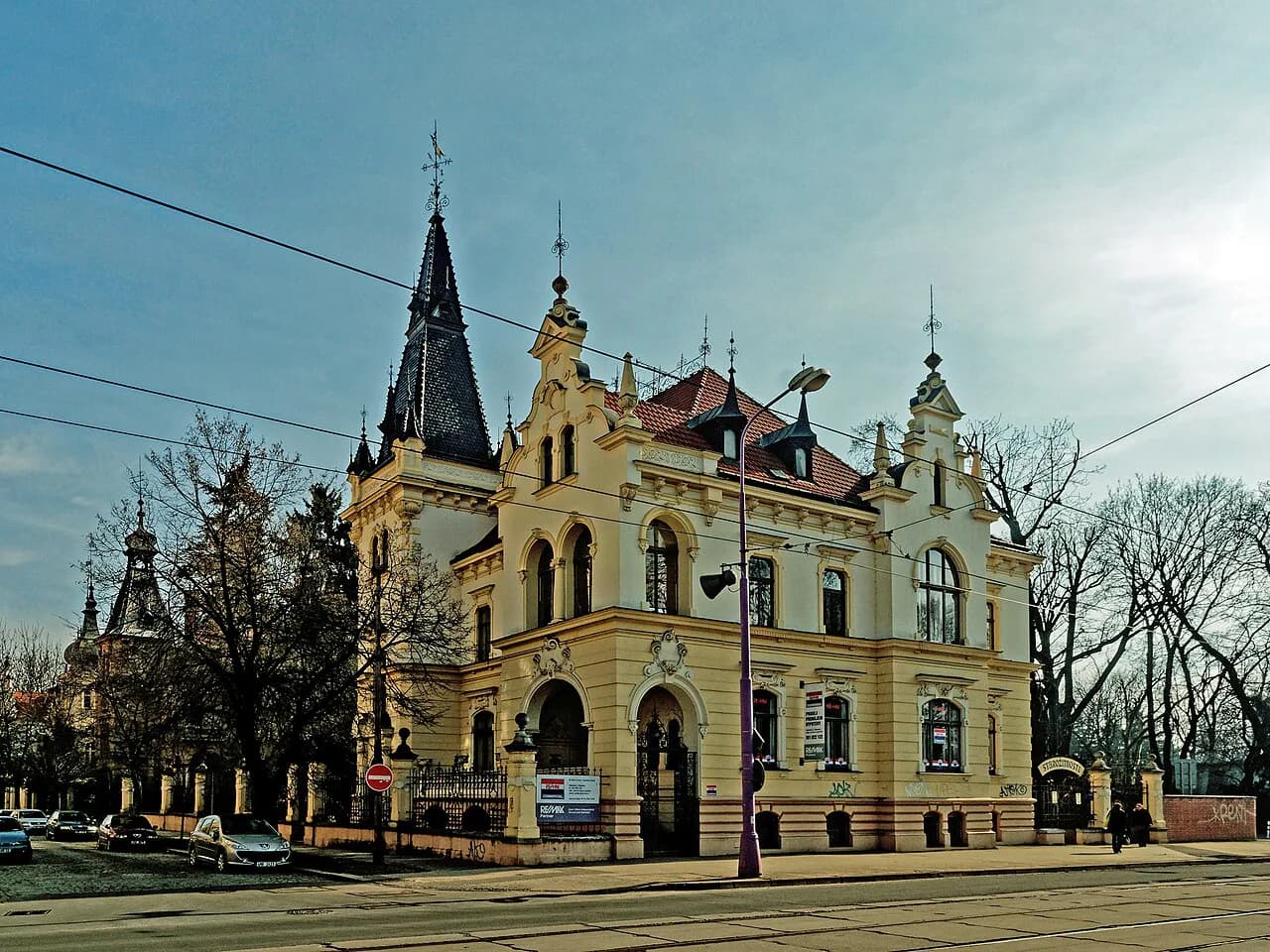
The same stretch brings you past the Jesuit College, Our Lady of the Snows Church, and Villa Primavesi, which fill out the city's later layers between the churches and Wenceslaus Square. If you prefer a plotted line rather than a list, follow a walking tour that connects these stops in order.
The University and the City's Cultural Role
The university was founded in 1573 as part of an effort to reestablish Roman Catholicism in the country. That origin explains why education, faith, and civic power sit so close together in the old center, with the Jesuit College and the churches only minutes from the Town Hall. For a visitor, the university's presence is felt in the city's everyday rhythm more than in any single monument.
Olomouc's cultural calendar has run for decades, from the Flora Olomouc gardening exhibition, more than forty years old, to the Autumn Festival of Sacred Music and the International Organ Festival. These are the modern continuation of the city's role as a regional center, and they explain why the squares feel used rather than preserved.
Reading the 20th Century in the Clock
The astronomical clock's socialist-realist face is the city's 20th-century layer in one object: a medieval and early modern symbol rebuilt to serve a later ideology. Most history summaries skip it, but standing in front of the clock with that in mind changes how you see the square. Pair it with the Town Hall exhibition for the fuller story of the building.
What to Prioritize If History Is Your Reason for Coming
Build the day around the Upper Square, the Holy Trinity Column, and St. Michael Church, then let the fountains and the Lower Square fill the gaps between them. The exterior route is open to walk at any hour, but do not plan your day around the column chapel unless you are there Tuesdays to Saturdays in the summer season. The trade-off is simple: the exteriors are always available, the interiors depend on the season and the hour.
If you want to push further into the region afterward, Litovel is a Haná brewery town north of the city and a natural next stop on the same trip. Within Olomouc, use the old town guide to fill in the streets between the squares.
Which Buildings Should You Put First?
Put the Upper Square, the Holy Trinity Column, and St. Michael Church at the top of your list, because each carries a different period and each is genuinely worth standing in front of. The fountains and the Lower Square reward a slow walk between them rather than a separate trip.
Confirm the seasonal chapel hours and the daily clock timing before you set out, since both shape how you sequence the day, and plan the interiors around the seasons rather than the other way around. The exteriors need no planning at all.
Explore more Olomouc guides
- Litovel: A Haná Brewery Town on the Morava
- Museums in Olomouc
- Olomouc Fountains
- Přerov: A Moravian Town on the Bečva, Beyond Olomouc
- Svatý Kopeček in Olomouc
- Where to Eat in Olomouc
- Olomouc Cathedral (St Wenceslas Cathedral)
- Olomouc Cheese (Tvarůžky)
- Olomouc Map
- Olomouc Sightseeing Tours
- Sovinec Castle
Frequently Asked Questions
Which country is Olomouc in?
Olomouc is in the Czech Republic, in the Moravia region, and it is the administrative center of the Olomouc Region. It is not the national capital; Prague is.
Was Olomouc ever a capital?
Olomouc was long the natural center of Moravia and one of the most important cities of the Czech state, but it is not a capital of the Czech Republic today. It functions as the administrative center of its region.
Sources
Notes for your Czech trip
Optional updates to our Czech town guides.
You might also like
Continue reading
More guides you'll find useful