Olomouc Fountains: A Walking Guide to Seven Baroque Fountains
Olomouc's baroque fountains—Arion, Caesar, Hercules, Jupiter, Mercury, Neptune and the Tritons—reward a short walk through the old town. Here is how to find them.
On this page
Olomouc's baroque fountains are an easy sight in the city: seven of them, clustered inside the compact old town so that one loop on foot can link them all. They sit alongside the square that anchors the city's UNESCO listing, which makes them a natural first walk before any paid interior. This guide names each fountain once, groups what the figures have in common, and sets an order that works whether you have an hour or an afternoon.
The appeal is the set rather than any single basin. Six of the figures come from Roman myth and one from Greek sea legend, and together they read as a civic statement carved in stone across the historic center. Treat them as sculpture you happen upon between churches, palaces and the town hall rather than as a ticketed attraction with a gate.
What the Olomouc fountains are and why they matter
Olomouc's fountains are baroque stone monuments crowned with figures, and the city's tourism portal treats them as part of the old town's core sightseeing alongside the column, the town hall, the cathedral and the archbishop's palace. They are outdoor public sculpture, so you meet them while crossing squares rather than booking a slot. That is also why they suit a traveler who wants substance without paying for every interior.
Their subject matter is worth a moment. Most carry Roman gods or heroes, while the marine pieces draw on sea deities and Tritons, which gives the group a shared mythological program instead of a random scatter of decorated basins. Knowing that, you start reading them as a sequence rather than seven lookalikes, and the walk gains a thread.
The fountains also function as wayfinding. Because they stand in the open and are spread through the historic center, they mark the transitions between the main square, the surrounding lanes and the streets that lead toward the cathedral quarter. Use them as checkpoints and you get a free skeleton for a self-guided circuit.
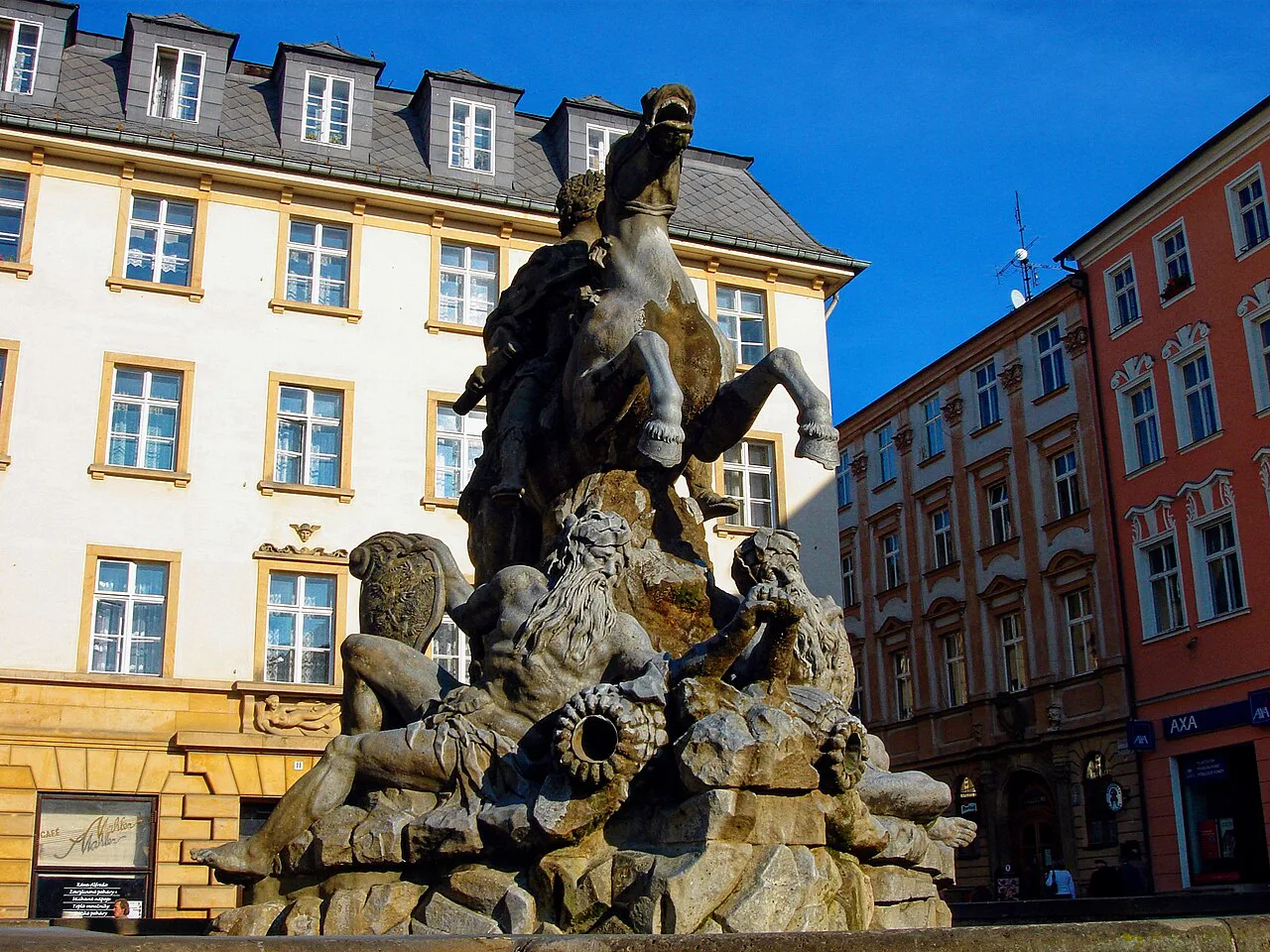
The seven fountains you can see: Arion, Caesar, Hercules, Jupiter, Mercury, Neptune and the Tritons
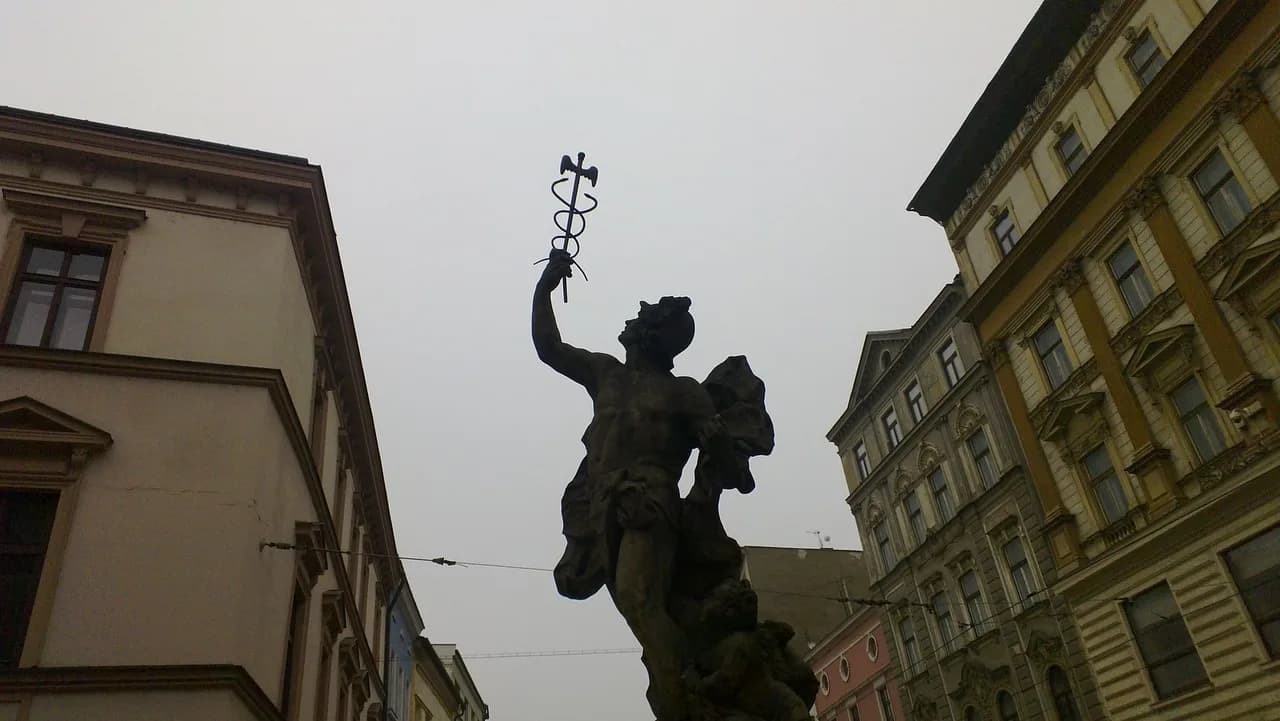
The set is Arion's Fountain, Caesar's Fountain, the Hercules Fountain, the Jupiter Fountain, the Mercury Fountain, the Neptune Fountain and the Tritons' Fountain. That makes seven in total, and the Tritons' Fountain belongs to the same group rather than counting as an extra. Keep the number in mind, because it is easy to tick off five and assume you have finished.
The names alone hint at range: Arion, Caesar, Hercules, Jupiter, Mercury and Neptune each summon a different figure from classical story, while the Tritons' Fountain adds a marine note. Rather than treat them as seven lookalike basins, read the group as a set of named characters, so that each one you meet adds to the picture instead of repeating it.
Because the group is named for distinct figures, a little reading before you go pays off more than a guided explanation on the spot. A short note on who each name belonged to turns a pleasant square into a puzzle you can solve on your own. That is the strongest argument for walking the set in one go instead of stumbling on one fountain by chance.
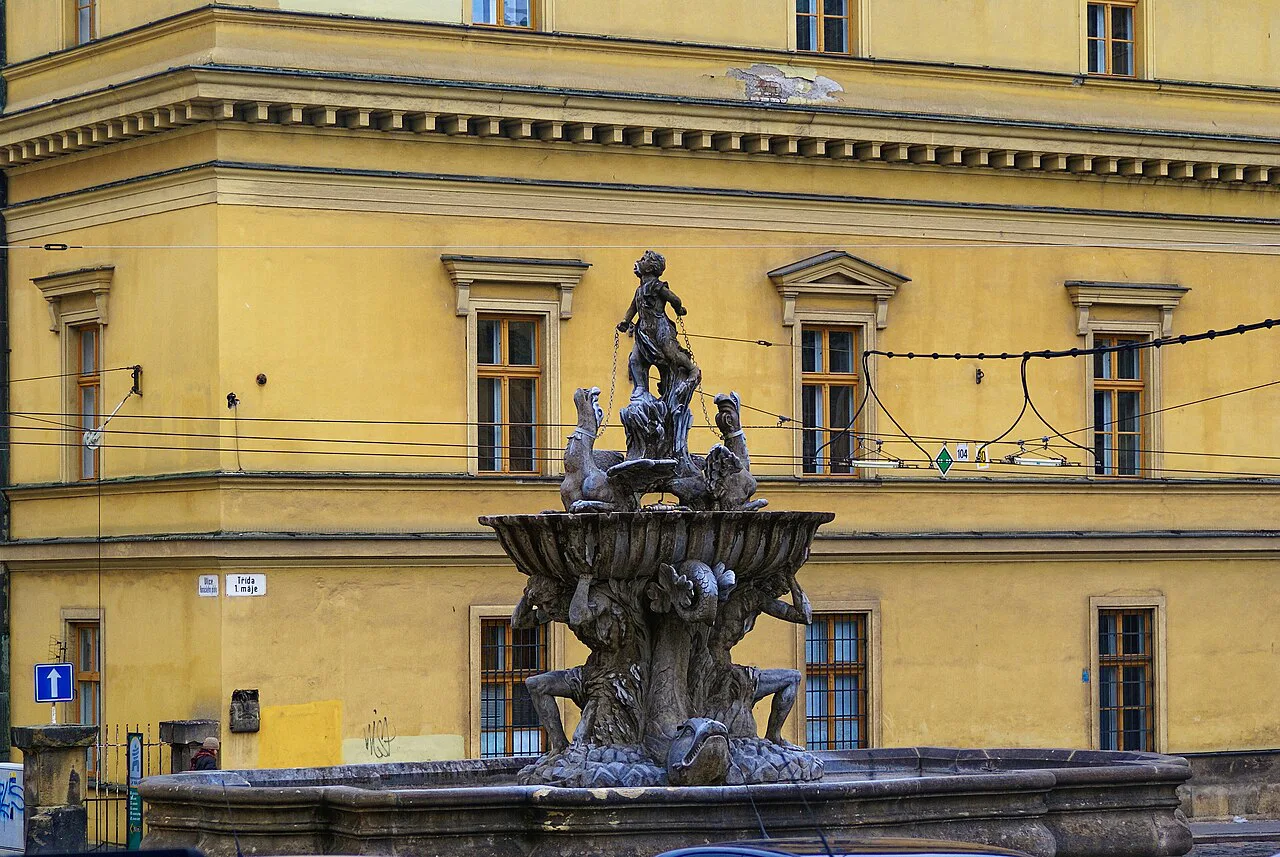
Where the fountains stand and how the old town links them
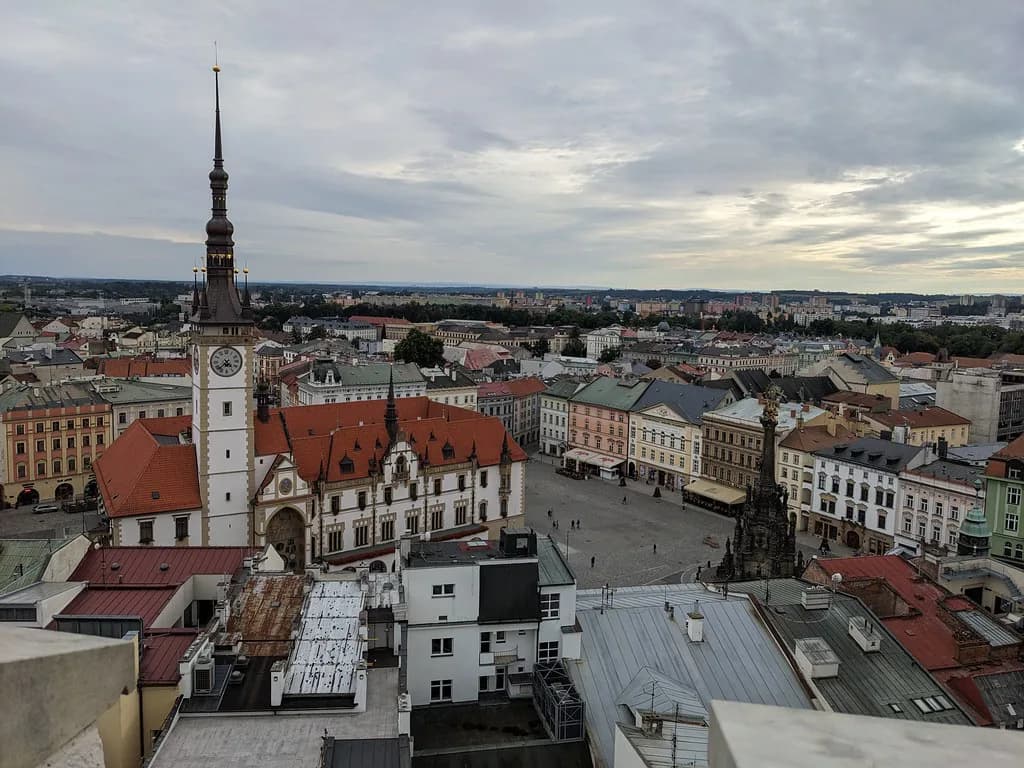
The fountains sit within the historic center, close enough that the old town itself is the map. Rather than chase street addresses, orient yourself by the landmarks the city promotes — the town hall, the Holy Trinity Column and the cathedral — and let the fountains appear between them as you cross the squares and lanes.
Olomouc's tourism portal lists the town hall, St. Wenceslas Cathedral and the archbishop's palace among the city's headline sights, which tells you the geography you are working with: the civic square at the center and the church quarter a short walk away. Build the fountain route around those anchors and you will pass most of the set without detours.
The fountains are outdoor monuments in public space, so there is no ticket desk or tour schedule to work around. The experience depends on the hour: midday brings the square's busiest foot traffic, while early morning gives you the stonework with far fewer people in the frame. If photography matters, start before the shops and cafés fill up.
A walking order that strings the fountains together with the square
Start on the main square, where the town hall and the Holy Trinity Column give you a fixed point, and treat it as fountain one. From the square, work outward through the adjacent lanes in a loop, picking up the remaining figure fountains as you pass, then close the circuit back at the column. This order keeps you oriented and avoids doubling back.
Fold the church quarter into the middle of the loop rather than the end, so the walk has a change of scale between civic squares and ecclesiastical streets. The city's own sightseeing list puts the cathedral and the archbishop's palace in that quarter, which makes it a natural midpoint between fountain clusters.
Give the circuit a relaxed hour or two if you want to read the figures and take photographs; a brisk walk covers the ground but skips the detail. The trade-off is simple: the fountains are outdoor sculpture and reward attention, so a slower pace buys you more than a longer list. Slot the walk before or after a paid interior instead of treating it as a competitor.
How to see them without a guide, and what a guided city tour adds
You do not need a guide for the fountains. They are outdoor monuments in public space, so a printed or downloaded walking order is enough, and the city publishes guided city tours and a mobile guided-tour option if you want commentary. The tours are the paid product; the fountains themselves are simply part of the streetscape.
A guided city tour earns its place when you want the interiors and the stories together — the town hall, the cathedral, the archbishop's palace — rather than the sculpture alone. The city's information center handles reservations and advance sales for those programs, so that is where to sort out timing before you commit a day to it.
The city also promotes the Olomouc region Card as a way to get more for less across participating sights, so check what it covers before buying if you plan several paid interiors. Keep the fountain walk separate from that decision: it is a free circuit either way, and it works well as the connective tissue between ticketed stops.
Making the fountains part of a route from Prague
Olomouc sits on a main rail corridor linking Prague with the eastern part of the country, which makes it a straightforward stop rather than a detour, and the fountains sit within walking distance of the center once you arrive. Check current train times and fares before you fix a schedule, since services and prices change by season and operator. Build the fountain loop into the first hour after arrival while you orient yourself.
If you are touring Moravia by car, the fountains make a low-cost anchor for a half day in the city before moving on. Towns north of Olomouc, such as Litovel, work as an add-on for travelers following the Morava corridor, and the fountain walk leaves the rest of the day free for a paid interior or a museum.
Which fountain walk fits your day
Choose the short loop around the main square if you have an hour between trains, and the fuller circuit through the church quarter if you have half a day and want the town hall, cathedral and palace interiors too. Either way, the fountains set the shape of the old town for you. Start at the square and let the figures lead.
If a paid interior is the priority, book it first and walk the fountains around it, since the outdoor route needs no reservation. Confirm current tour times, ticket prices and card coverage with the information center before you go.
Explore more Olomouc guides
Frequently Asked Questions
In which country is Olomouc located?
Olomouc is in the Czech Republic, in the eastern region of Moravia, on the main rail corridor from Prague.
Are the Olomouc fountains free to see?
Yes. The fountains are outdoor monuments in public space in the historic center, so you can walk between them without a ticket or a booked time slot.
How many baroque fountains does Olomouc have?
The city's fountain group numbers seven: Arion, Caesar, Hercules, Jupiter, Mercury, Neptune and the Tritons. The Tritons' Fountain is part of the set, not an additional eighth.
Sources
Notes for your Czech trip
Optional updates to our Czech town guides.
You might also like
Continue reading
More guides you'll find useful