Cheb, Czech Republic: Castle, Town Square and What to See
Cheb pairs a rare Staufen imperial castle with a walkable old town. See what to visit, how long it needs, and how it fits a Prague or Vienna route.
On this page
Cheb earns a stop of roughly half a day, and the reason is specific: its castle is the only Staufen imperial palace on Czech territory, with a double Romanesque-Gothic chapel that survives almost intact. The old town around it is small enough to walk in an hour or two, so the castle and the square together make a sensible pause on the road toward Bavaria or the spa towns. This guide covers what to see, how the center is laid out, how long it needs, and how to fit it into a route.
What Cheb is and why it earns a stop outside Prague
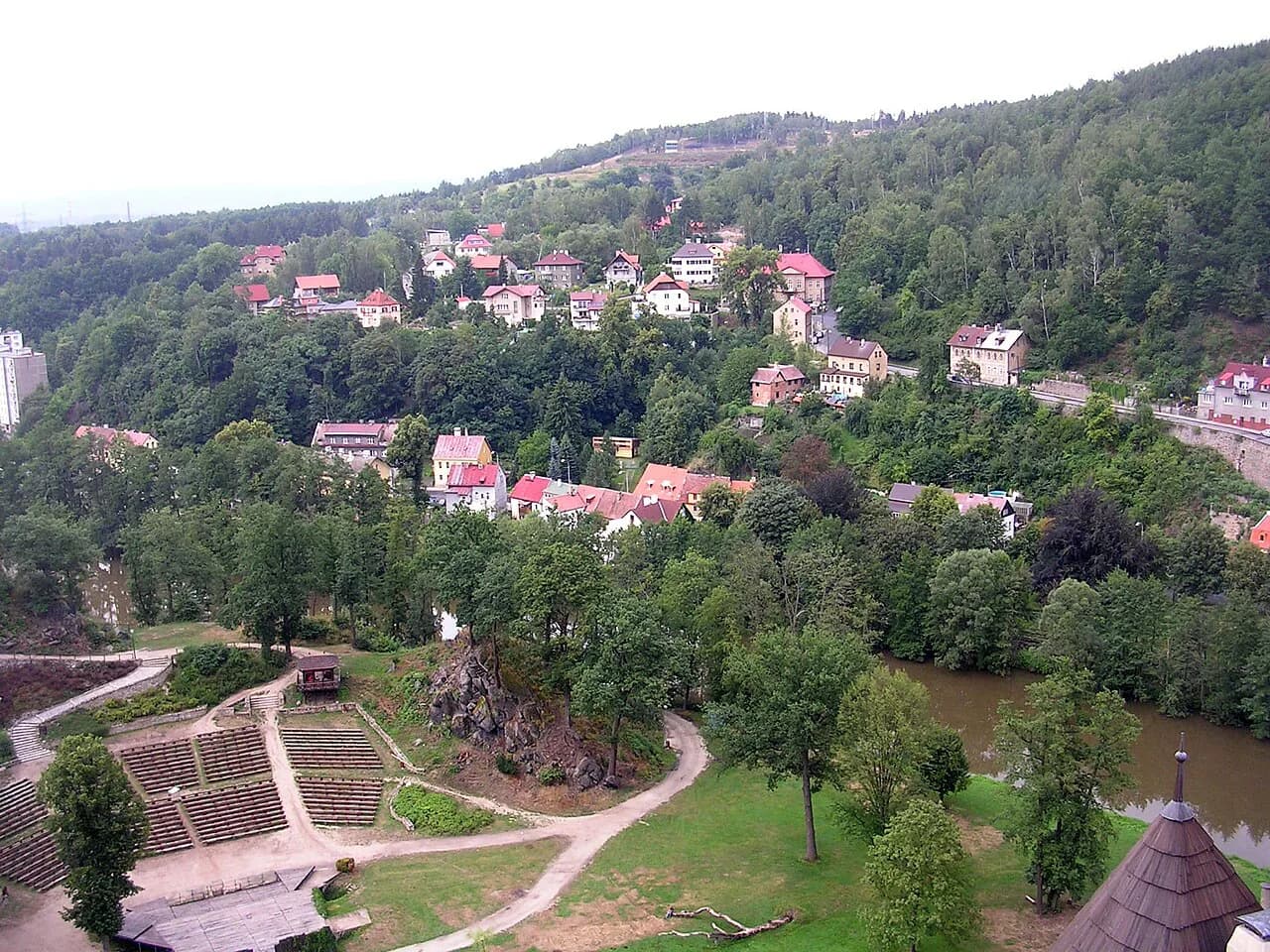
Cheb sits in the far west of the Czech Republic, close to the German border and the Ohře River, which puts it on the natural corridor between Prague, Karlovy Vary and Bavaria. Its historic core is compact rather than grand: a historic square, a cluster of old houses, churches and the castle on a promontory above the river. What lifts it above a generic border town is the castle, which the site presents as unique among Czech castles for its Staufen imperial palace and its preserved two-story chapel.
Travelers often pass through Cheb on the way to the spa triangle rather than treating it as a destination, and that is the right frame. Pair it with Mariánské Lázně (Marienbad) or Františkovy Lázně (Franzensbad) for an overnight circuit, or use it as a lunch-and-castle stop on a longer drive.
Cheb Castle: the imperial palace, the Black Tower and the double chapel
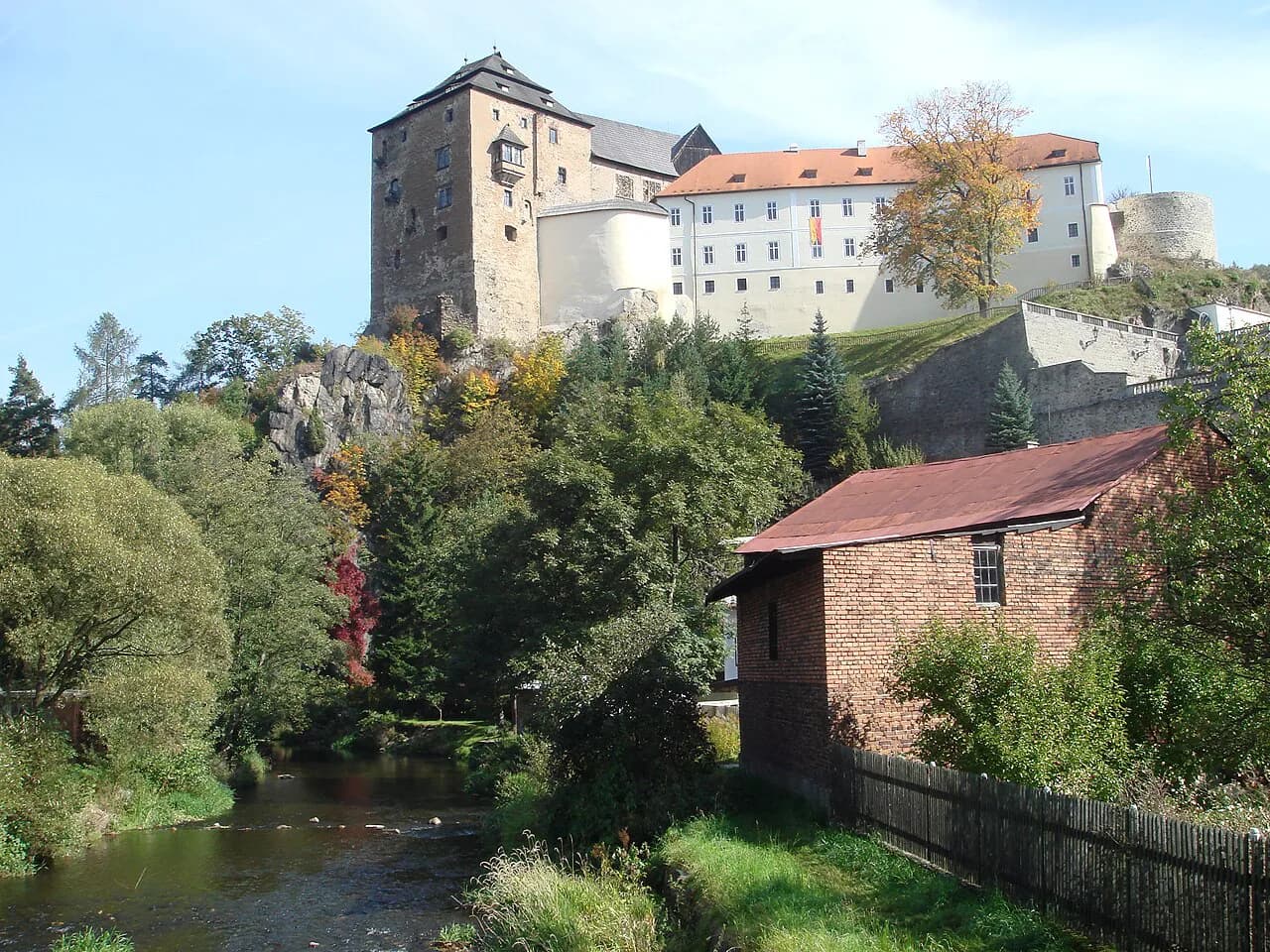
The castle began in the early twelfth century, and at the end of that century Friedrich Barbarossa had the original building rebuilt as an imperial palace, the only example of this castle type in the country. What you see today is a torso of the former palace, the massive defensive Black Tower, and above all the unusual double chapel of St. Martin, Erhard and Ursula, described as a treasure of Staufen Gothic architecture.
Sort the visit by those three parts. The palace torso is a shell that rewards a slow look at the masonry and a read of the site's history panels; the Black Tower is the vertical landmark of the whole town; the chapel is the piece that justifies the detour, because a two-level Romanesque-Gothic chapel with this level of preservation is rare anywhere in Europe.
Castle tours, hours and entry
The castle publishes its opening hours by season: in January through March and again in November and December it opens only on weekends, from 10:00 to 15:00, while the main season runs Tuesday to Sunday with a later closing. It also posts temporary closures and hour changes on its news page, so check the calendar for your dates before you build a day around it. Entry prices appear on the castle's own visitor information rather than quoted here, since they change.
Treat the castle as a place to visit with the site's own visitor information in hand rather than as a walk-up ruin, and check at the ticket office how the interiors are shown that day. Standard opening is Tuesday through Sunday in the main season, which makes Monday a poor arrival day for the castle itself, though the square and churches remain open to walk.
Wallenstein and why the castle matters to history travelers
Cheb's castle is where the murder of Albrecht von Wallenstein's adjutants took place in 1634, an event the castle presents as one of the significant historical episodes tied to the site. For readers who follow the Thirty Years' War, that connection turns a provincial border castle into a place with a story attached to a name they already know. The castle also lists a royal wedding among the events that took place within its walls.
The old town center: náměstí Krále Jiřího z Poděbrad and the Špalíček
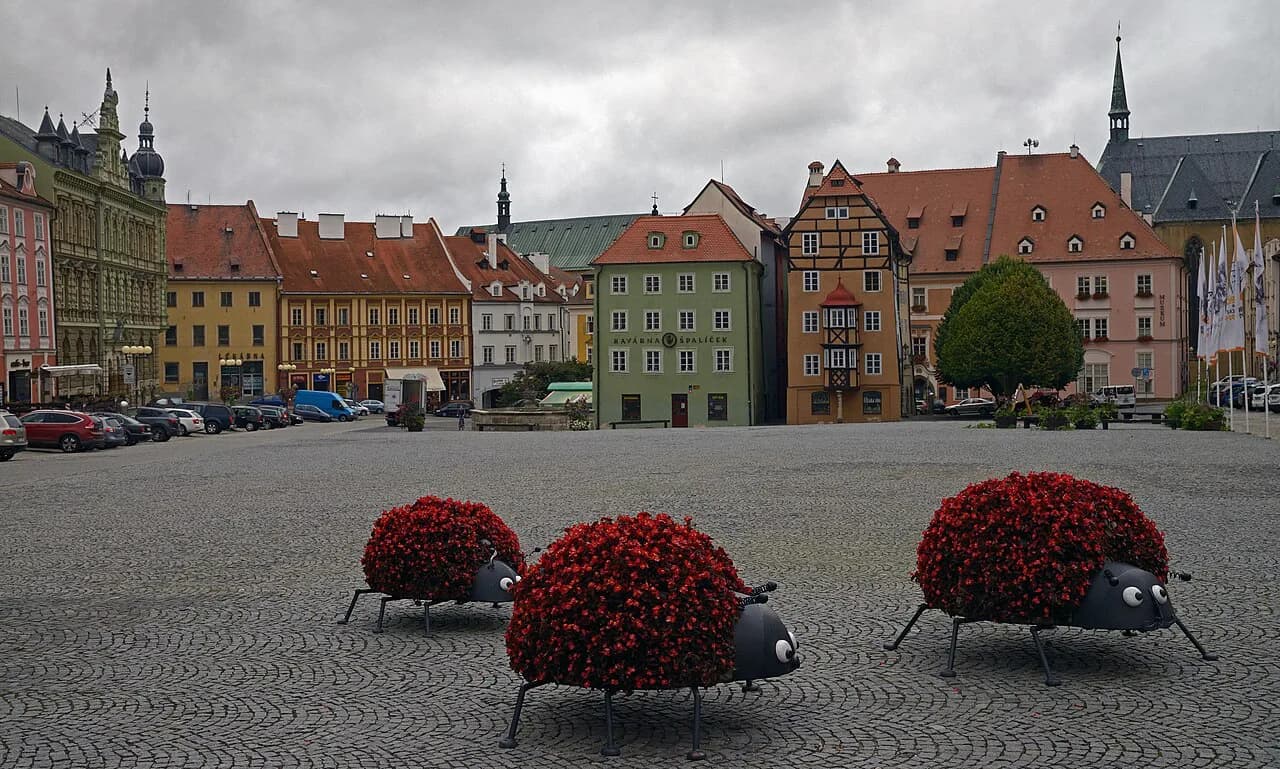
The center is organized around a long historic square lined with burgher houses, with the Špalíček — a tight block of old houses — as the town's most photographed corner and the clearest sign of Cheb's trading-town past. Walk the square end to end, then duck into the side streets behind the Špalíček for the quieter fabric of the old town.
The square is also the natural place to sit down; cafés and shops line the ground floors, and the scale means you can cross the whole historic core on foot in a few minutes. Use the square as your orientation point rather than chasing a checklist of addresses.
Churches and other historic buildings in the core
Beyond the square, the castle points visitors to a wider set of monuments in the historic part of Cheb, including the baroque Church of St. Klara, which hosts concerts and seasonal events. The castle complex itself includes the Chapel of St. Erhard and Ursula, the Kuchelhaus, the casemates and the Mill Tower, each described individually on the castle site, so you can decide how deep to go.
Treat the churches as short interior stops rather than set-piece visits; the value is in stepping inside a baroque interior for ten minutes between the square and the castle. If a service or a concert is in progress, come back later rather than photographing through it.
A short walking route through the center and up to the castle
Start on náměstí Krále Jiřího z Poděbrad at the Špalíček end, walk the length of the square, and take the short climb toward the castle above the Ohře, allowing about fifteen minutes of walking with a stop or two. Circle the palace torso, climb or photograph the Black Tower, and visit the double chapel as the final interior. Come back down through the side streets to the square for coffee, which keeps the whole loop to two or three hours.
If you are continuing into the spa country, the Ohře valley runs on toward Loket, a castle town on the same river with a compact center that makes an easy second stop on the same day. Otherwise head for Karlovy Vary, where the colonnades and spa architecture take the afternoon.
How long Cheb needs and how to pace a half day
Budget three to four hours: the castle with its chapel takes the bulk of it, the square and Špalíček about forty-five minutes, and the remaining churches another half hour. That fits neatly into a morning arrival or an early-afternoon stop without an overnight. If you are coming from Prague or Vienna, which both lie a long train ride away, plan Cheb as part of a western Bohemia loop rather than a day trip.
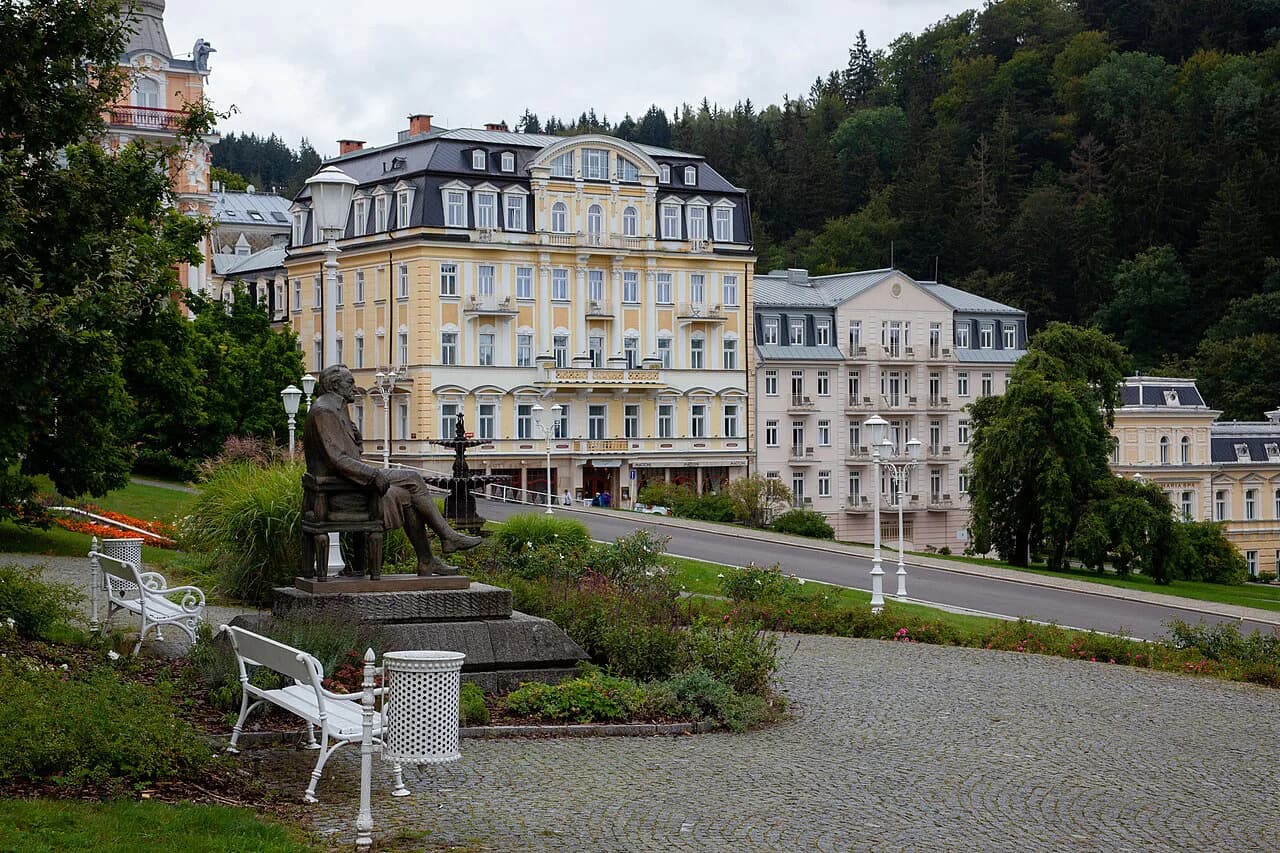
The town is a comfortable add-on to a spa stay; if you are based in Mariánské Lázně, its colonnade and Dům Chopin sit within an easy regional hop, and the two towns complement each other on a two- or three-night western circuit.
Getting to Cheb and where it fits on a route
Cheb lies on the main rail corridor from Prague through Plzeň toward Bavaria, and on the road route from Karlovy Vary to the German border, which makes it a straightforward stop between the spa towns and Nuremberg or Munich. Train and bus timings change with the timetable, so check the current schedule before committing to a connection rather than relying on remembered times.
On a westward loop, sequence it as Prague, Plzeň, Cheb, the spa triangle and back, or run the reverse from Bavaria. Travelers taking the direct train from Prague or Vienna get the town without a car, but the center and castle are uphill from the station, so allow extra time on foot.
What things cost in CZK and how to budget the visit
Cheb is an inexpensive stop by Czech standards: a castle ticket, a coffee on the square and a light lunch sit comfortably within a modest day budget in koruna. Check the castle's visitor information for the current entry price rather than relying on a quoted figure, since adult, reduced and family rates are set seasonally. The square and the churches outside the castle charge nothing to walk.
Carry cash in koruna for small cafés and the castle ticket office, and keep a card for larger places. Compared with the spa towns to the east, prices here are modest, and there is no need to plan a big outlay for the day.
Is Cheb worth the stop on your route?
Yes, if you are already traveling between Prague and Bavaria or spending time in the Czech spa towns, because the castle's Staufen palace and double chapel are genuinely rare and the old town takes only a couple of hours. It is not worth a dedicated trip from Prague, and the Monday closure in the main season makes Monday the wrong arrival day for the castle.
Build the stop around the castle, then the square and the Špalíček, and keep the rest flexible so a short-notice closure or a concert at St. Klara does not derail the day. For a full western Bohemia plan, pair Cheb with Mariánské Lázně, Františkovy Lázně or Loket rather than trying to see it all in one afternoon.
Explore more Mariánské Lázně guides
Frequently Asked Questions
Is Cheb the same as Eger?
Yes, historically. Cheb was known in German as Eger, and the town's German heritage is still visible in its old houses and churches. The Czech name Cheb is what you will see on signs and timetables today.
Do you need a guided tour to see Cheb Castle?
The castle publishes its opening hours and visitor information on its own site, and it lists a castle tour among its visitor pages. Check the current arrangements at the ticket office when you arrive rather than assuming a fixed tour schedule.
How do you pronounce Cheb?
The Czech ch is a hard, breathy sound close to the Scots loch, so Cheb begins with that sound and ends in a short e, roughly kh-EB. Say the place name that way and locals will understand immediately.
Sources
Notes for your Czech trip
Optional updates to our Czech town guides.
You might also like
Continue reading
More guides you'll find useful