
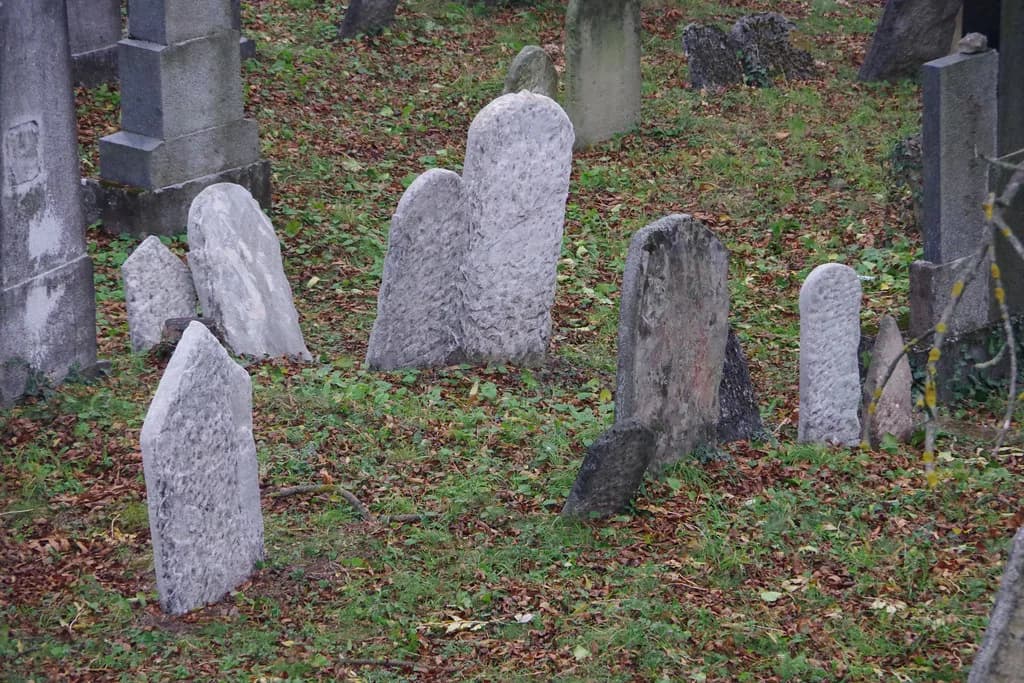
Mikulov Jewish Cemetery: A Visitor's Guide to the Rabbis' Peak and Ceremonial Hall
The Mikulov Jewish cemetery is the town's most rewarding stop for anyone interested in Moravian Jewish history, and a visit takes about an hour. Head straight for the Rabbis' Peak, the raised section holding the graves of Mikulov and Moravian regional rabbis and the part the town itself singles out as the most valuable. This guide covers where the cemetery sits, how to reach the gate, what the ticket includes, the seasonal calendar that governs most trips, and the memorials and stones worth seeking out inside the walls.
Where the cemetery sits and how to reach the entrance
The cemetery occupies the western slope of Kozí hill, entered from the south off Hřbitovní náměstí, the street address the town publishes for it. Approach from Mikulov's historic center on foot; the climb is short but steady, and the walled grounds open up once you pass the gate. Because the plot follows the hillside rather than a grid, the shape is irregular, which is the first thing to notice before you start walking.
If you are pairing the cemetery with the rest of the hillside, Kozí hrádek is the other landmark on the same slope, and the two make a natural half-day on foot from the square. Travelers building a wider circuit around town can start from the Mikulov Attractions: 4 Visitor Guides overview and slot the cemetery in as a quieter counterpoint to the chateau.

The ceremonial hall and its exhibition on Jewish life
The ceremonial hall stands at the entrance and combines a funeral hall with a morgue, designed by the Viennese architect Max Fleischer. The grounds' caretaking society credits the hall to Fleischer's plans and notes that it now houses a small exhibition on Jewish history and culture in Mikulov. The society states plainly that one ticket covers both the hall and the cemetery grounds.
Read the exhibition before walking the rows. It gives context to the rabbinic graves you are about to see and explains why Mikulov mattered as a seat of the Moravian rabbinate from the sixteenth century until 1951. Budget fifteen minutes here, then move uphill while the background is fresh.

Opening seasons month by month
The gate is not open year-round, and the calendar is the single biggest planning constraint. April and May open Friday to Sunday from 10 am to 4 pm, June runs Tuesday to Sunday 10 am to 5 pm, July through September open daily 10 am to 6 pm, and October runs Saturday and Sunday only, 10 am to 4 pm. Watch the October weekend-only rule especially: travelers often assume an autumn weekday visit will work.
Summer is the forgiving window: from July to September you can arrive any day of the week and still find the gate open into the early evening. If your trip falls outside the published months, build the cemetery in as a bonus rather than the anchor of your day and confirm the current season before you climb the hill.
Ticket prices in CZK and what the ticket covers
Admission is modest: full price is CZK 40, with a CZK 25 concession for children, students and pensioners. The ticket admits you to the cemetery and the exhibition in the ceremonial hall, so there is no separate charge for the two. The heritage society, which maintains the grounds on behalf of the Jewish Community of Brno, directs admission income toward reconstruction work at the cemetery.
Because money from admissions pays for repairs at the cemetery, your ticket does double duty as upkeep for the stones you came to see. The society also arranges guided tours; ask at the hall about whether one is running during your visit.
The Rabbis' Peak and the graves of Moravian regional rabbis
The Rabbis' Peak is where the cemetery's significance concentrates, and it deserves your first twenty minutes. Mikulov served as the seat of the Moravian rabbi from the sixteenth century until 1951, and the graves here include Mordechaj Benet, Šemuel Šmelka Horovith and Menachem Mendl Krochal, as the heritage society records. This section was added in the early seventeenth century, when the cemetery was extended to the western wall with the lane behind the peak for the local and later regional rabbis.
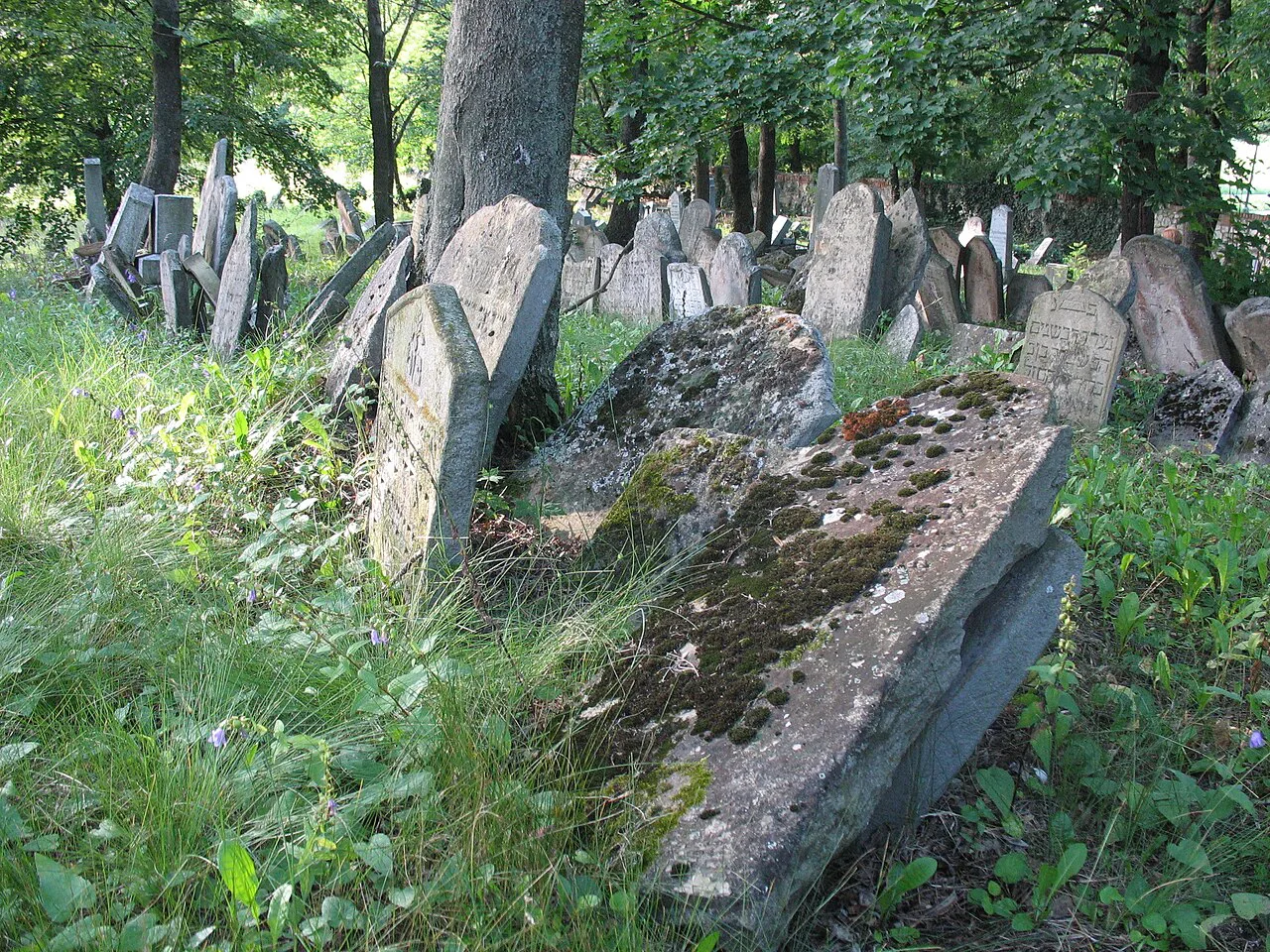
Stand at the top of the peak and look back over the rows before descending. The dense east-west alignment of the stones becomes legible from above in a way it never does at ground level, and you will spot the older, carved slabs more easily on the way down. Head here before the lower sections so the best-preserved stones are not rushed at the end of your visit.
Tombstones and funerary sculpture: 1605 and three building stages
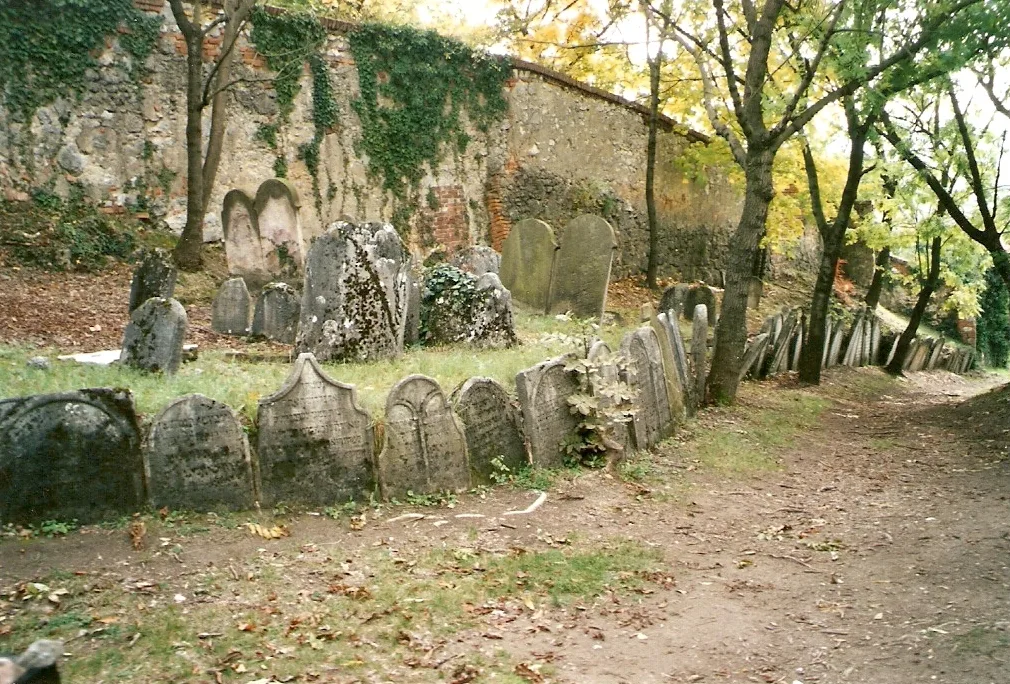
The oldest legible tombstone belongs to Samuel ben Leb Ashkenazi and dates from 1605, though the first burials followed the founding of the Jewish community around the mid-fifteenth century. The cemetery grew in three stages, and the irregular outline is the visible record of them: the earliest south-eastern section along the eastern wall, the north-eastern extension of the early 1600s, and a northern plot added in the late nineteenth century. The protective stone-and-brick wall around the whole grounds probably dates from the 1760s.
Count the stones roughly as you walk and you cover about 4,000 tombs across nearly 20,000 square meters, one of the largest and oldest Jewish cemeteries in the country. Look for the late-nineteenth-century division into seven groups and rows, marked with combined Roman and Arabic numbers, which helps you keep your bearings. The carving styles shift from plain slab to ornate baroque relief as you move through the sections, a compact lesson in Moravian Jewish funerary art.
Two memorials inside the walls
Near the older section stands a memorial to twenty-five Mikulov soldiers killed in World War I, set beside the original entry path. Toward the end of the grounds is a second memorial, unveiled in 1975, to twenty-one Jewish prisoners from Hungary shot by German forces in Mikulov on 15 April 1945. Both are easy to pass without noticing, so read the inscriptions rather than walking straight to the Rabbis' Peak and back.
The site is a closed culture monument, owned by the Jewish Community of Brno and cared for by the Society of Friends of Jewish Culture in Mikulov. No burials take place here now, which changes the register of a visit: this is an archive of a community read in stone, not an active cemetery. Treat the ground and the stones accordingly and keep to the paths.
How much time to allow and how the slope affects the walk
Allow about an hour: fifteen minutes in the ceremonial hall, twenty on the Rabbis' Peak and the rest wandering the rows and reading the memorials. The slope and the irregular layout mean you will double back more than once, and the ground is uneven underfoot. Sturdy shoes matter more than they would on the flat square below.
The climb from the historic center is short, but the cemetery sits above town, so plan it as part of a walking loop rather than a quick detour by car. If you want a longer leg afterward, Svatý kopeček Above Mikulov adds a sharper ascent and a viewpoint, while Turold Cave in Mikulov offers an underground contrast on a hot afternoon.
Nearby in Mikulov: chateau, square and Dietrichstein tomb
The cemetery fits neatly onto the same hillside circuit as the chateau and the historic square, both a short descent away. The Dietrichstein tomb is the third anchor of that walk, and doing all three on foot keeps the day compact. Start at the square, work up to the cemetery and come down through the chateau grounds.
For a quieter alternative to the town's busier sights, the cemetery is the better choice on a summer midday, when the chateau and square fill up. Just check that your chosen day falls inside the published season before you set out.
Should you put the Jewish cemetery on your Mikulov walk?
Yes, if the season fits: it is one of the country's most significant Jewish cemeteries, the ticket is cheap, and an hour on the slope delivers more than most paid attractions in town. If your visit falls on a weekday in October, shift the plan to the weekend or save the cemetery for a summer return.
Frequently Asked Questions
Is the Mikulov Jewish cemetery still an active burial ground?
No. It is a protected culture monument owned by the Jewish Community of Brno and cared for by the Society of Friends of Jewish Culture in Mikulov, and burials no longer take place there. Visitors come to see the tombstones, the Rabbis' Peak and the exhibition in the ceremonial hall.
Do I need a guided tour to visit?
No, the cemetery can be visited on your own during opening hours, and the ticket covers both the grounds and the ceremonial hall exhibition. The heritage society also arranges guided tours; ask at the hall about times and whether an English-language tour is available.
What is the Rabbis' Peak?
It is the raised section of the cemetery holding the tombs of Mikulov and Moravian regional rabbis, including Mordechaj Benet and Menachem Mendl Krochal. It is the most valuable and most visited part of the grounds, and the best place to start your walk.