Zelená Hora Church: Santini's Star-Shaped Pilgrimage Church
Zelená Hora is Santini's star-shaped pilgrimage church of St. John of Nepomuk above Žďár nad Sázavou, a UNESCO site built on layered number symbolism.
On this page
Zelená Hora is a UNESCO-listed pilgrimage church of St. John of Nepomuk on a hill above Žďár nad Sázavou, built in the shape of a five-pointed star and dense with number symbolism. Plan on roughly an hour for the church, the ambits and the walk around the outside, and bring a way to read the details rather than rushing the nave. This guide covers the site's layout, its symbolism, its history and how to approach a visit.
The church is not a museum piece but an active pilgrimage site, and it stands apart from the chateau and square of the nearest big town in the Vysočina hills.
What Zelená Hora Is and Where It Stands
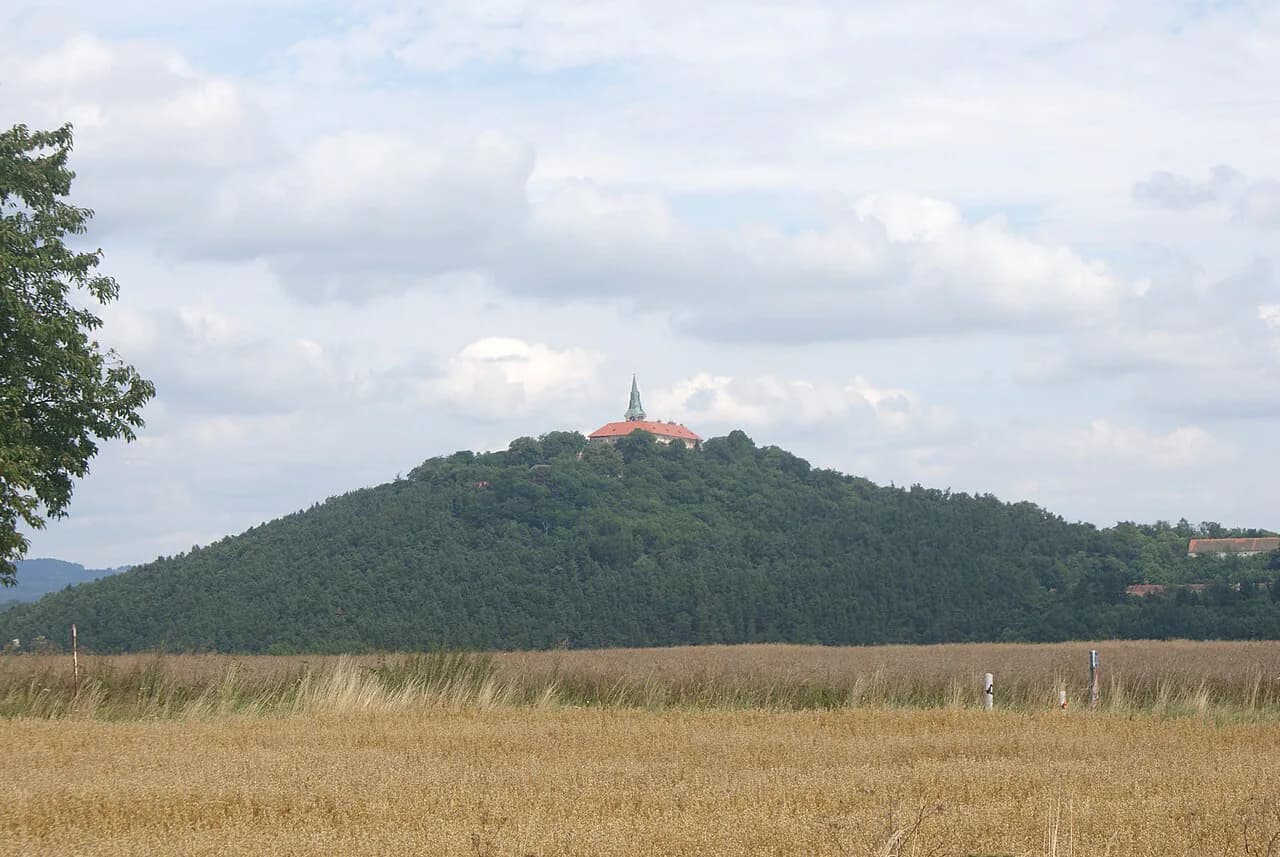
The Pilgrimage Church of St. John of Nepomuk sits on Zelená Hora, a low hill beside the former Cistercian monastery at Žďár nad Sázavou in the Vysočina region. The monastery was founded in 1252 by Cistercian monks from Pomuk in western Bohemia, the birthplace of St. John of Nepomuk, which is why the site's devotion to him runs so deep. The church is a separate building from the monastery complex, and visitors come specifically for it rather than for a town center.
Its position on the hill means the star-shaped plan reads most clearly from outside, where the five arms and the surrounding ring of ambits are visible as a single geometric figure. Walk the perimeter before going in, because the interior alone does not explain the plan.
Why the Church Is a Five-Pointed Star
Santini designed the church as a star among stars, and the number five governs the whole building. The ground plan is a five-pointed star, there are five entrances, five chapels with five altars, and the Latin inscription TACUI, meaning "I kept silent," has five letters. The five points recall the five wounds of Christ and the martyrdom of St. John of Nepomuk, who was killed for refusing to break the seal of confession.
The number three runs alongside the five and points to the Trinity: windows take the form of an equilateral triangle in a sphere, and other windows are shaped like a bishop's mitre, the emblem of the abbey. Look up at the dome and the windows before reading any label, because the shapes carry the argument.
Abbot Vejmluva, Santini and the Reason for the Church
The church exists because of a single find. In 1719, when the grave of John of Nepomuk was opened in St. Vitus Cathedral in Prague, the commission found a small piece of organic matter that physicians identified as a tongue, confirming the legend that the saint did not break the confessional secret even under torture. Abbot Václav Vejmluva, head of the Žďár monastery from 1705 to 1738 and a devoted admirer of John of Nepomuk, treated the find as a miracle and resolved to build a church to the future saint.
Vejmluva secured Jan Blažej Santini-Aichl (1677–1723), who designed his life's work here, breaking with the conventions of the day to build a church woven through with numerical symbolism. In 1721 the abbot acquired a rare relic, the bone to which the martyr's tongue had been attached, which raised the church to the status of a reliquary chapel. Knowing this sequence makes the interior legible: the tongue and the star are not decoration but the reason the building took this shape.
What to Look At Inside
Start with the dome, where a large red tongue, the attribute of St. John, sits surrounded by a circle of flames with rays shining through. The main altar was designed by Santini himself, with the figure of the saint standing on a globe carved by Jan Pavel Czechpauer of Chrudim and the angel probably by Ignác Rohrbach. Five eight-pointed Cistercian stars on the globe stand for the five continents where Christianity spread.
The side altars take the form of triangular chapels dedicated to the four evangelists, St. Matthew, St. Mark, St. Luke and St. John, with each figure holding an open Bible bearing a text from his gospel. The scheme casts St. John of Nepomuk as a fifth evangelist, and the altars were made by pupils of Matyáš Braun, among them Řehoř Thény, Czechpauer and Rohrbach. Five angels and three archangels appear to lift the saint to heaven, a reference to the age of 53 at which he died.
Fragments of the original paving survive in the side areas, set with pentagrams and rhombuses that give the floor an impression of swirling movement. Look down as well as up; the floor is part of the symbolic program, not just a surface to cross.
The Ambits and What They Were For
The outer ambits, the ring of covered corridors around the church, were not built at the same time as the church itself but followed after a short interval. Their plan uses ten walls with concave outer sides, alternating four-sided gates and five-sided chapels. In the Baroque period they sheltered pilgrims from bad weather and sometimes gave them a place to sleep.
Treat the ambits as a separate element with their own history rather than as part of Santini's church, and walk them slowly: the alternation of gates and chapels is easiest to read in sequence. They frame the star plan and give the hill its processional character.
Fire, Restoration and UNESCO Status
In 1784 a large fire destroyed the roof of the church, the monastery was subsequently abolished, and the interior furnishings were moved to surrounding villages. Restoration efforts began at the end of the 18th century and continued through the 19th, so much of what you see inside is not the original furnishing but the result of that recovery. In 1994 the pilgrimage church was inscribed on the UNESCO World Heritage List.
Zelená Hora has again become an important religious site, and a pilgrimage in honor of St. John of Nepomuk is held each year. UNESCO status brought attention and visitors, but the building still functions as a place of devotion rather than a heritage set piece.
Visiting Hours, Tickets and Practicalities
Visitor hours and entry fees are set by the site administration and change by season, so check the parish's own site before you travel; the church is administered from the Žďár monastery parish. Confirm current opening times and ticket prices directly, since they are the two details most likely to shift.
The church is a short distance from the center of Žďár nad Sázavou, so the practical question is not whether to combine it with the town but in what order. See the building from the outside first, then the interior, then the ambits, which keeps the symbolism in sequence.
How Zelená Hora Fits a Vysočina Route
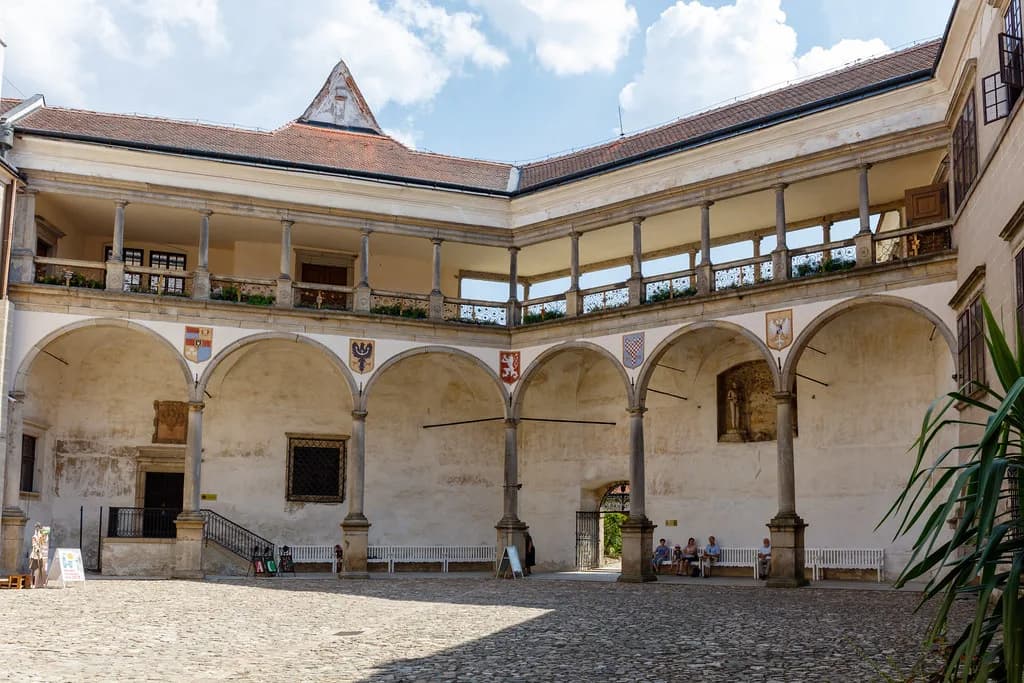
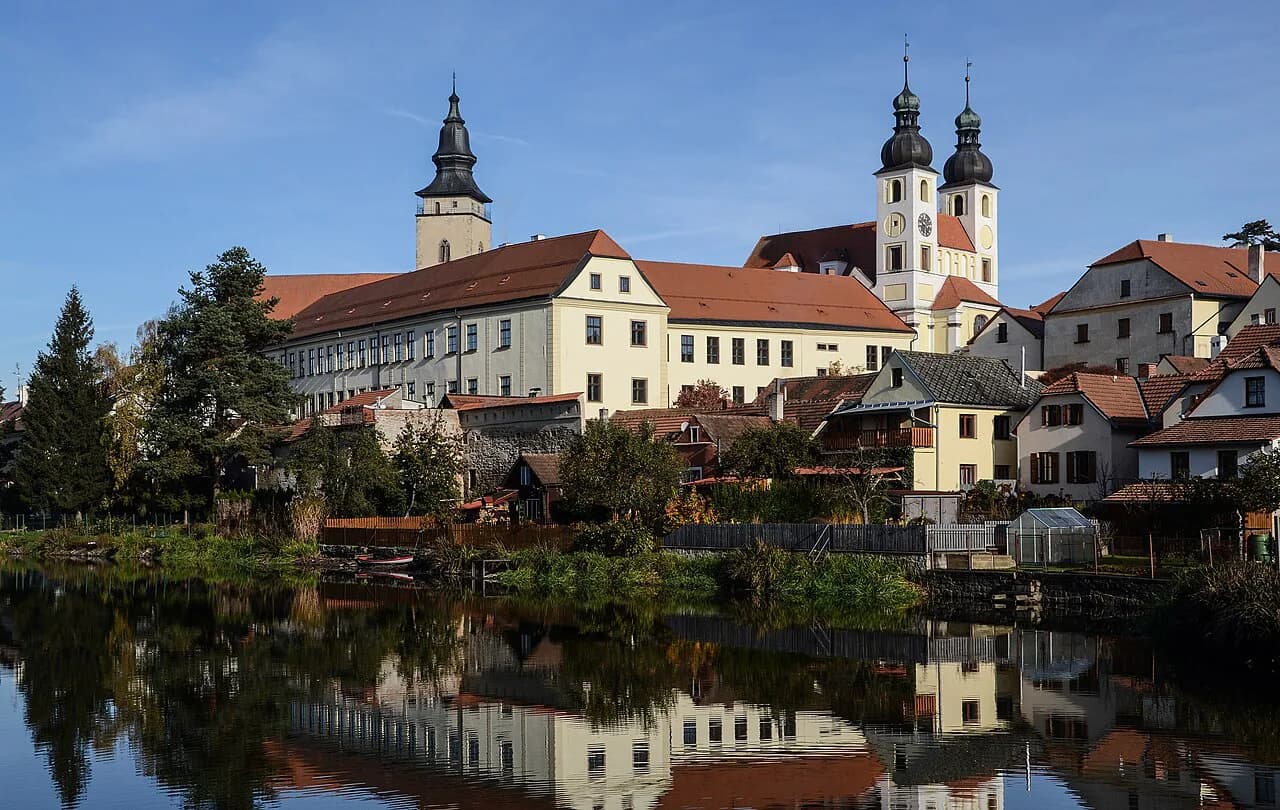
Žďár nad Sázavou sits in the Vysočina hills, which makes Zelená Hora a natural stop on a route linking the region's towns rather than a standalone excursion. If you are working from the south, Telč (Třebíč is another UNESCO stop on the same loop) offers a full town visit, with a UNESCO square and a chateau worth a separate half day. Read the guide to Telč before you set the order of stops.
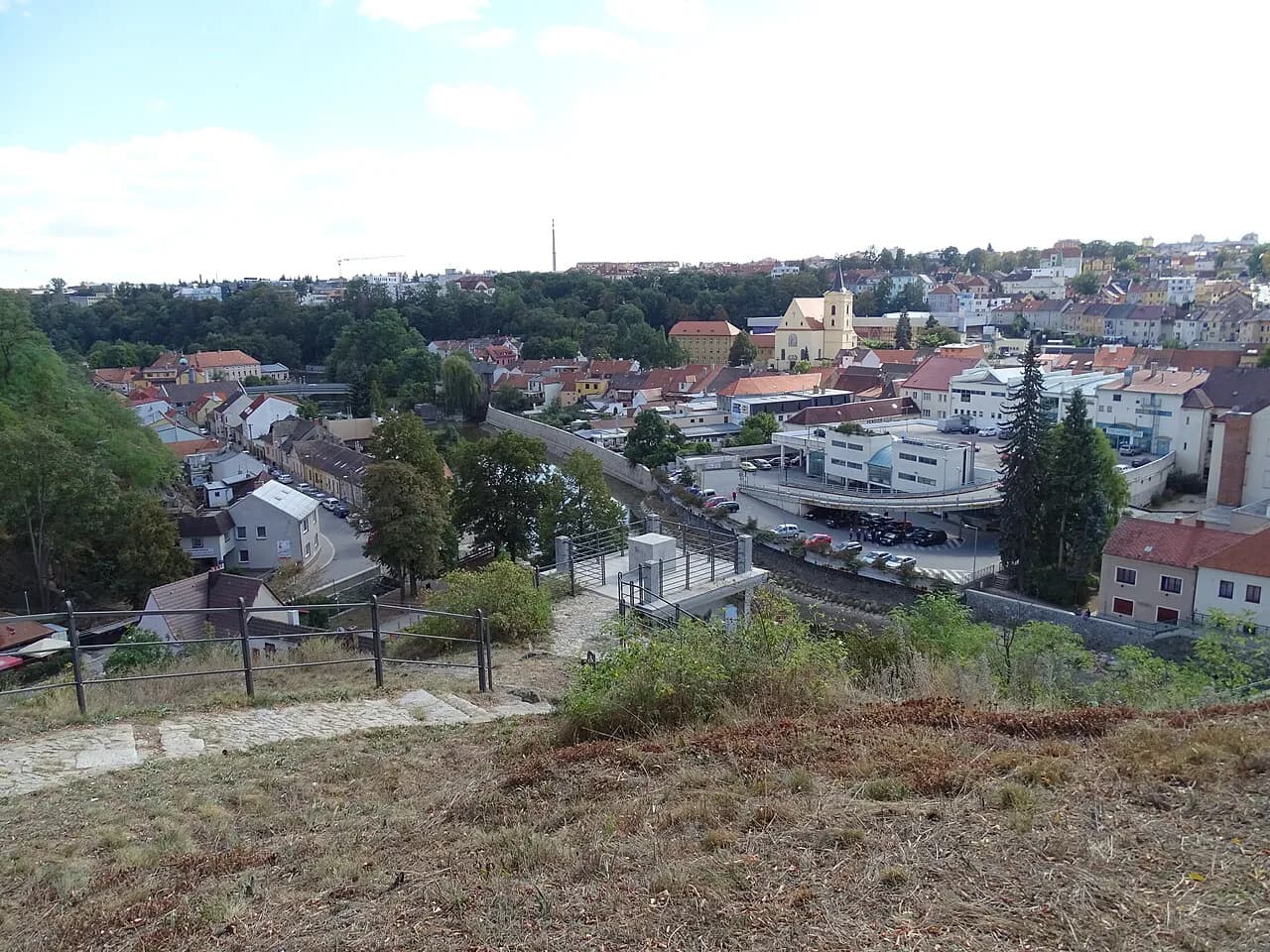
Třebíč, with its UNESCO Jewish Quarter and the Basilica of St Procopius, lies to the south and pairs well with the same loop. If your interest is castle interiors rather than churches, the Renaissance halls at the Telč chateau make the stronger counterweight to Santini's Baroque geometry, and the two days together give a clear contrast between styles.
Allow an hour at Zelená Hora itself, plus travel time between towns, and avoid stacking too many stops into one day. The church rewards unhurried attention to small details, and a rushed visit turns it into a photo stop, which misses the point.
Where Zelená Hora Fits in a Vysočina Trip
Yes, if you want one building you can read closely. Zelená Hora is the rare Czech church where the plan, the numbers and the interior all argue the same idea, and an hour of attention pays off more than three rushed stops elsewhere.
If your trip is built around town squares and chateau interiors, give Zelená Hora a half-day slot and anchor the rest of the route in Telč and Třebíč. Either way, confirm the current hours and tickets before setting out.
Explore more Telč guides
Sources
Notes for your Czech trip
Optional updates to our Czech town guides.
You might also like
Continue reading
More guides you'll find useful