Turnov, Czech Republic: A Guide to the Gemstone Town of Český ráj
Turnov anchors Český ráj with a museum of garnets, minerals and archaeology, a walkable main square, and an easy base for nearby castles.
On this page
Turnov works best as a base rather than a single sight: a compact town center, a regional museum with several distinct exhibits, and a ring of castles and rock country within a short drive. Give the town half a day for the square and the museum, then use it as your hub for Český ráj, the sandstone landscape north of Prague. This guide covers what is inside the museum, how the center is laid out on foot, how much time to allow, and what to confirm before you go.
The town sits in the Liberecký kraj region of northern Bohemia, with Jablonec nad Nisou and Semily as its nearest larger neighbors. It is small — a recorded population of roughly 14,400 at the start of 2012 — which is exactly why it functions as a hub: you park once, walk the center, and head out to the surrounding countryside.
What Turnov is and why it's worth a stop
Turnov is known in the Czech Republic as a center of stone and jewelry work, and the local museum leans hard into that identity with mineralogy, gemstone and stone-cutting collections. For a visitor, that means one focused, high-quality museum stop rather than a checklist of monuments. Plan the museum as the anchor of your time in town and build the rest of the day around it.
The second reason to stop is geography. Turnov advertises itself as the heart of Český ráj, and the surrounding castles, rock formations and chateaux are the main draw for most travelers. Treat the town as a comfortable place to sleep, eat and get oriented, and save your daylight for the countryside.
If you are weighing whether to spend time in the town itself, the honest answer is that the museum and the square justify an afternoon, not a full day. Anyone interested in geology, archaeology or glass and garnet work will want longer in the exhibits; families and casual visitors can move through faster. Neither choice requires you to skip the region.
Where Turnov sits and how to reach it from Prague
Turnov lies roughly between Mladá Boleslav and Jablonec nad Nisou in northern Bohemia, on the corridor that connects Prague with the mountains near the Polish border. The city publishes an information center for visitors, the RTIC, and a town webcam of náměstí Českého ráje if you want to see the square before you commit.
Trains and buses link Turnov with Prague and with Liberec and Jablonec, but timetables and journey times change with each annual schedule, so check the Czech national timetable (IDOS) for the date you plan to travel rather than relying on a figure in a guide. A car remains the most flexible option for reaching the surrounding castles, since several sit off the main rail lines.
If you arrive by train, expect a walk or short taxi ride from the station to náměstí Českého ráje. Turnov has announced a planned reconstruction of its railway station, so approach routes and facilities may shift during works. Confirm the current situation as your trip approaches.
The Museum of the Bohemian Paradise in Turnov: what's inside
The Muzeum Českého ráje v Turnov — the Museum of the Bohemian Paradise — is the town's principal indoor sight, and it is organized as a set of separate permanent exhibits rather than one chronological walk-through. Archaeology of Český ráj, history, folk culture of the Pojizeří, the history of stone-cutting, geology and mineralogy, the Klenotnice (treasury), mountaineering, and a Lapidarium of sculptures each occupy their own space. That structure is useful: pick the two or three rooms that match your interests instead of trying to absorb everything.
The museum also mounts temporary exhibitions in the Výstavní síň Viléma Heckela and organizes lectures and guided walks tied to those shows. Exhibitions and events listed on its site have included the crowns of emperors and kings, luminescence, and a geological story of the Bohemian Massif. Check the exhibitions page before you go so you know what is on during your dates.
The museum runs Dlaskův statek, a separate folk-architecture site in Dolánky, as its own branch — it is not under the same roof as the main building. Plan the two as one outing if you have a car, since Dolánky lies outside the town center. The museum posts closure notices for the farmstead separately, so confirm its status before driving out.
Minerals, garnets and the Czech gemstone tradition on display
Turnov's reputation rests on stone: the region is known for Czech garnet, a deep red pyrope set into jewelry, and for the lapidary and stone-cutting trade that grew around it. The museum devotes permanent space to the history of stone-cutting and to geology and mineralogy, plus a separate mineralogical exhibit drawn from the Scheybal collection. If garnets are your reason for coming, this is the core of the visit.
The Klenotnice, or treasury, presents the collection as a jewel-box display, and it pairs naturally with the stone-cutting rooms. Allow more time here than you might expect if you have any interest in jewelry or geology — the material rewards close looking. Casual visitors can skim it in twenty minutes and move on to the archaeology wing.
Rock climbing and archaeology exhibits at the museum
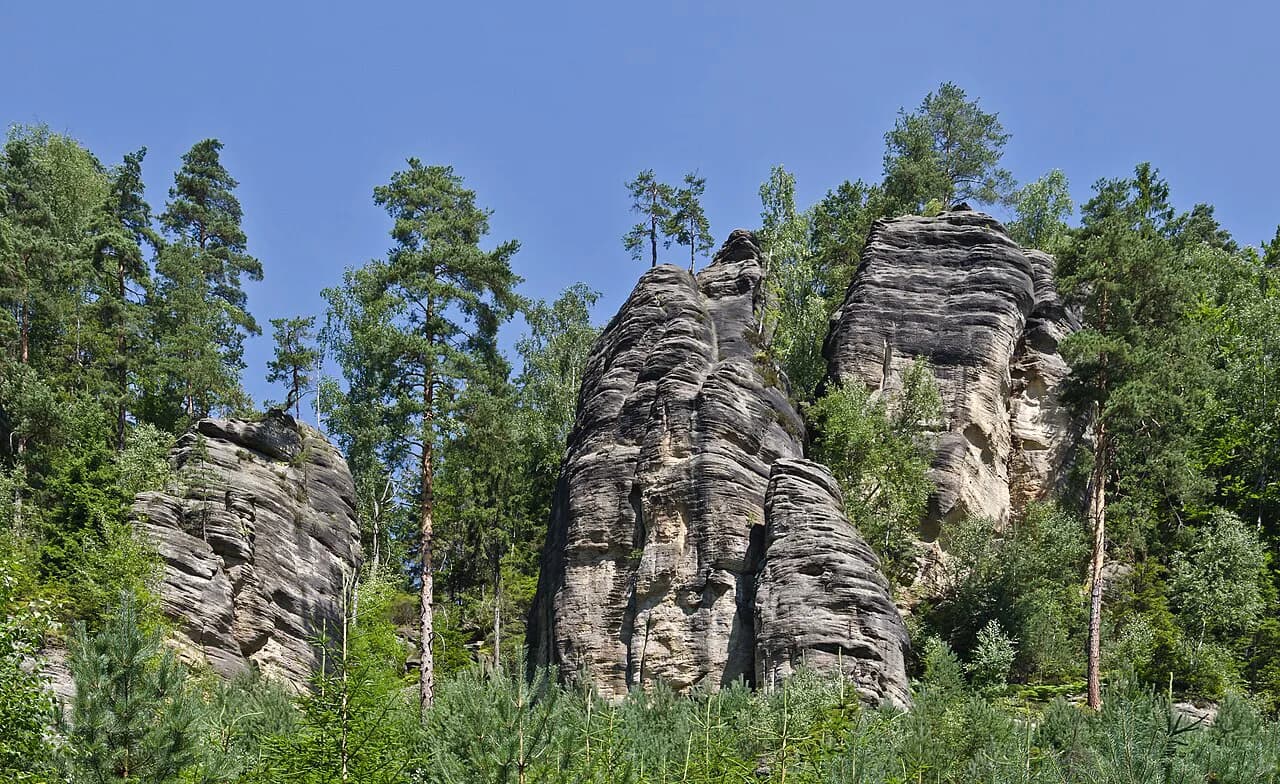
Two exhibits give the museum an unusual range. The mountaineering exhibit covers the climbing tradition of the sandstone towers around Turnov, and the archaeology of Český ráj exhibit sets out the region's long settlement history. Together they explain why this landscape matters to Czechs beyond the scenery.
The museum also runs public programming around archaeology, including a week of experimental archaeology tied to the International Day of Archaeology. In 2026 that program ran from September 30 to October 3, with admission for the week set at 60 Kč for one day, 100 Kč for two days and 140 Kč for three days, and Saturday entry free. Treat those figures as event pricing for that program, not as the museum's standard admission.
Events like these sell the museum to travelers with school-age children or a serious interest in how the past is reconstructed, since you can watch bronze casting, hide working and Roman siege equipment demonstrations rather than just reading labels. If your dates are fixed, check the events calendar for the year you travel.
Turnov's main square and town center on foot
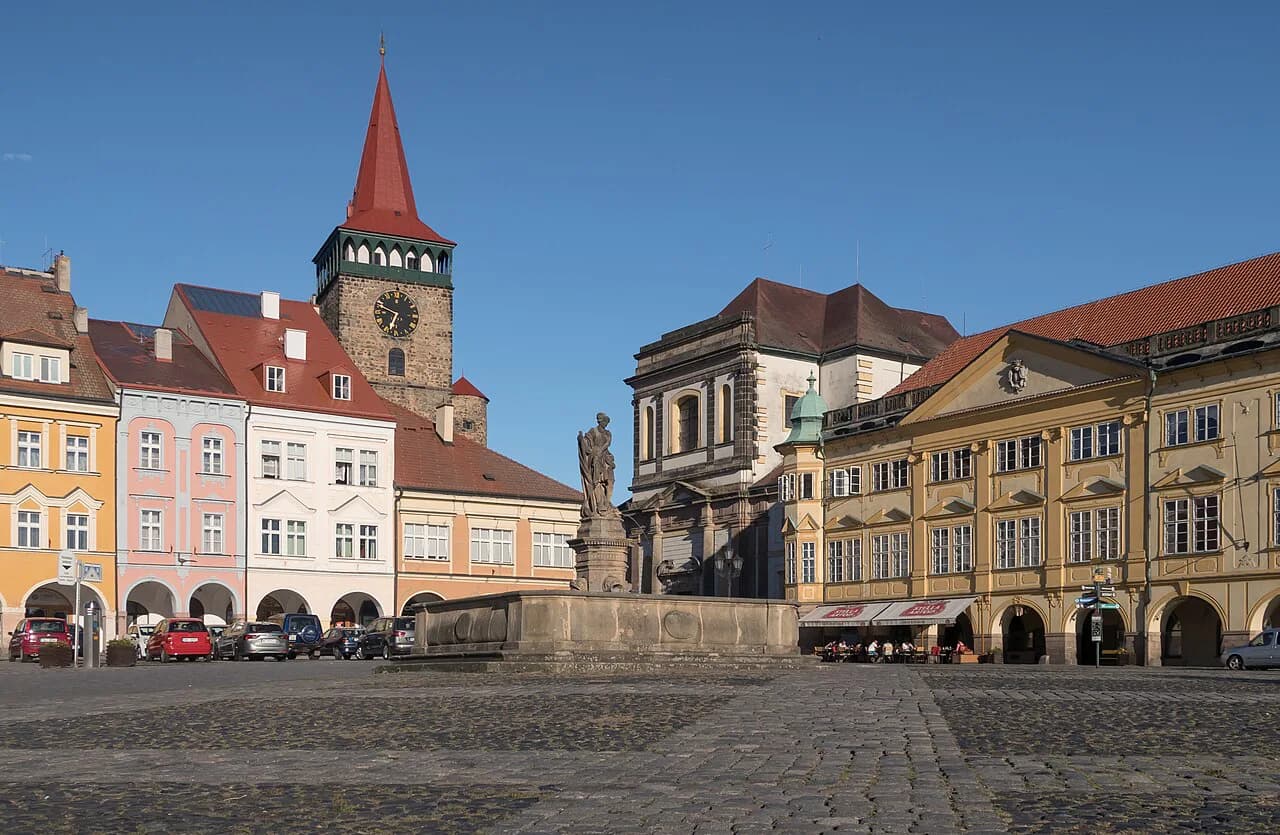
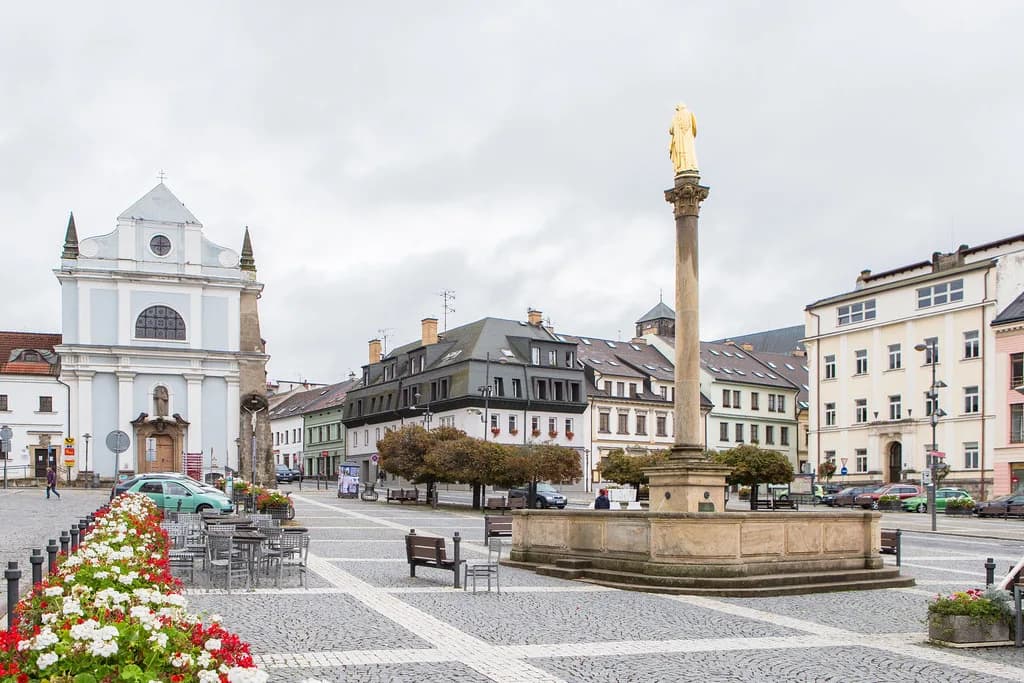
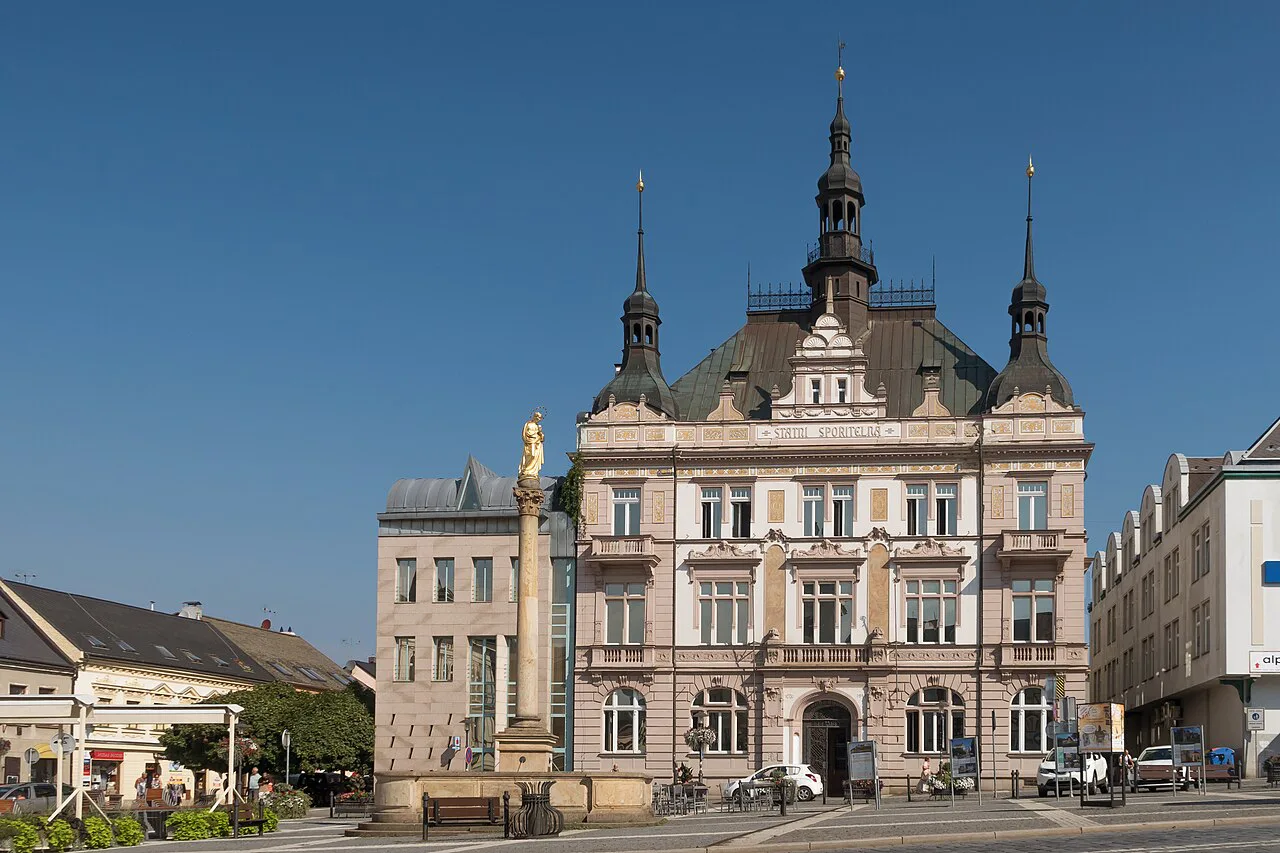
The center pivots on náměstí Českého ráje, the main square, which the town shows on a live webcam and which serves as the natural starting point for a walk. The town hall on the square is a landmark in its own right — the town marked its 500th anniversary in 2026 — and the surrounding streets hold the shops and services you would expect in a town of this size.
Beyond the square, the town's sights are modest and close together: the synagogue is listed among the town's own visitor links, and the streets around the center are easy to cover on foot in under an hour. This is not a town of grand monuments — its appeal is the compact, lived-in center plus the museum.
A short walking route through the center
Start on náměstí Českého ráje, look at the town hall and the square's frontages, then walk to the synagogue and loop back through the surrounding streets toward the museum. That route covers the town's core in roughly an hour at an easy pace, with time left for coffee or a look at shop windows. Add the museum and you have a solid half day.
If you want a longer walk, the riverside and the roads leading out toward Dolánky give you a sense of how quickly the town gives way to countryside. The museum's branch at Dlaskův statek in Dolánky is the logical destination if you are on foot and want a goal; otherwise drive.
How much time Turnov needs
Half a day covers the square, the synagogue and a focused pass through two or three museum exhibits. A full day lets you add Dlaskův statek in Dolánky and still have time for a short excursion into the surrounding countryside. If your trip is built around castles and rock formations, treat Turnov as an evening base and give it only a morning.
Castles and chateaux around Turnov
The town's real pulling power is what surrounds it. Valdštejn Castle sits close by and is the most convenient castle outing from Turnov, while Trosky castle — the twin-towered ruin on its basalt plugs — is the emblem of the region and a longer half-day excursion toward Rovensko pod Troskami. Both are typically visited on guided tours, so plan around tour times rather than assuming you can wander at will.
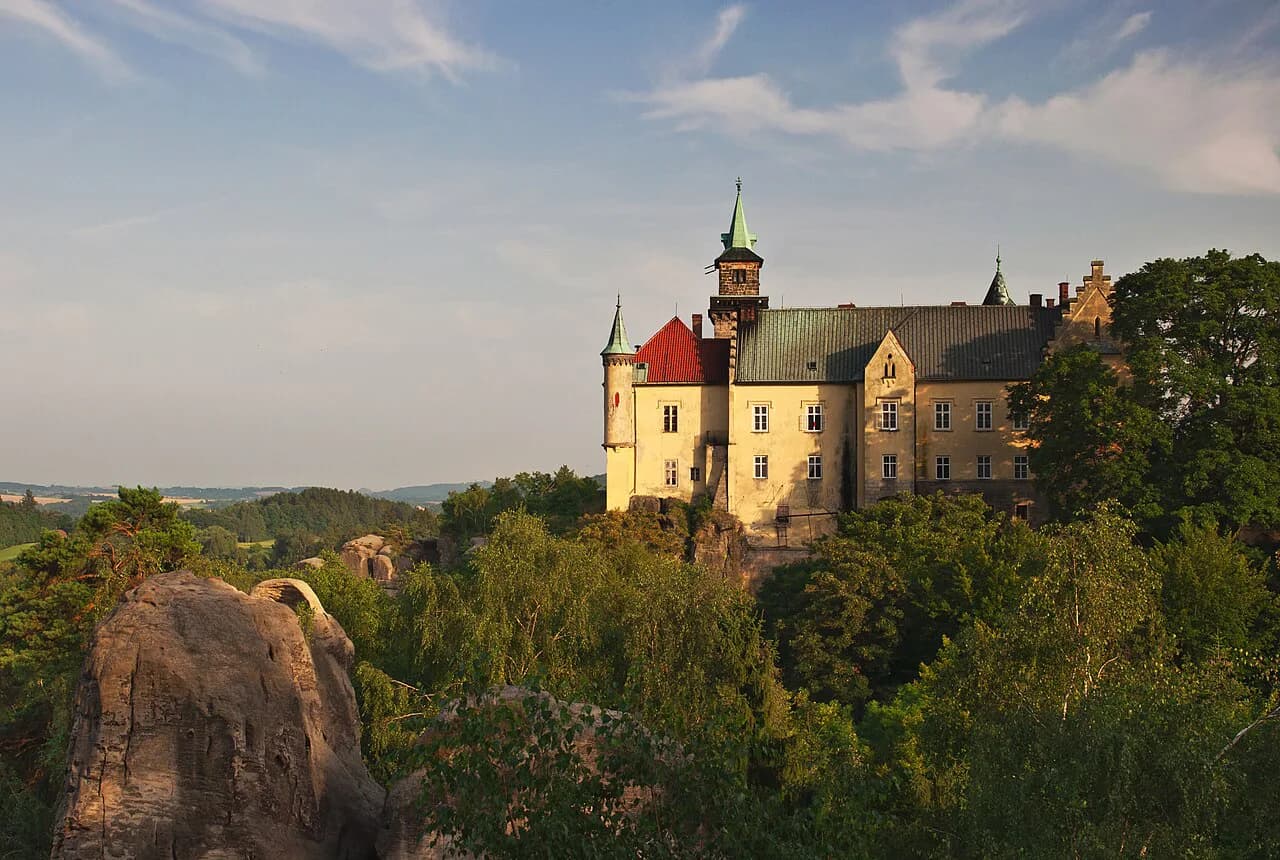
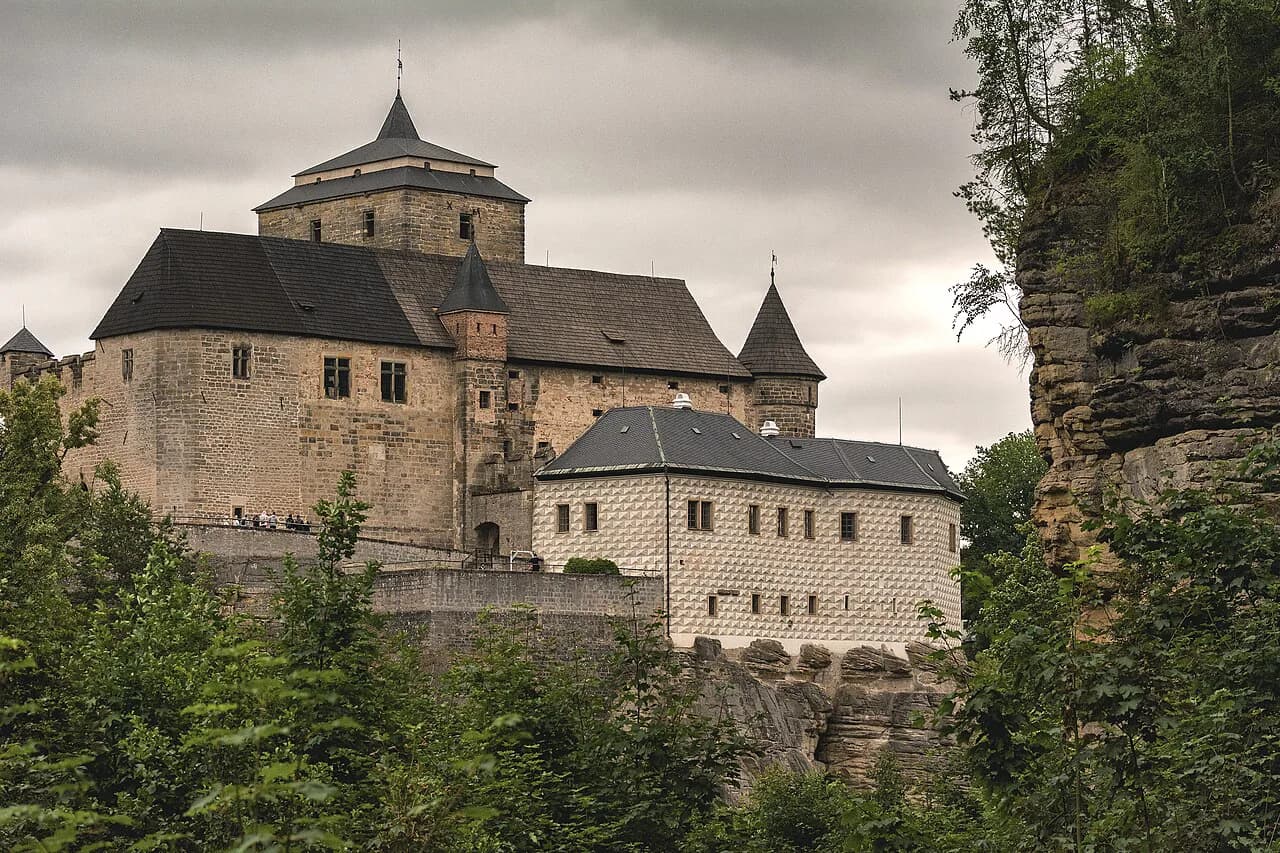
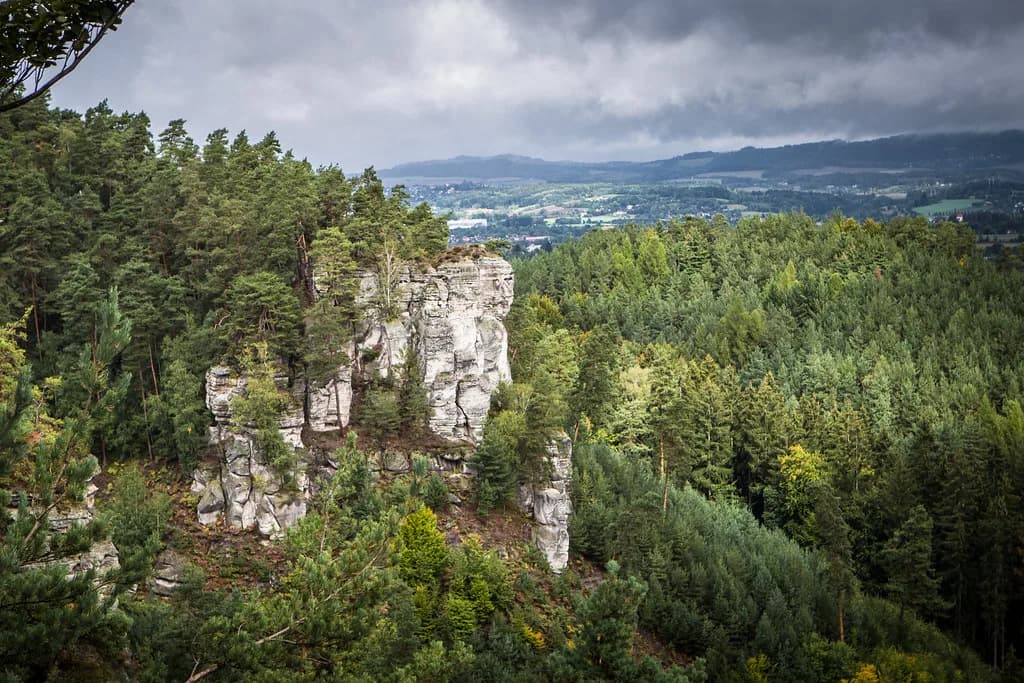
Further afield, Kost castle and the rock towns of Prachov rocks and Hrubá Skála fill out a Český ráj itinerary, and Dětenice Castle and the Jičín area lie to the east. Many of these sites open seasonally, often from spring to October, and several run guided tours in Czech with English available only by arrangement. Build flexibility into your plan and confirm tour language and opening season with each site.
If you are coming from Prague by car, Turnov makes a natural first night before a loop through the castles. The Škoda Museum in Mladá Boleslav sits on the route from Prague and pairs well with a Turnov stop for anyone interested in Czech industrial history.
Practical notes: tickets and closures at the museum
The museum publishes its own notices about closures and special admission regimes on its website, including holiday opening arrangements and one-off closures of Dlaskův statek. Because these change through the year, read the notices on the museum's site for your dates rather than relying on a general statement.
Small Czech regional museums commonly label exhibits in Czech only, and English-language materials vary by exhibit. If English interpretation matters to you, ask at the desk before buying a ticket so you know what you are getting.
Where Turnov fits on a Český ráj route
Turnov is the practical hinge of a Český ráj loop: Prague to Turnov, then castles and rock country, then back via Mladá Boleslav or east toward Jičín. Two nights here lets you see the museum properly and reach Trosky and Valdštejn without rushing. One night is enough if the museum is a secondary interest.
If your priorities are rock scenery rather than castles, base yourself for the Adršpach-Teplice Rocks further north or add Malá Skála on the Jizera. Both work as extensions of the same trip rather than replacements for Turnov.
Should Turnov be your base or just a stop?
Make Turnov your base if you want one place to sleep while you work through the castles and rock country of Český ráj, and plan a half day for the town itself. Keep it as a brief stop if your schedule is tight and the museum is not a priority — the square and center take an hour, and the real draw is outside town.
Before you travel, confirm the museum's current opening arrangements and any closures at Dlaskův statek, and check castle tour times and languages for the sites you plan to visit. Those are the details that decide whether a Turnov base saves you time or costs you a morning.
Explore more Turnov guides
Frequently Asked Questions
Is Turnov worth visiting?
Yes, if you treat it as the base for Český ráj rather than a destination in itself. The Museum of the Bohemian Paradise, with its mineralogy, stone-cutting and archaeology exhibits, justifies an afternoon, and the compact square and center fill an hour. The surrounding castles and rock formations are the main reason to stay.
What is Turnov known for?
Turnov is known for stone and jewelry work, especially Czech garnet, and its regional museum reflects that with mineralogy, a treasury collection and a history of stone-cutting. It is also the practical hub for the Český ráj region, with Valdštejn and Trosky castles within reach.
How far is Turnov from Prague?
Turnov lies in northern Bohemia in the Liberecký kraj region, north of Mladá Boleslav on the corridor toward Jablonec nad Nisou. Check current train and bus times on the Czech national timetable for your date, since schedules change annually and driving times vary with traffic.
What is the Bohemian Paradise in the Czech Republic?
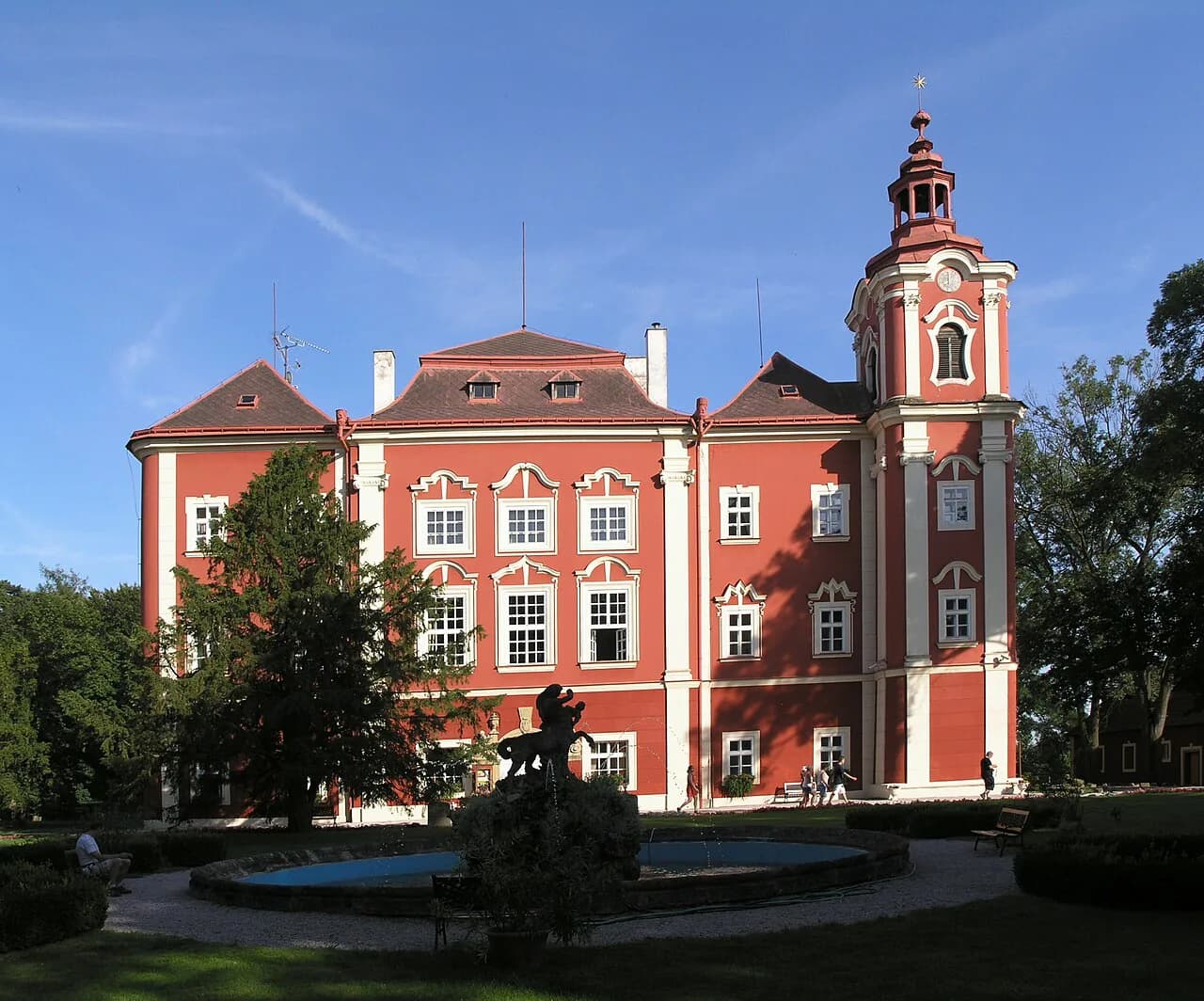
Český ráj, or Bohemian Paradise, is the sandstone landscape north of Prague centered on Turnov, known for rock towers, castles such as Trosky and Valdštejn, and chateaux. It is a protected landscape area and the main reason travelers come to this part of the country.
Sources
Notes for your Czech trip
Optional updates to our Czech town guides.
You might also like
Continue reading
More guides you'll find useful