Liberec Town Hall: The Neo-Renaissance Landmark on Dr. E. Beneše Square
Liberec's town hall is a neo-Renaissance landmark on náměstí Dr. E. Beneše, built 1888–1893 by Franz Neumann. Here is what to look for on the facade.
On this page
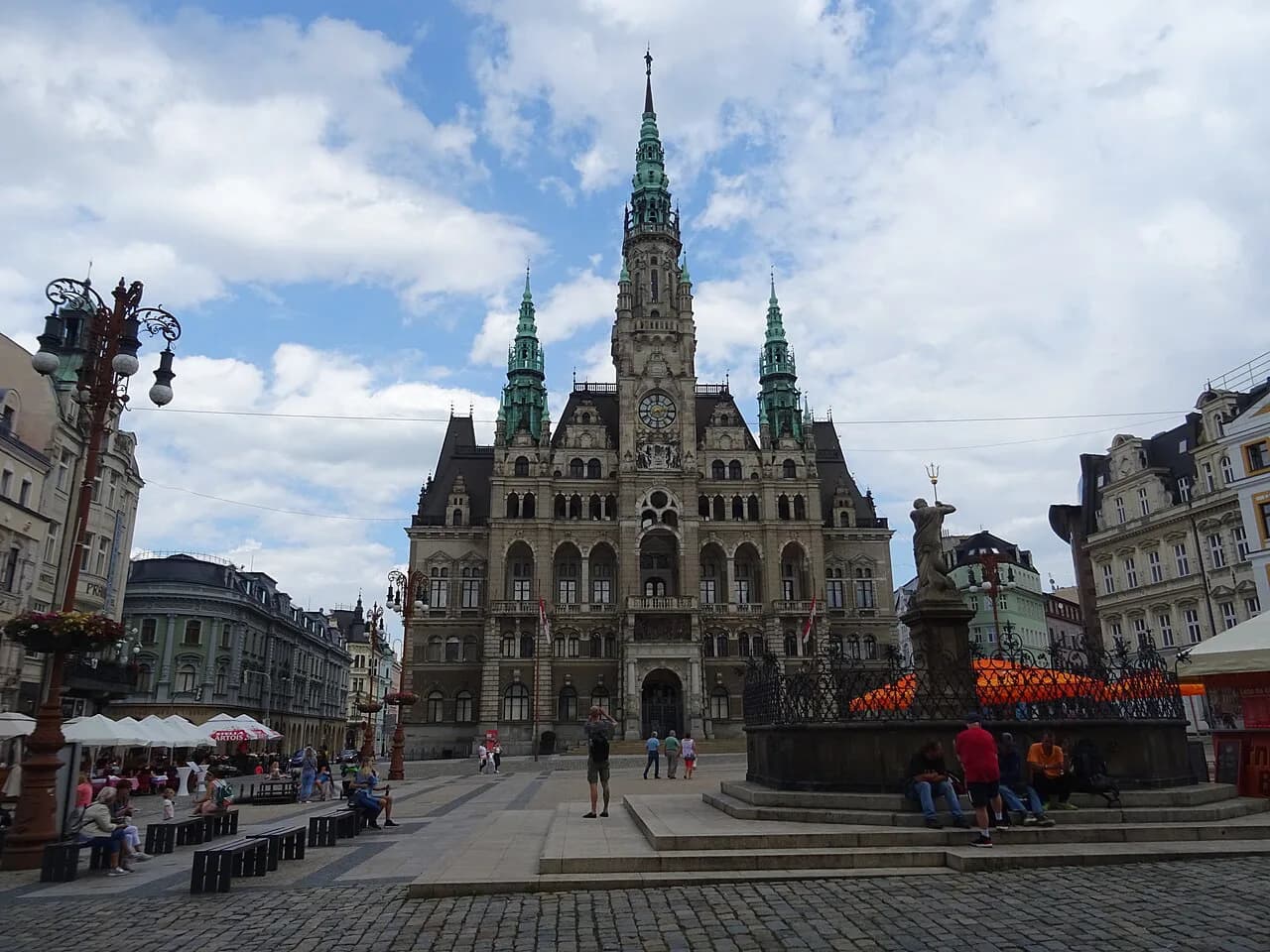
The Liberec town hall is a neo-Renaissance landmark on náměstí Dr. E. Beneše, built between 1888 and 1893 to designs by the Austrian architect Franz Neumann. It is a working municipal building rather than a museum, so the main thing to do here is read the facade, the tower and the square around it. This guide covers the building's dates, its architecture, the Roland statue on the central spire, the 1968 plaque at the front, and how the town hall fits into a walk through Liberec.
The square itself is the practical anchor: the town hall stands at nám. Dr. E. Beneše 1, close to shops and cafes, and the facade is visible at any hour from the pavement. Allow roughly 20 to 30 minutes to look at the building and the surrounding square rather than planning a half-day around it.
What the Liberec town hall is and where it stands
The town hall occupies the center of náměstí Dr. E. Beneše, the main square of the north Bohemian city, at number 1. It is the seat of the municipal authority, which is why the building is in daily use and not set up as a visitor attraction. Think of it as the civic centerpiece of Liberec rather than a sight with a ticket desk.
Liberec sits about seventy miles from Prague and grew rich on the Flemish and German textile trade, and the town hall's scale reflects that commercial confidence. If you are building a route through the region, the Liberec Guide covers how the square fits with the rest of the center.
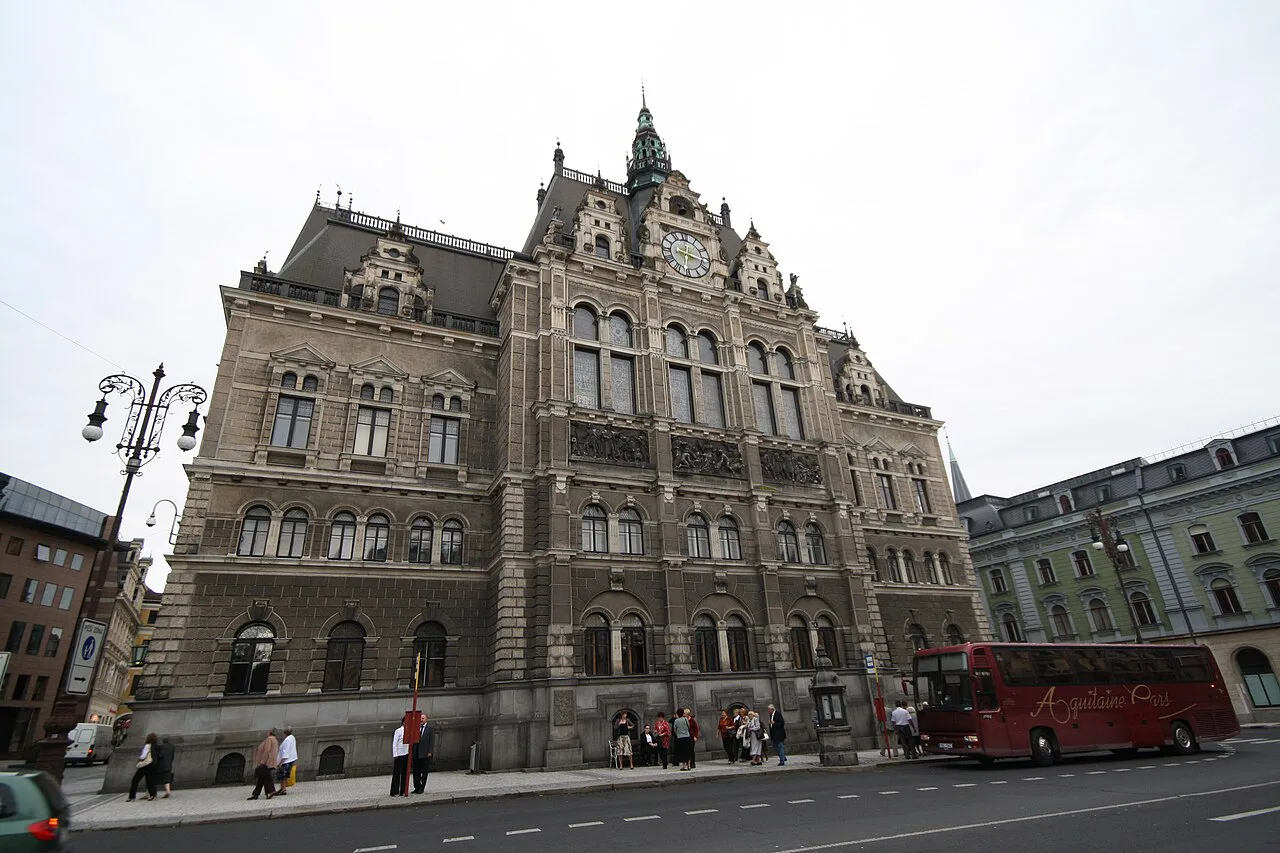
The building at a glance: Franz Neumann, 1888–1893
Franz Neumann won an open competition against eight other entries and built the hall between 1888 and 1893 on the site of an earlier building dating from 1602. That makes the present structure a late nineteenth-century statement piece planted on a much older civic footprint. Knowing the two dates helps: the square has been the town's administrative address for more than four centuries, but the building you see is 1890s work.
Architecturally it is neo-Renaissance, and it is a near-contemporary of the Rathaus in Vienna, whose design clearly influenced it. Travelers who have already stood in front of the Vienna city hall will recognize the family resemblance in the loggia, the balconies and the assertive roofline. Treat the comparison as a way to read the facade, not as a claim that one is a copy of the other.
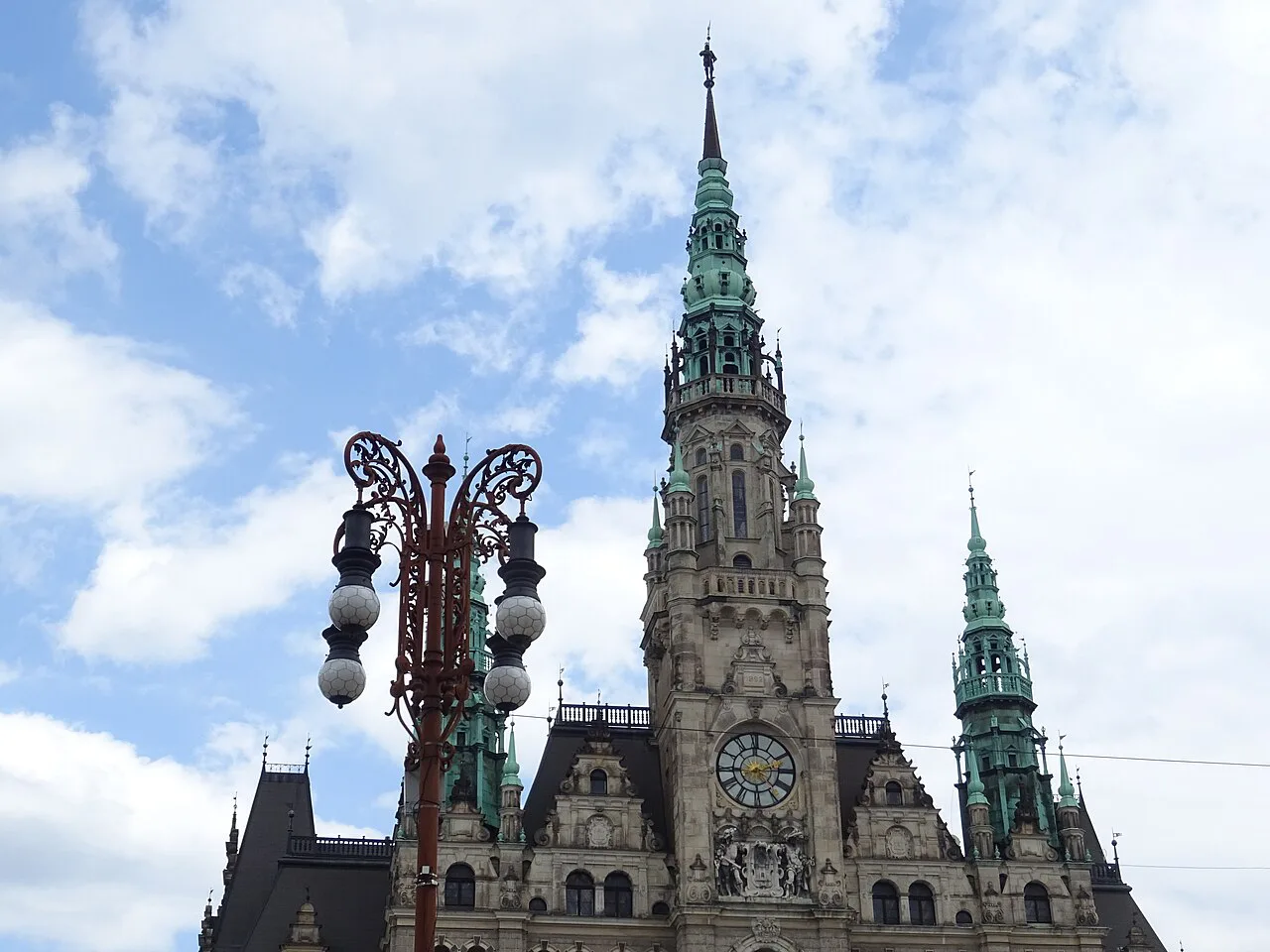
How it reads on the square: five stories, loggia, balconies and three pinnacles
The hall rises five stories, with a prominent loggia and balconies across the front and three pinnacles crowning the composition. The central spire carries a statue of the medieval knight Roland, shown bestowing his blessing on the deliberations of the town council below. Roland is the detail to find first when you stand on the square: look up to the middle of the roofline rather than at street level.
The facade rewards a slow read. The neo-Renaissance detailing is spread across the upper stories, so step back toward the middle of the square to take in the loggia, the balconies and the three pinnacles in one view, then move closer for the stonework. Late afternoon light on the front of the building is the reason to time your look rather than pass through at random.
The Roland statue and the red star that replaced it
The Roland statue on the central spire was removed during the Communist period and replaced by the emblem of the red star. The knight was put back once the Communist period ended, restoring the town's protector to the spire. That swap is the clearest single story the building tells about twentieth-century Liberec.
For a visitor, the takeaway is simple: the figure you see today is a restoration of the original idea, not an unbroken survivor from 1893. Look at the central spire with that in mind, and the building's roofline becomes a political timeline as much as an architectural one.
The 1968 plaque on the front of the hall
On 21 August 1968, during the Warsaw Pact invasion of Czechoslovakia, a convoy of tanks smashed into buildings next to the hall and crushed nine citizens to death. Their names are memorialized on a plaque on the front of the building. Protesters climbed the tower and hung a banner reading that the Russians should go home and that they wanted socialism without tanks and bayonets.
The plaque is the reason to walk right up to the facade instead of photographing it from across the square. Read it soberly and quietly; it records a specific loss in a specific place, and the square around it is ordinary, busy Liberec. This is the one stop on the square where a few minutes of silence is the right response.
What you can and cannot see inside: office hours are not sightseeing hours
The hall is a functioning city hall, so the published office hours describe when residents conduct official business, not when visitors can tour the building. The city lists City Hall office hours through the week, including Saturday morning, and those times are administrative rather than sightseeing access.
Do not plan a trip around entering the tower or joining a guided tour; there is no published visitor program in what the city and building listings show. If interior access matters to you, call the town hall inquiry line before you travel and ask what is possible on your dates. Otherwise, treat the facade and the square as the visit and you will not be disappointed.
Practical notes: the address, the inquiry line and how much time to give it
The address is nám. Dr. E. Beneše 1, 460 59 Liberec, and the town hall lists a ticket inquiry phone number for questions about the building. Use the phone rather than guesswork if you need to know about access on a particular day.
Budget 20 to 30 minutes for the facade, the plaque and a circuit of the square, and add time if you want coffee nearby. The town hall works well as the first stop on a Liberec walk, because the square orients you before you head out to the rest of the town. The Liberec Attractions: 4 Visitor Guides hub collects the other stops worth pairing with it.
Nearby on the same stop: around náměstí Dr. E. Beneše
The square is ringed by shops and cafes, so the town hall rarely stands alone in a visitor's day. The Trip.com listing maps restaurants and stores in and around the center near the building, which makes the square a natural lunch stop rather than a detour.
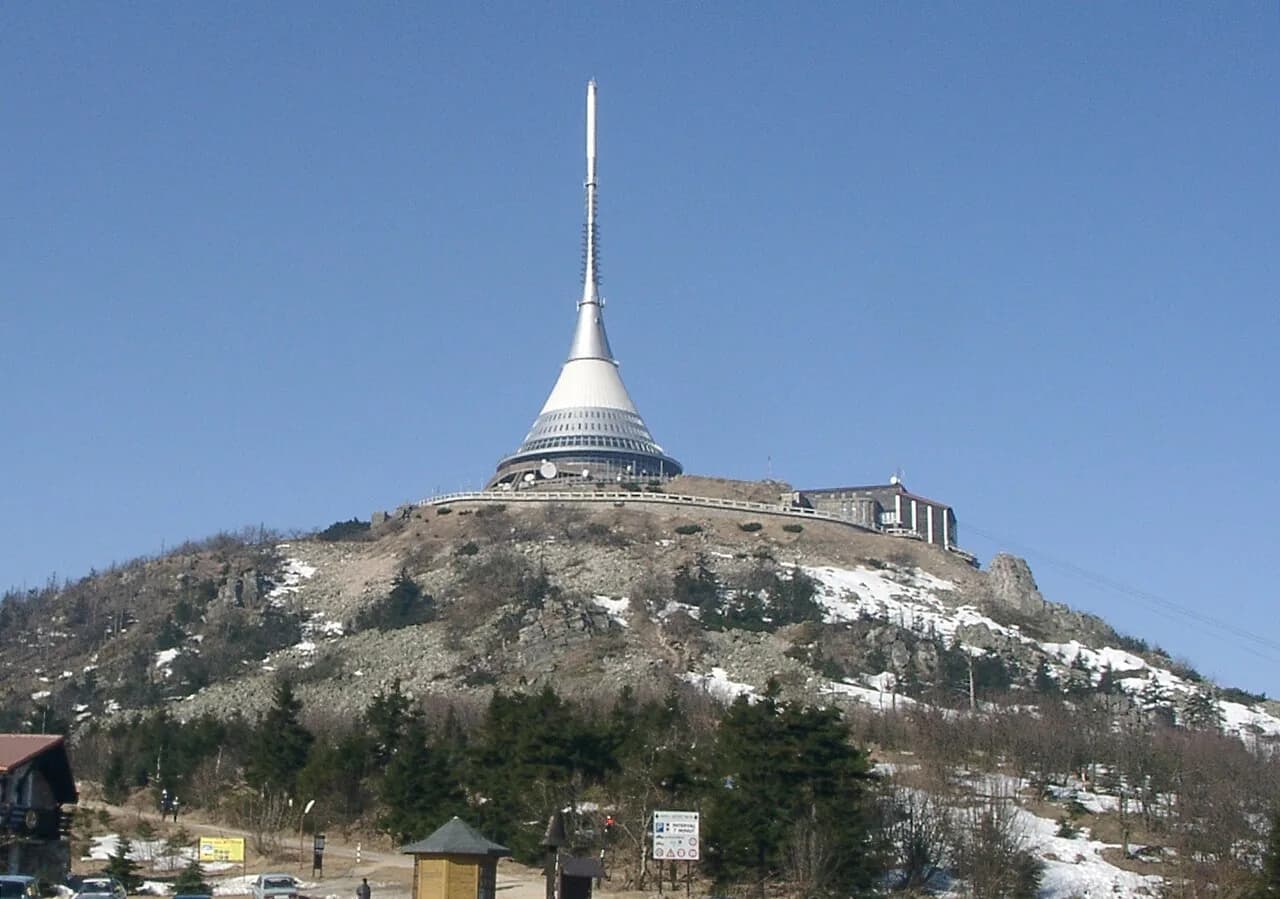
For the wider town, the Liberec map is useful for working out the walk from the square toward the rest of the center. If you want a single architectural counterpoint to the neo-Renaissance hall, the Ještěd Tower above the city is the other landmark most travelers come to Liberec to see.
Should the town hall be your first stop in Liberec?
Yes, if you treat it as a 20- to 30-minute introduction to the city rather than a ticketed attraction. The neo-Renaissance facade, the Roland statue on the central spire and the 1968 plaque give you the town's commercial confidence and its twentieth-century wounds in one square.
Call the town hall inquiry line before you go if interior access is the point of your visit, since the published City Hall office hours are for administrative business, not sightseeing. Build the rest of the day around the square and the town beyond it.
Explore more Liberec guides
Frequently Asked Questions
Can you go inside Liberec town hall?
The town hall is a working city hall, and the hours the city publishes are office hours for administrative business rather than visitor access. No tower tours or interior sightseeing program appears in the building's public listings, so call the town hall inquiry line before traveling if interior access matters to you.
How old is Liberec town hall?
The present building was constructed between 1888 and 1893, replacing an earlier building on the site that dated from 1602. The square has served as the town's administrative address for more than four centuries, but the neo-Renaissance hall you see is late nineteenth-century work.
Who designed Liberec town hall?
The Austrian architect Franz Neumann designed the building, winning an open competition against eight other entries. It is a neo-Renaissance design and a near-contemporary of the Rathaus in Vienna, which influenced it.
Sources
Notes for your Czech trip
Optional updates to our Czech town guides.
You might also like
Continue reading
More guides you'll find useful