Karlovy Vary Old Town: Squares, Colonnades and Streets to Walk
Karlovy Vary old town fits along the Teplá River: five colonnades, the Hot Spring, St. Mary Magdalene church and Stará Louka, walkable in a few hours.
On this page
Karlovy Vary (Carlsbad) old town is small enough to cover on foot in a few hours, because the historic core follows the Teplá River through a narrow valley rather than spreading across a grid. The essential walk strings together the five colonnades, the Hot Spring, two churches and the Stará Louka promenade, and you can add the museums or the Diana tower if you have longer. This guide explains what each part of the center is like, gives a river-valley walking order, and sets out the bus, train and car choices from Prague.
How the old town is laid out along the Teplá
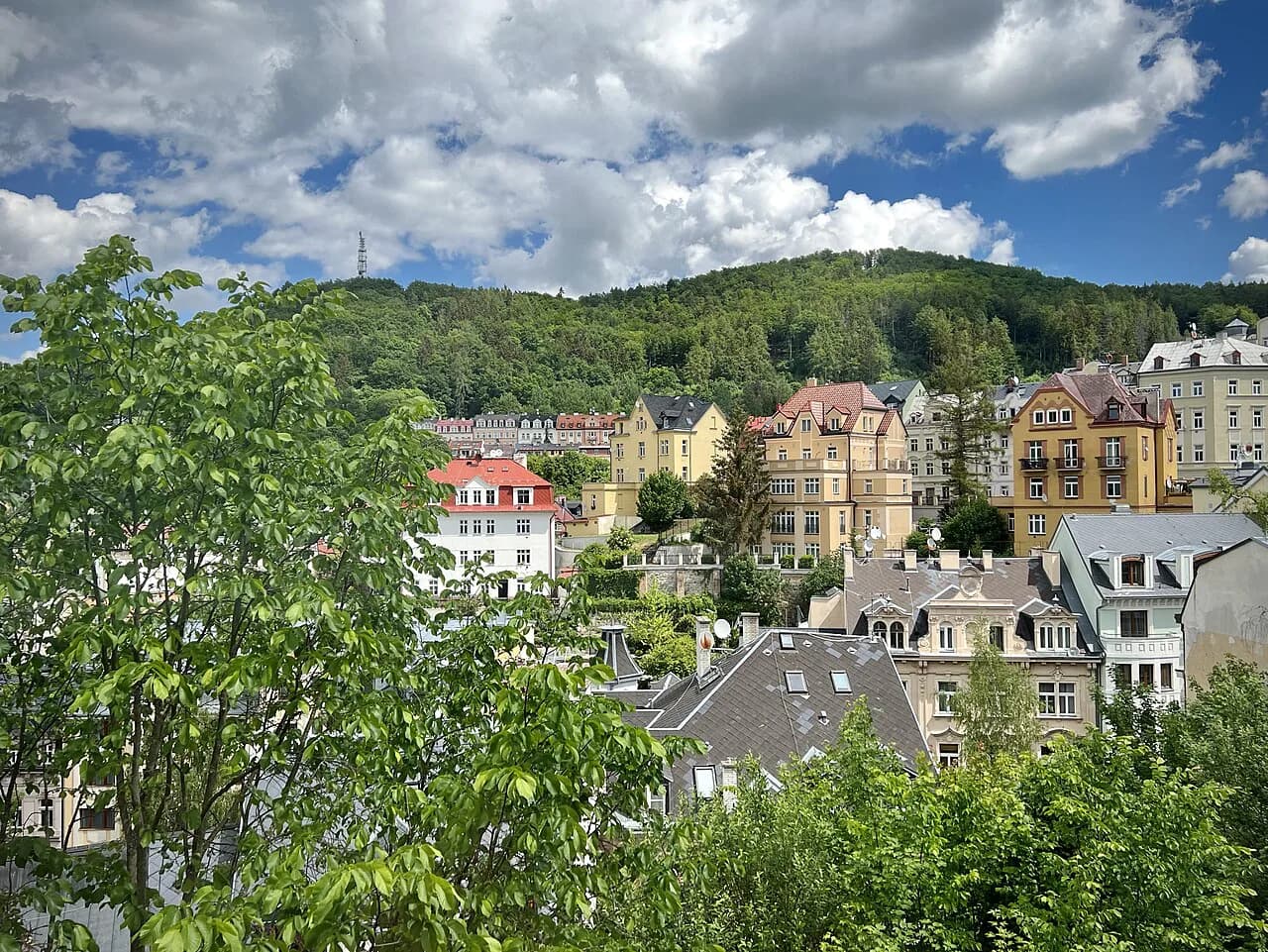
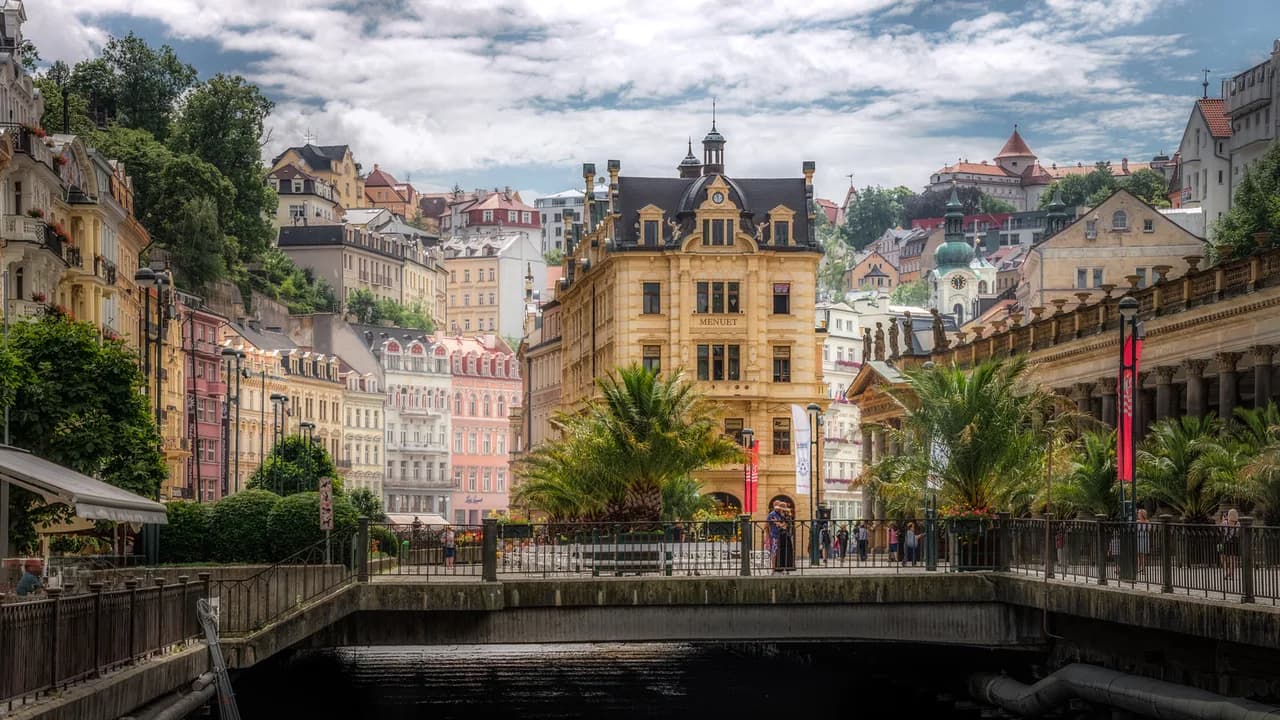
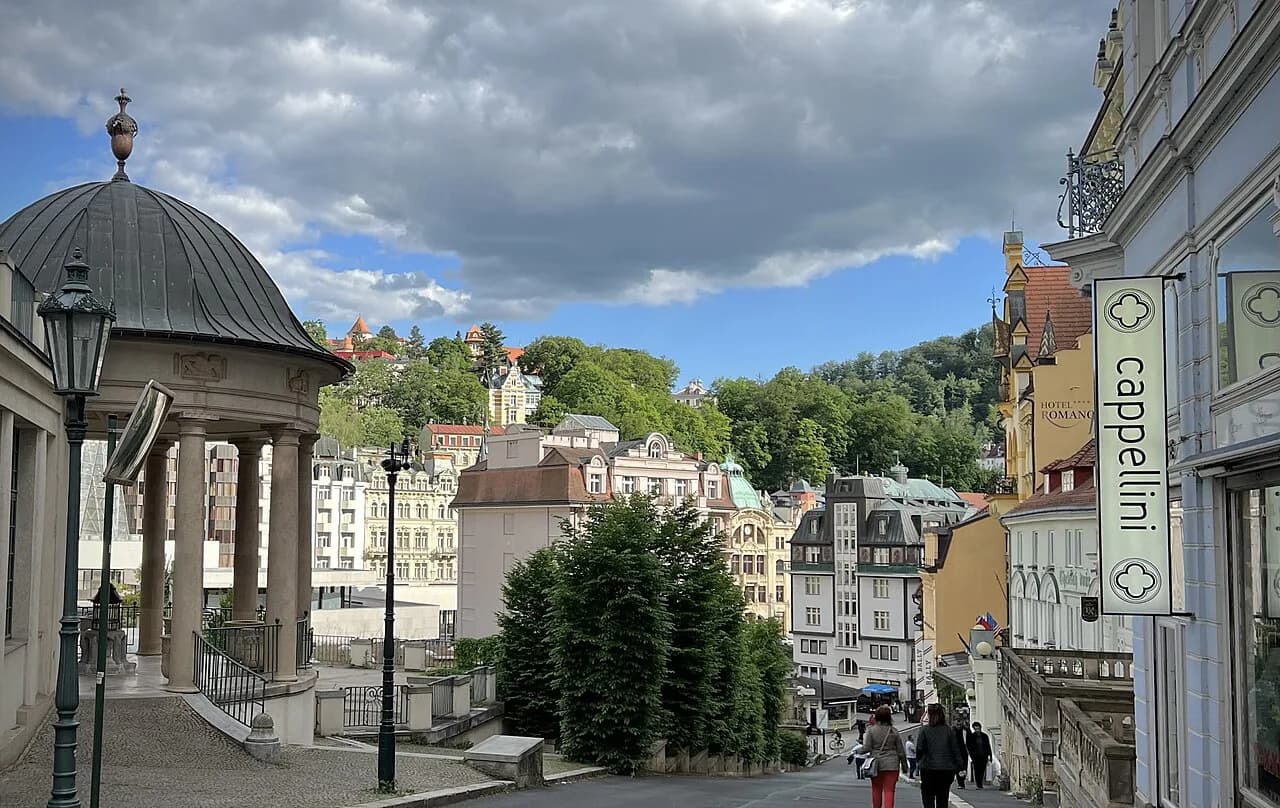
The old town sits in the valley of the Teplá River, which curves through the center and gives the spa promenade its shape. The colonnades follow the river and its banks, so the natural approach is to walk upstream or downstream from one pavilion to the next instead of crisscrossing the valley.
This river-valley layout is why a half day works here: the distance between the Hot Spring Colonnade and the Mill Colonnade is a short stroll, and the churches and Stará Louka sit between or beside them. Orient yourself with a Karlovy Vary map before you set out, and treat the river as your main street rather than trying to memorize individual turns.
Great Spa Towns of Europe describes Karlovy Vary as the largest open-air salon of Europe, a phrase that captures the promenade atmosphere: royal families, heads of state and artists came here to take the waters. That history is why the center reads as a continuous social space rather than a set of separate sights.
The five colonnades and what each one is for
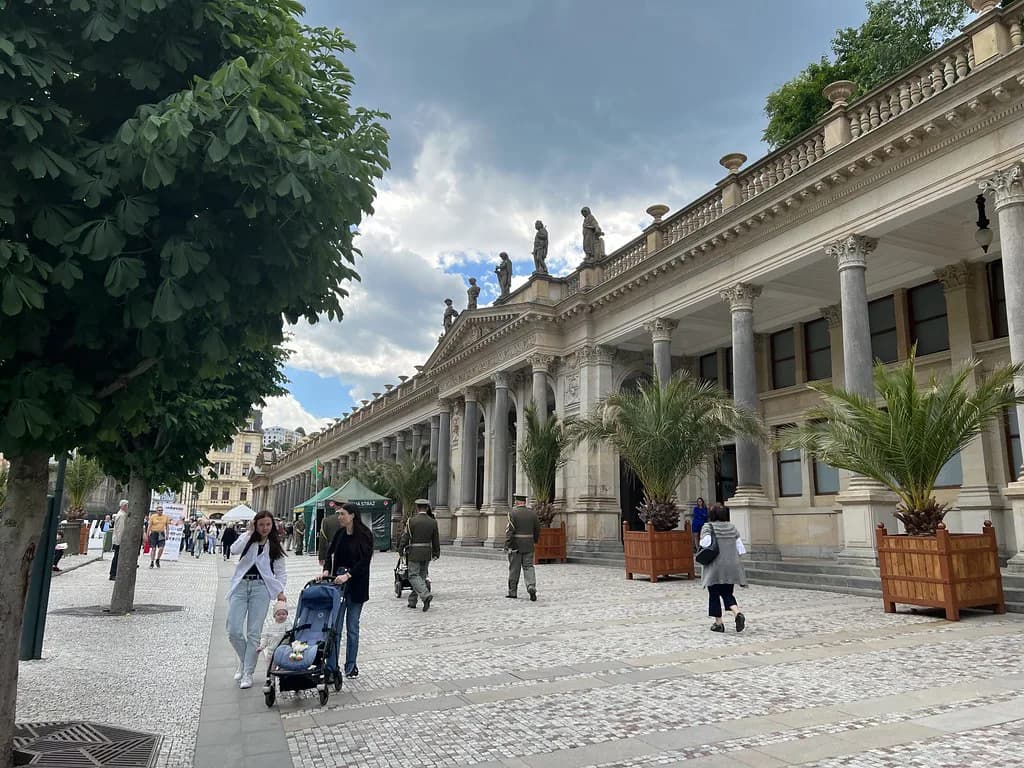
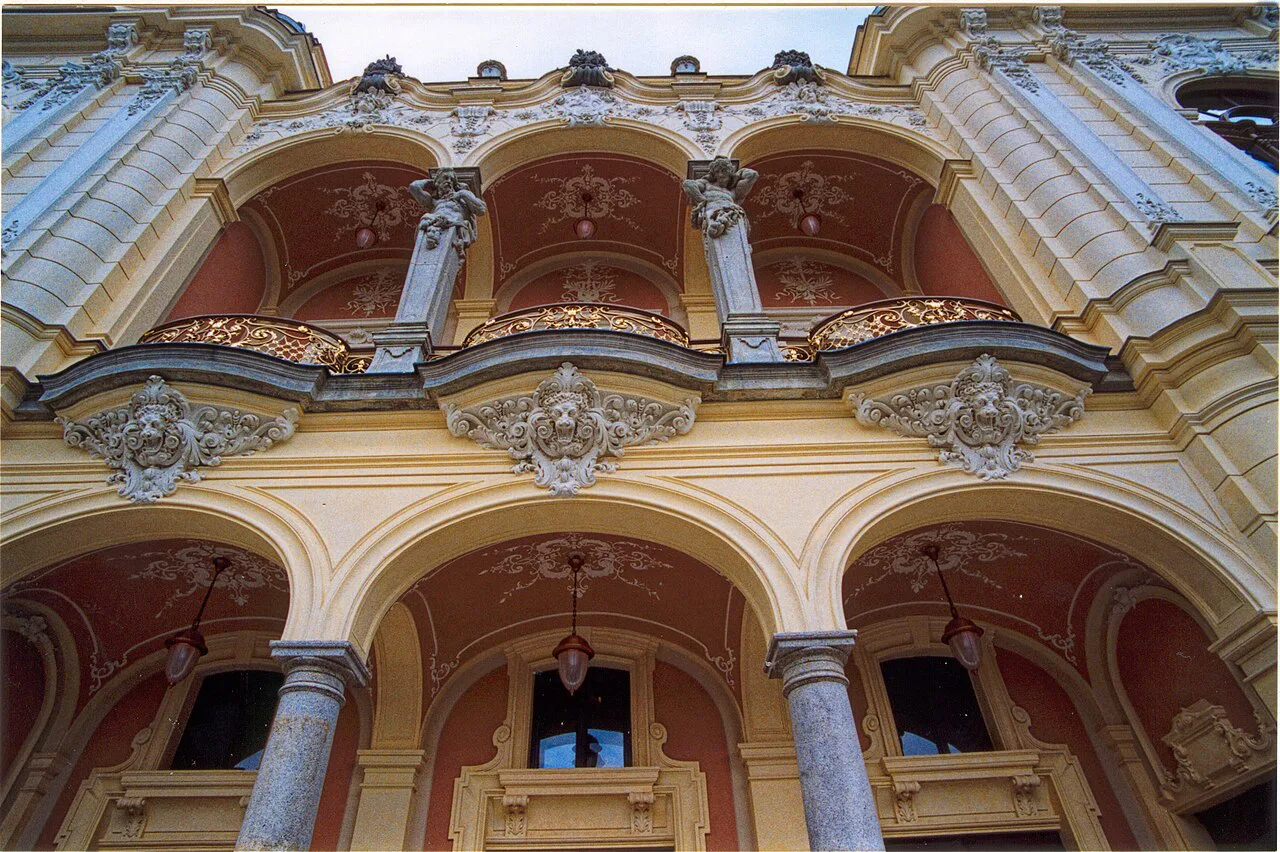
The colonnades are the defining feature of the old town, and they let you enjoy the hot springs even in the rain. The five are the Market Colonnade (Tržní kolonáda), the Mill Colonnade (Mlýnská kolonáda), the Castle Colonnade (Zámecká kolonáda), the Park Colonnade and the Hot Spring Colonnade (Vřídelní kolonáda), each with a different setting along the Teplá.
The Market Colonnade, built in 1883 by Ferdinand Fellner and Hermann Helmer, is an elegant wooden structure on the left bank of the Teplá and one of the city's symbols. The Mill Colonnade, designed by Josef Zítek in the Neoclassical style and opened in 1881, is the largest in town and houses the springs of five mineral springs, making it the one to linger in if you are following the water.
The Castle Colonnade, in Art Nouveau style by Friedrich Ohmann and inaugurated in 1912, is partially accessible to the public and holds the upper castle spring (Horní zámecký pramen). The Park Colonnade in Dvořák Park, also by Fellner and Helmer and opened in 1881, shelters the Snake Spring canal, so it is the quietest stop of the set.
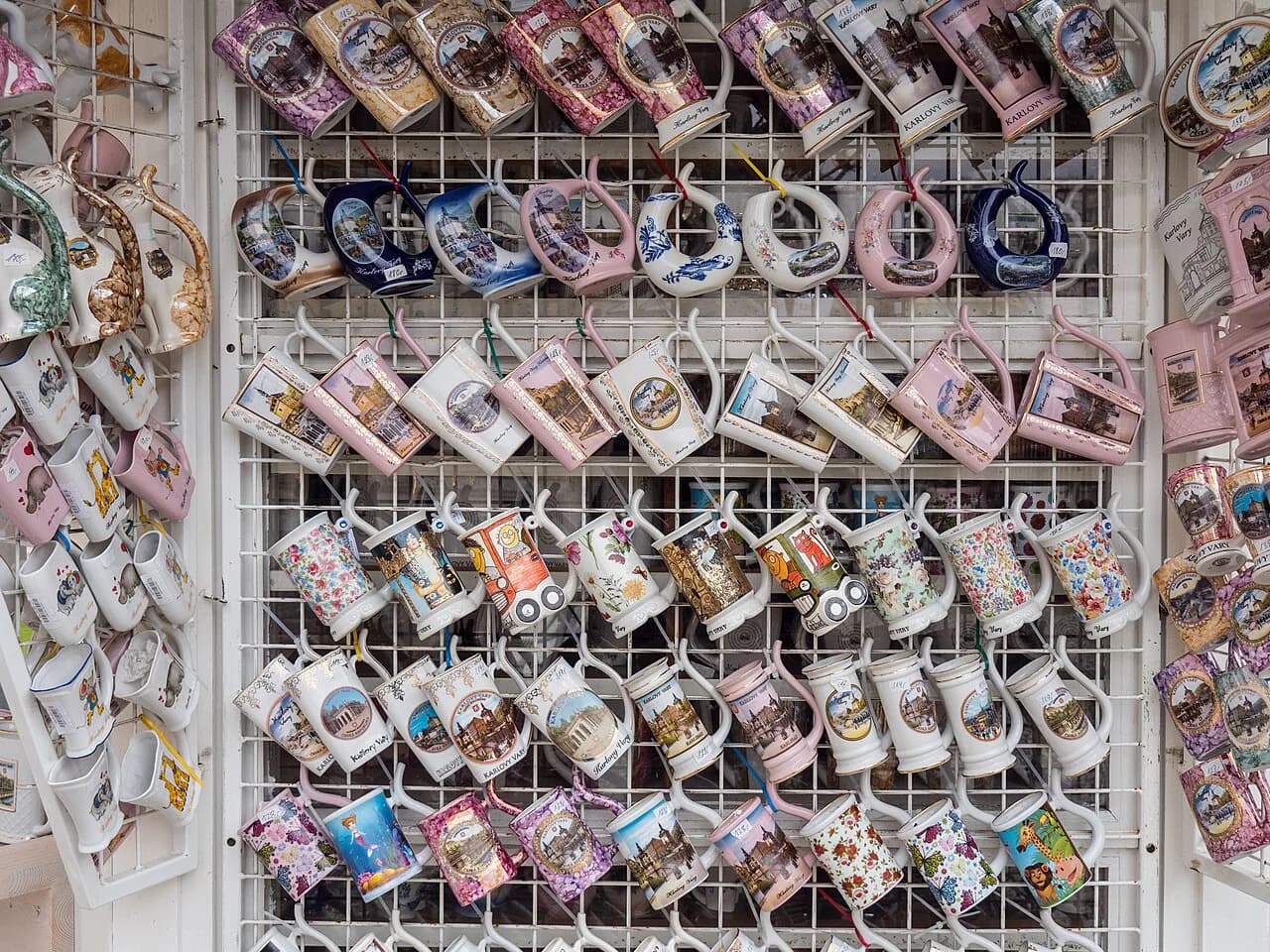
If you want to taste your way along the springs, a Karlovy Vary drinking cup is the local accessory, and the colonnades are where you use it. The colonnades page goes deeper on each pavilion, so use this section mainly to decide which ones to walk through first.
The Hot Spring and its 12-meter jet
The Hot Spring Colonnade, near Divadelní Square, houses the Pramen Vřídlo, a jet that reaches about 12 meters in height with a flow of roughly 2,000 liters per minute. It is the most theatrical single sight in the old town, and the colonnade is the natural first stop because everything else runs from it.
The springs themselves have been credited with curative powers for more than six centuries, and the geysers in the area can throw columns of water tens of meters high at temperatures as high as 70 degrees. Many springs also flow in the basements of spas and hotels, and guided tours such as the Hot Spring Underground let you follow those streams to their destination.
Treat the Hot Spring as a short stop rather than the whole visit; the value of the old town is in moving between the colonnades and the riverside streets. A separate guide covers the Vřídelní kolonáda in more detail if you want to plan around it.
St. Mary Magdalene and the Orthodox Church of Saints Peter and Paul
The Church of St. Mary Magdalene is one of the landmarks of the center and pairs naturally with the Hot Spring Colonnade and the Market Colonnade, since all sit close to the river in the heart of town. The Orthodox Church of Saints Peter and Paul, with its distinctive onion domes, is the other church to look for, and its position makes it a good marker for the western end of the promenade walk.
These two churches give the old town its skyline and break up the colonnade sequence with a change of scale. Visit them as you pass between spring pavilions rather than as separate excursions, and the half-day route stays compact.
Stará Louka and the riverside streets
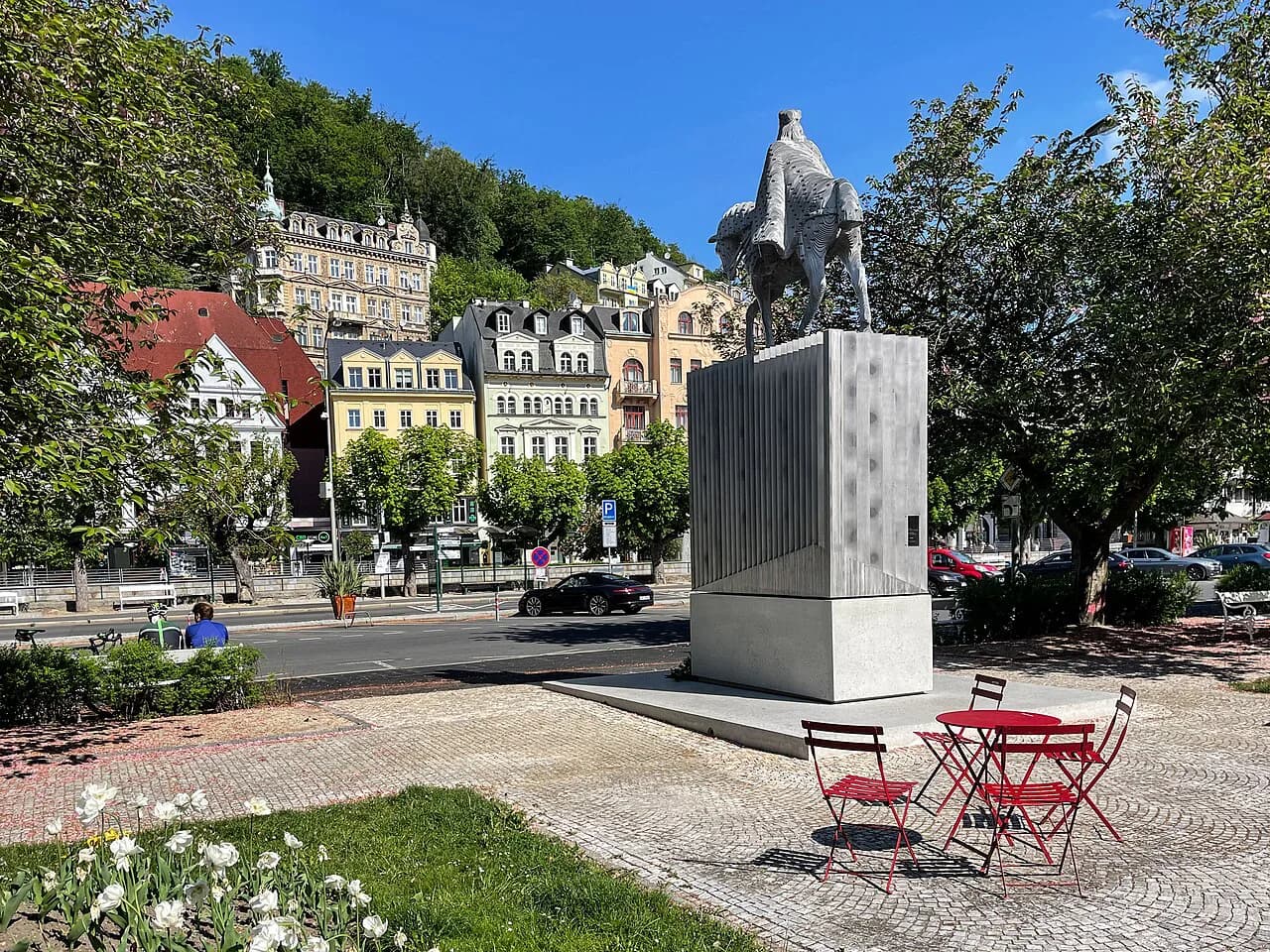
Stará Louka is the riverside promenade street that most visitors picture when they think of Karlovy Vary: elegant facades on one side, the Teplá on the other, and the colonnades within easy reach. Walk it in the direction of the Grand Hotel Pupp and you cover the historic heart in one continuous line.
This stretch is also where the promenade atmosphere is strongest, so allow time to sit or simply stand by the river rather than treating it as a corridor between sights. If your day is tight, Stará Louka is the part not to skip.
Grand Hotel Pupp at the edge of the center
The Grand Hotel Pupp anchors the western edge of the old town and marks the end of the classic promenade walk along Stará Louka. You do not need to be a guest to appreciate it as a landmark, and it makes a natural turning point before you head back through the colonnades or uphill toward the viewpoints.
Use it as a fixed point on your route: from here you can retrace the river, cut up to the Diana tower, or continue to the museums. Treating the hotel as one well-known landmark keeps the walk from turning into a list of unconnected stops.
Moser Glass Museum and the Jan Becher Museum
The Moser Glass Museum and the Jan Becher Museum give the old town a cultural stop beyond the springs, and both are indoor options if the weather turns. They fit best as additions to the walking route rather than as the reason for the trip, so slot them in after you have seen the colonnades and the churches.
This is where a short visit needs a trade-off: choose one museum, or none, and keep the river walk intact. The Moser factory and the Jan Becher herb-liqueur story are the two obvious picks if you want an indoor hour in the middle of the day.
Diana Observation Tower and the viewpoints above town
The Diana Observation Tower sits very close to the center at a height of 562 meters above sea level, which makes it the easiest viewpoint to add to a walking day. It gives you the valley from above, so you can see how the Teplá, the colonnades and Stará Louka fit together before or after you walk them.
Going up costs you time and energy, so decide whether the view matters more than a second museum or a slower promenade. For most first-time visitors, the tower is worth one clear look at the layout of the old town rather than a full excursion.
A walking order for a half day on foot
Start at the Hot Spring Colonnade, walk through the Market Colonnade and the Mill Colonnade, then continue along Stará Louka toward the Grand Hotel Pupp. Take in St. Mary Magdalene and the Orthodox Church of Saints Peter and Paul as you pass, and finish with the Castle and Park colonnades if you still have energy.
This order follows the valley, so you are always walking toward the next pavilion rather than backtracking, and it keeps the churches and promenade on the same line. If you want a more structured version, a Karlovy Vary walking tour can handle the sequencing for you.
For a tighter schedule, the one day in Karlovy Vary plan trims the route to the Hot Spring, two colonnades and Stará Louka, which is realistic if you arrive late. Build the day around the river and let the museums and the Diana tower be optional extras.
If you want fewer stops and no ticket decisions, the free things to do route leans on the colonnades and the promenade. Either way, check opening hours for the churches and museums before you build a schedule around them.
Getting there from Prague by bus, train or car
Buses from Prague are usually the cheapest option, trains are competitive on comfort, and a rented car gives you flexibility only if you plan to continue into the region. Prices depend on season and operator, so compare current listings for day tours, bus, train and car rental before you book.
Those figures are historical and in euros, not current koruna fares, so confirm today's prices and timetable times when you book. If you are combining Karlovy Vary with other stops, a Karlovy Vary itinerary is a better planning base than a single day trip.
Once you arrive, the bus and train stations are below the old town, so the walk up to the colonnades is part of the visit. Leave the car outside the valley if you drive, because the center is compact and best covered on foot.
Which route to follow in Karlovy Vary
Choose the river walk if this is your first visit: Hot Spring, Mill Colonnade, Stará Louka and the Grand Hotel Pupp in one line, with the churches on the way. Add a museum only if the weather pushes you indoors, and treat the Diana tower as a bonus view rather than a required stop.
For a broader list of what the town offers beyond the old town, use the Karlovy Vary attractions hub before you lock in a schedule. The center rewards a slow half day more than a rushed checklist, and the walking order above is the simplest way to see it.
Frequently Asked Questions
Why is Karlovy Vary famous?
It is the most prestigious spa town in the Czech Republic, known for its hot springs, its colonnades and its place among the Great Spa Towns of Europe. Visitors come for the waters, the promenade architecture and the social history of the resort.
Which movies have been filmed in Karlovy Vary?
The town is closely associated with its international film festival, and the Grand Hotel Pupp is the best-known backdrop in the center. Check the festival's own materials for specific titles and years.
Sources
Notes for your Czech trip
Optional updates to our Czech town guides.
You might also like

Continue reading
More guides you'll find useful