Karlovy Vary History: The Dates Behind the Town You Walk Through
Karlovy Vary history in a short timeline, from Charles IV's 1370 town charter to the fires and floods that shaped today's colonnade-era spa town.
On this page
Karlovy Vary history starts with a documented charter, not a legend: Emperor Charles IV granted the settlement royal town privileges on 14 August 1370, and the town takes his name. The famous story of a hunting party stumbling on hot springs is tradition rather than record, so treat it as a colorful opener and anchor your visit on the dates below. This guide runs the documented timeline from that charter to the railway and points out what each era left standing for you to see.
The short version for a visitor: almost nothing you photograph in the center was built before 1759. Most of the architecture that defines the spa promenade dates from the 18th and 19th centuries, when the town rebuilt after repeated disasters. Knowing that reshapes a walk, because your eyes start looking for what survived rather than for a medieval core.
Timeline at a glance
The official town timeline gives a clean sequence to hold in your head: 1370 town privileges, 1401 confirmation and the right of asylum, 1582 flood, 1604 fire, 1640 Swedish plundering, 1707 free royal town status, 1711 Peter the Great's stay, 1759 fire, 1769 thermal salt manufacture, 1785 Goethe's visit, 1807 first Becherovka production, 1870 railway connection and 1890 flood. Each line explains a rebuild, a reputation or a piece of infrastructure you still encounter in the center today.
Read the list in two halves: first destruction, then reputation and industry. That shift matches what you feel on the ground, because the buildings look confident and decorative — financed by a spa economy that had already found its public.
Founding: Charles IV and the 1370 town charter
Charles IV stayed in the town in 1370, 1374 and 1376, and the privileges he granted were modeled on the rights of nearby Loket. This is the historical founding moment, and it explains why the Emperor's name sits on the town rather than some earlier figure. If you only remember one date from Karlovy Vary's past, keep 1370.
The spring discovery narrative is separate from that record, and the town presents it as legend. That distinction matters when you hear the tale repeated on a spa walk: it is a good story about imperial hunting, not an archival fact.
Why so little medieval Karlovy Vary survives
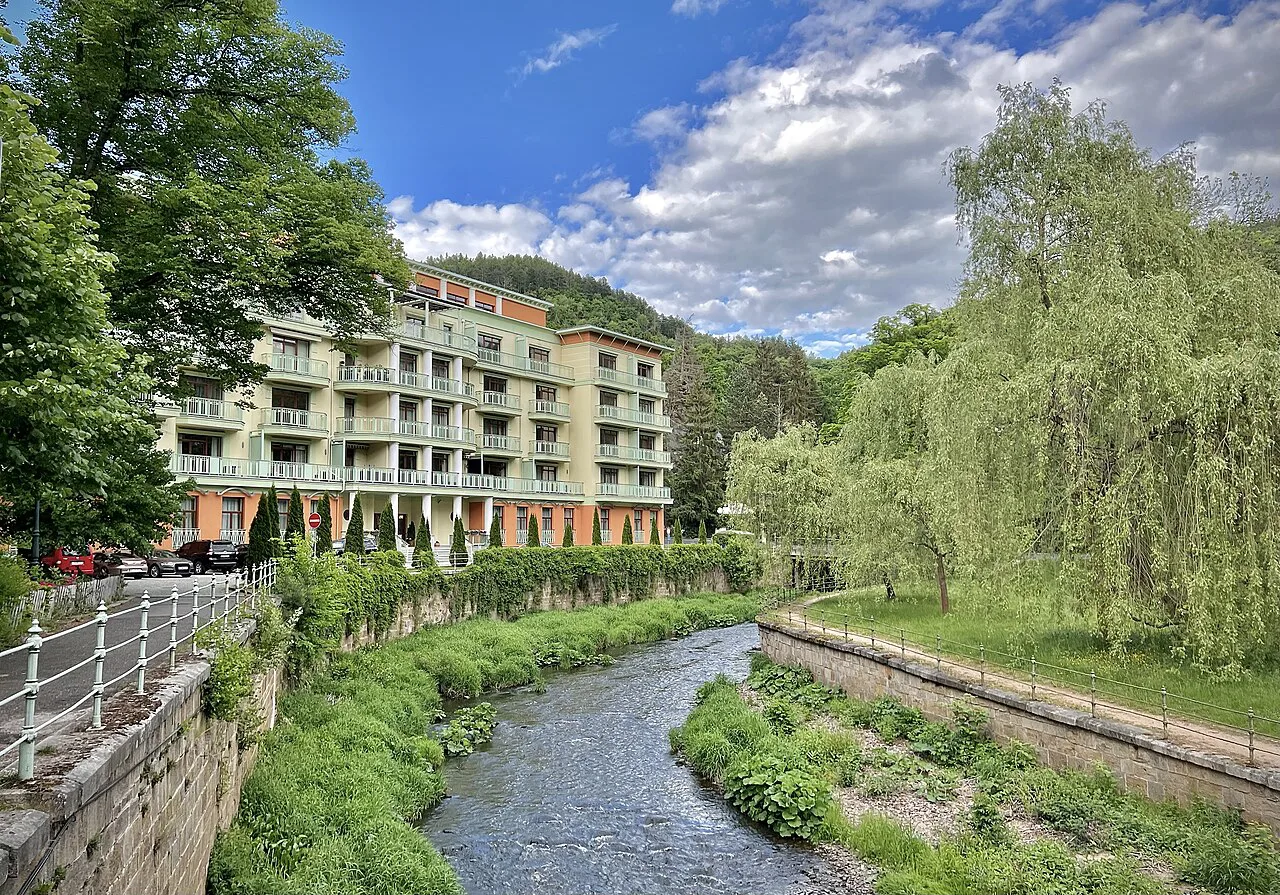
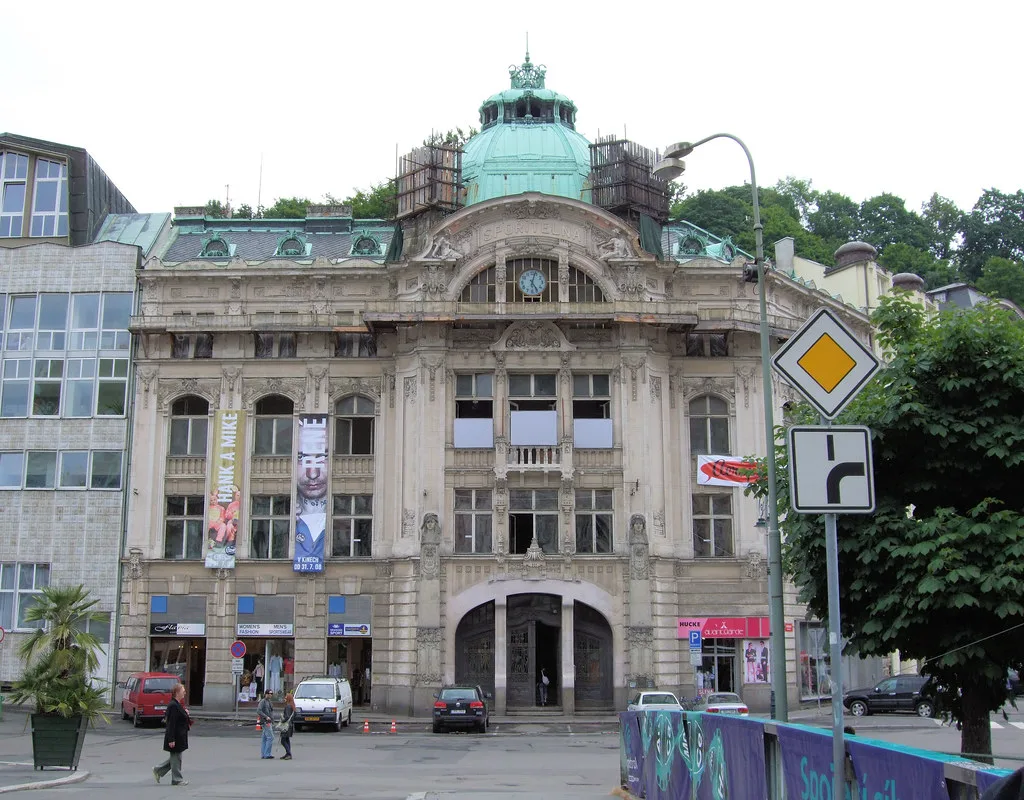
In 1604 a fire destroyed 99 of the town's 102 houses, leaving three standing. The same century brought Swedish plundering during the Thirty Years' War, and another major fire in 1759 burned 224 houses, including the Castle Tower and the former town hall. Saying that the medieval town is gone is not a figure of speech.
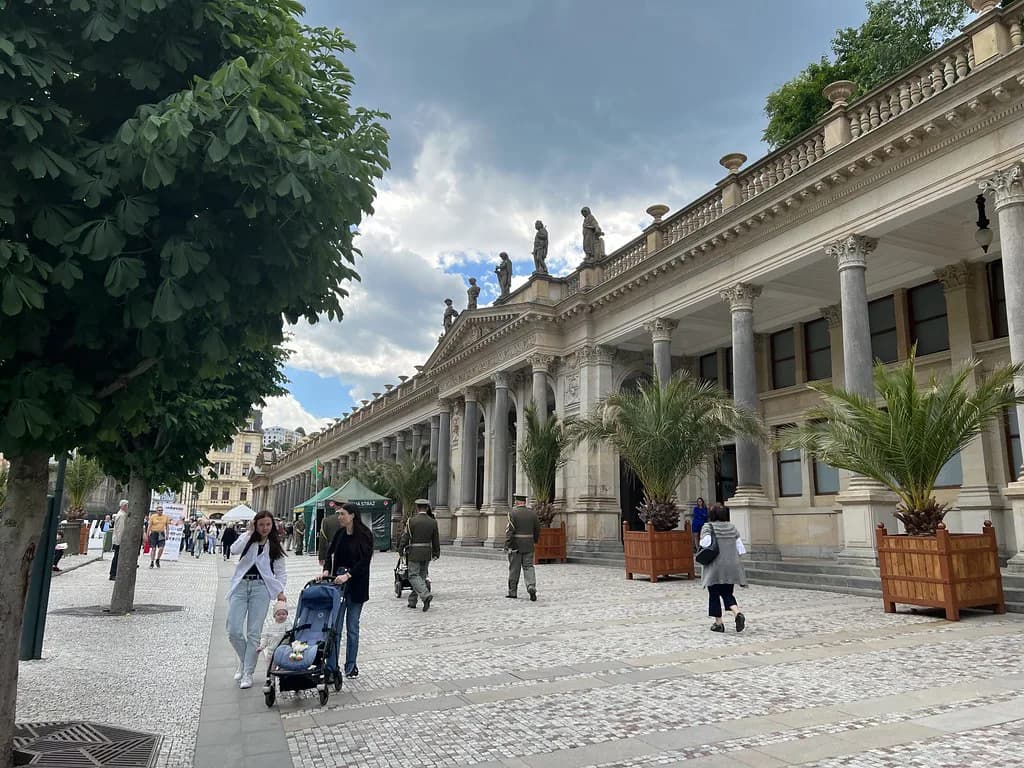
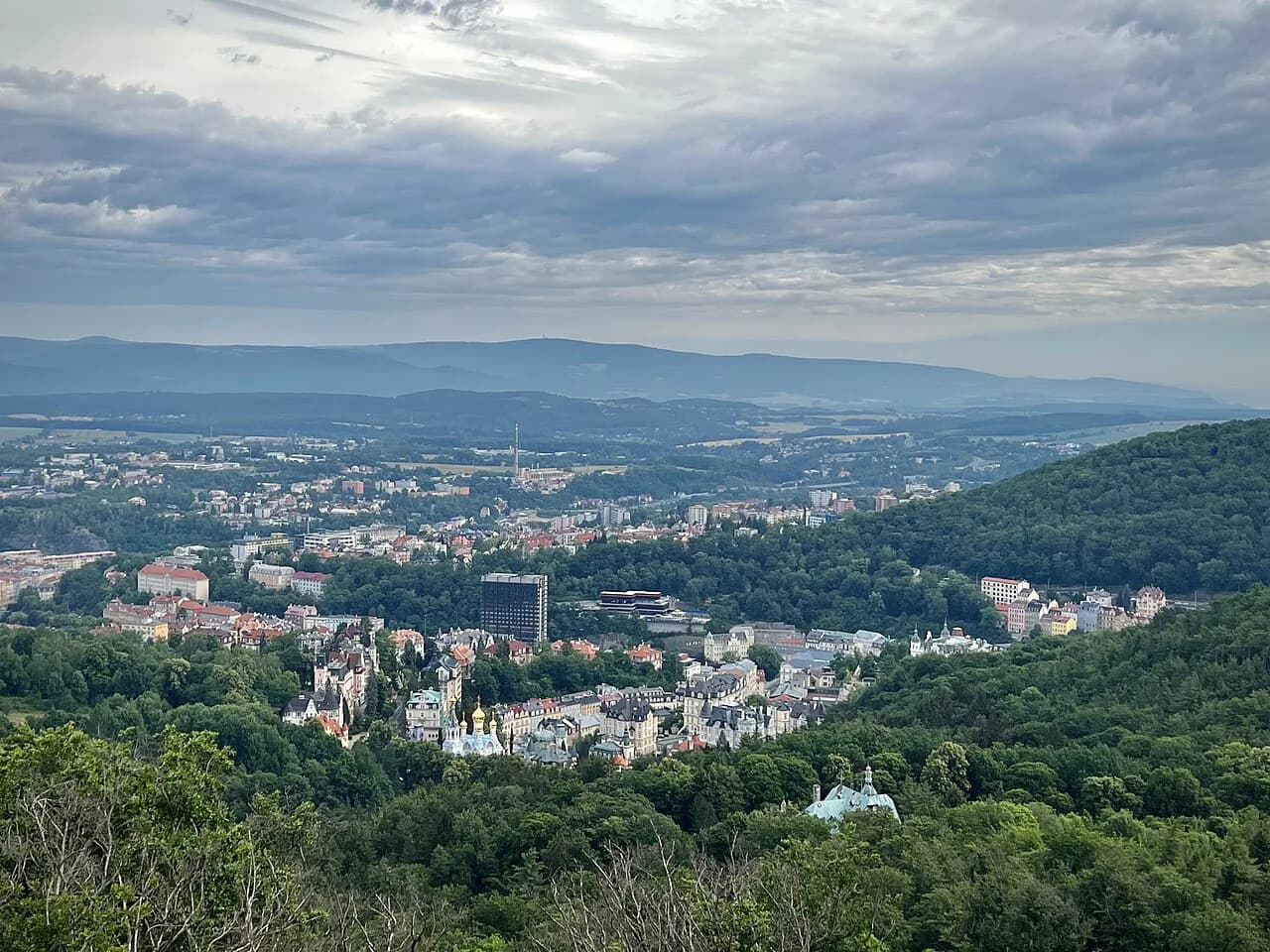
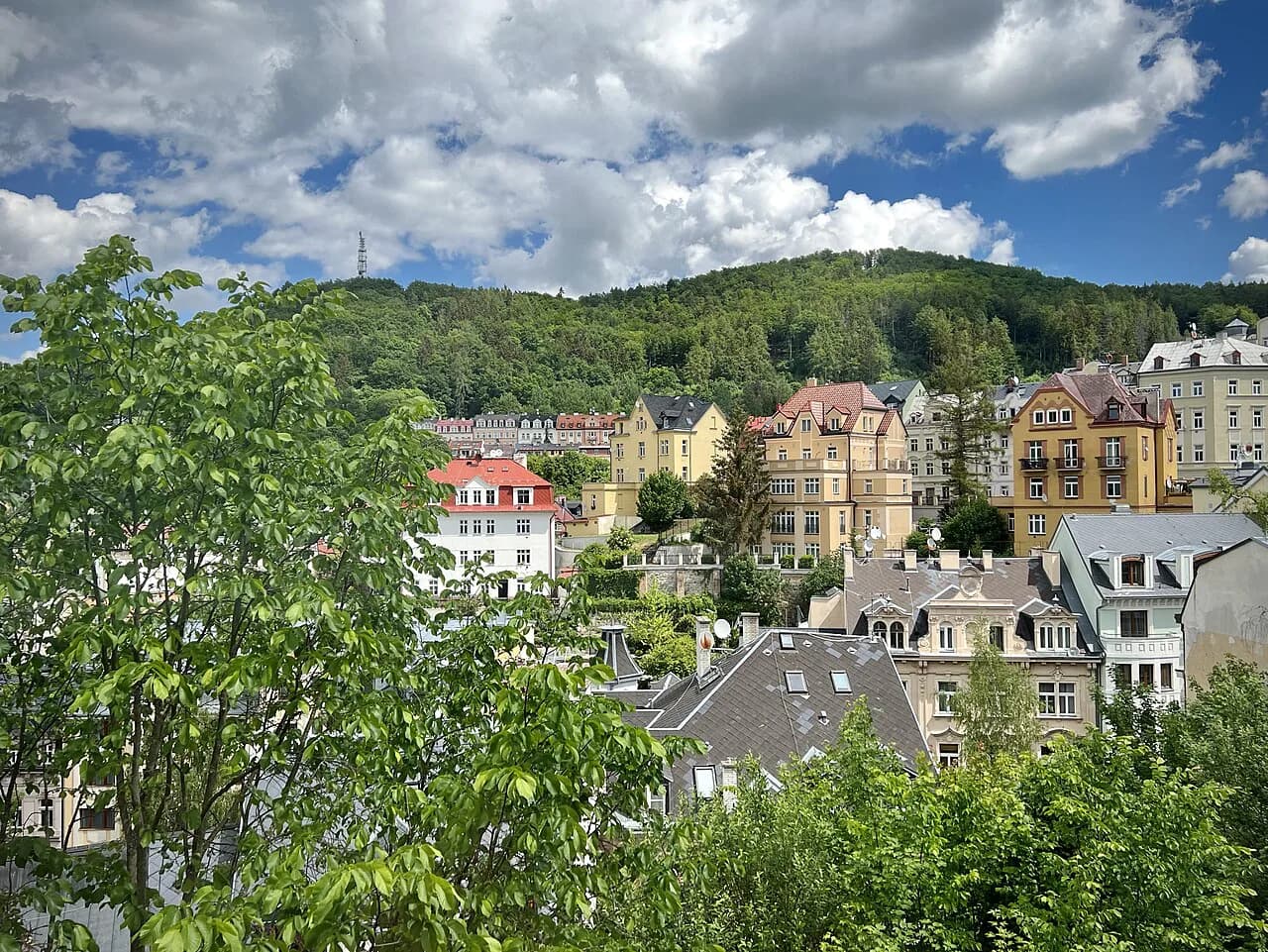
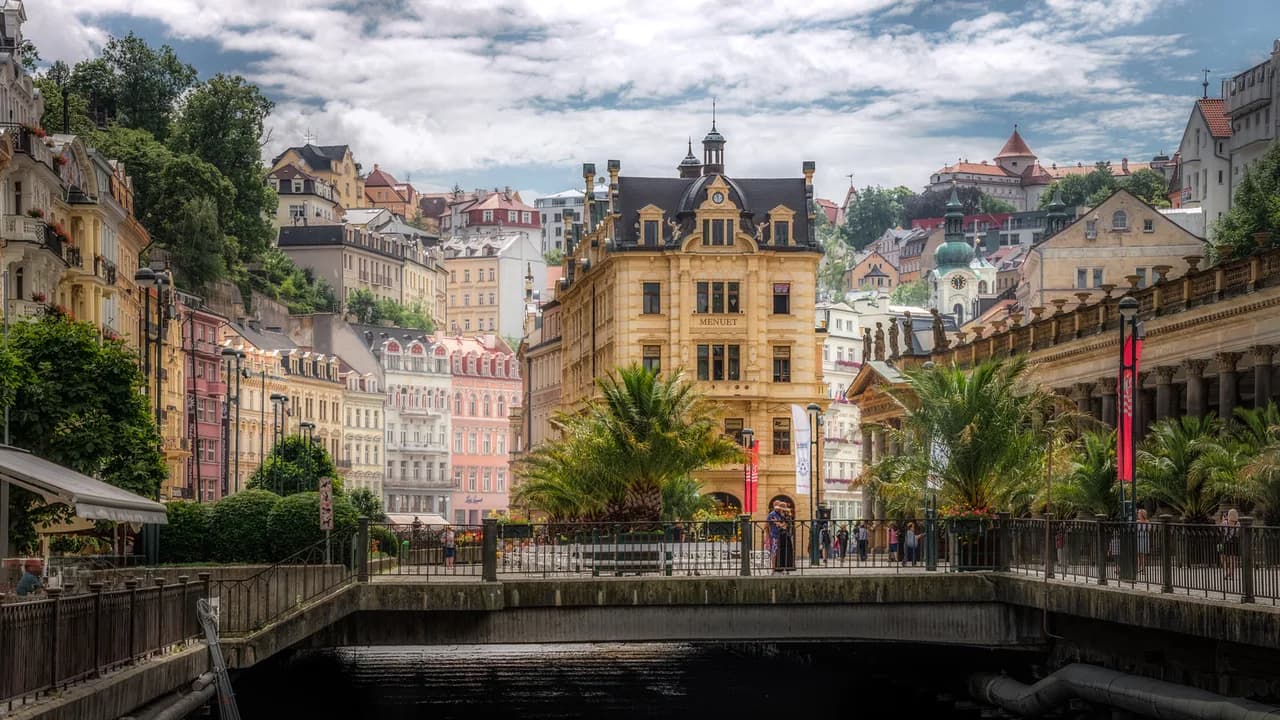
What you see on the promenade reflects the later rebuilding campaigns, which is why the timbered or Romanesque core you might expect from a Czech town is absent here. Spend your attention on the colonnade-era streetscape and the river corridor instead. The Teplá River and its embankment organize the whole walkable center, and every later building was fitted along it. For a closer look at the old core, see the Karlovy Vary Old Town guide.
Disasters that reset the town: 1582, 1604 and 1759
The 1582 flood came after heavy spring rain caused ponds on the Teplá to burst their dams; 36 houses were destroyed outright, 18 partially, and all bridges were swept away. The 1890 flood, listed later in the timeline, is remembered as the worst. Water has shaped this town as much as fire, and the narrow valley setting makes both risks easy to understand on site.
The 1759 fire started in the House at the Three Moors on Tržiště, the Market Street that still runs through the center today. Walk that street with the date in mind and the scale of the rebuilding becomes concrete, because the houses you pass replaced a burned-out block.
Free royal town status and the famous guests
Emperor Joseph I confirmed the town's privileges in 1707 and named Karlovy Vary a free royal town. The guest list that followed is the town's real historical currency: Peter the Great stayed in 1711 and 1712, and Goethe visited in 1785. When you see plaques and names around the spa center, these are the people the town is invoking.
A grimmer line belongs in the same timeline: the last execution in Karlovy Vary took place in 1727, at a gallows site on Šibeniční Hill, where the Bellevue Gazebo now stands. It is a reminder that the elegant spa identity was layered onto an ordinary early modern town with ordinary harsh justice.
Becherovka and thermal salt: the town's early industry
In 1769, under a court decree, the town began producing thermal salt using a method devised by the physician David Becher, drawing the salt from the mineral water itself. In 1807 came the first production of Becherovka. Both show a spa town turning its natural resources into products with a shelf life beyond the season.
For a visitor, this is the historical context behind the drinking cure rather than a shopping tip. The mineral water is the town's original industry, and the salty residue was once a way to carry it home. Understanding that makes the colonnades read as working infrastructure, not just photogenic backdrops.
The railway arrives and the town joins Europe
In 1870 Karlovy Vary connected to the European railway network, which is the moment the spa became reachable at scale for wealthy visitors from across the continent. That connection explains the confidence of the late 19th-century buildings along the river. It is also why the town's layout feels like a resort built for arrivals.
The 1890 flood closes the documented timeline and sits at the end of that same prosperous era. Taken together, the railway and the flood frame the period whose architecture you walk through: built fast, rebuilt fast, and still standing.
How the timeline maps onto the streets you walk today
Use the dates as waypoints rather than a lecture. Start on Tržiště, where the 1759 fire began, follow the Teplá corridor past the colonnades, and note that almost every facade you pass is post-1759. The Hot Spring Colonnade area is where the thermal water, the town's founding asset, is most obviously on display.
If you want to structure the center as a single loop, the walking route through the spa core covers the river, the main colonnade and the market street in a compact stretch. A map helps because the valley bends, and the streets do not form a grid.
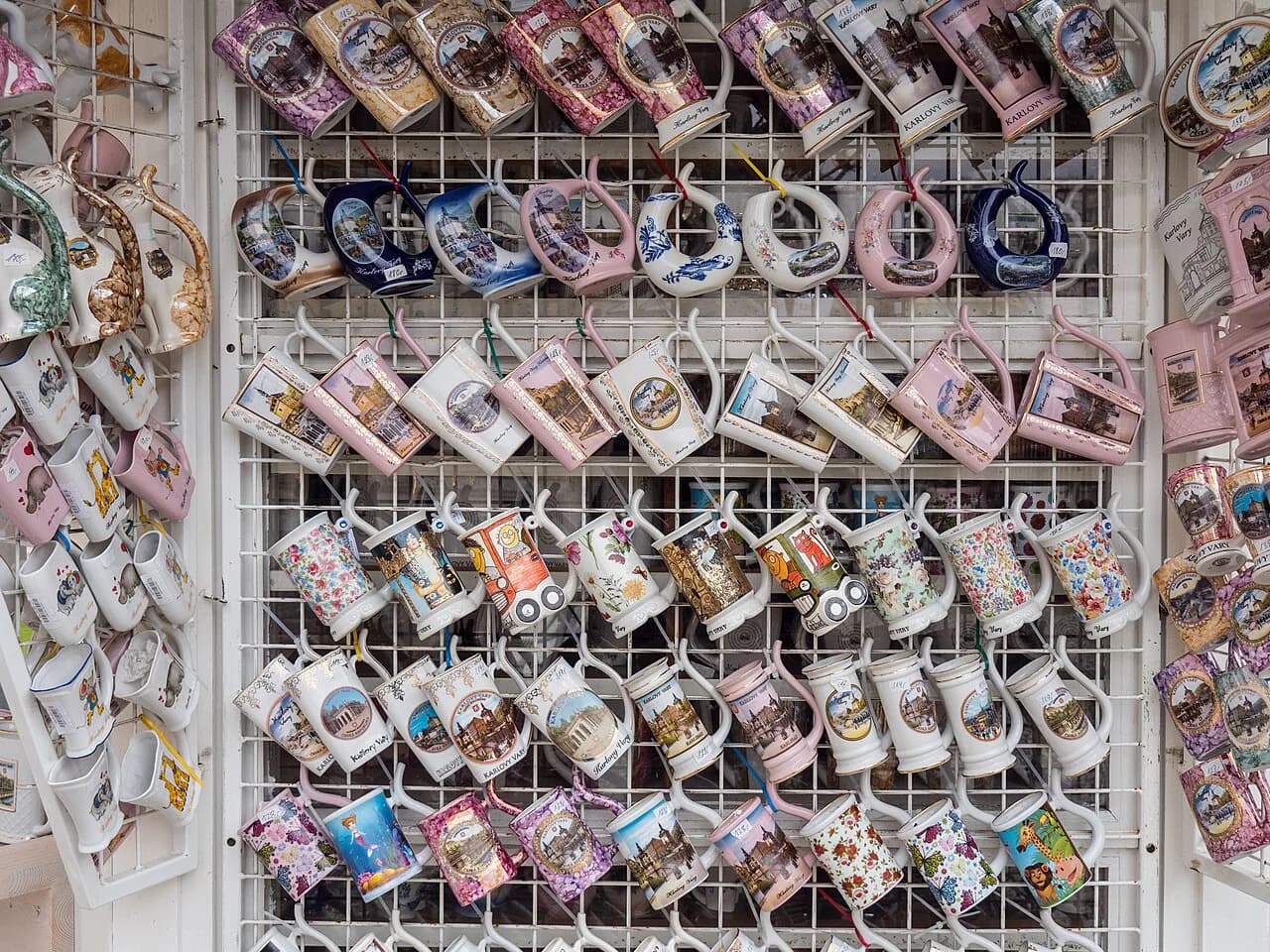
The stories behind the custom of sipping from a porcelain cup go back to the drinking cure, and the town's spa identity is inseparable from that ritual. If the timeline leaves you curious about the everyday spa culture rather than the dates, follow that thread next.
Where the Karlovy Vary story continues on site
The town's own history pages lay out the full timeline, and that is the most reliable place to confirm a date before you repeat it. For a broader plan of what to see between the historical markers, start with the town guide to things to do in Karlovy Vary, Town by Town.
If you prefer an organized introduction, the local tourist information service runs guided options, and the town publishes its own tours and visitor card details. Nothing about the historical walk requires a ticket, but a guide can connect the dates to the buildings faster than a plaque can.
Beyond the promenade, the town's museum collections are where objects and documents fill out the spa story, and they make a sensible indoor stop if the weather turns. The Karlovy Vary Attractions: 9 Visitor Guides hub pulls the individual sights together if you want to branch out from the timeline.
Which date should you look for on your walk?
If you remember one thing, make it 1759: the fire that burned 224 houses explains why Karlovy Vary reads as a confident 18th- and 19th-century spa rather than a medieval town. Walk Tržiště with that date in mind, then follow the Teplá to the colonnades and the story connects itself.
If you have a spare hour, the cheapest way to absorb the history is simply to walk the promenade loop and read the plaques.
Explore more Karlovy Vary guides
Frequently Asked Questions
What does "Karlovy" mean in Czech?
Karlovy is the possessive form of Karel, the Czech name for Charles, so Karlovy Vary translates roughly as Charles's Baths, after Emperor Charles IV, who granted the town its privileges in 1370. You will see the same root in Karlštejn and other Czech places named for the Emperor.
Did Charles IV really discover the springs by accident?
The town presents the hunting-party discovery as legend, while the documented record begins with the royal privileges granted on 14 August 1370 and the Emperor's stays in 1370, 1374 and 1376. Treat the accident story as tradition and the charter as the fact.
Sources
Notes for your Czech trip
Optional updates to our Czech town guides.
You might also like

Continue reading
More guides you'll find useful