Baťa Skyscraper in Zlín: Building 21 and Its Elevator Office
The Baťa skyscraper in Zlín, Building 21, is a 77.5-meter Functionalist landmark. See the elevator office, the terrace, and how the building is used today.
On this page
The Baťa skyscraper is Building 21, a 77.5-meter Functionalist tower that company management moved into at the turn of 1938 and 1939, and it remains the anchor of any visit to Zlín. Its signature feature is a director's office built into an elevator shaft, a cabin six by six meters that traveled between floors so the boss could drop in on his staff. This guide covers what the building is, how to find it in the red brick factory complex, what you can see inside, and how it fits a trip from Prague.
What the Baťa skyscraper is and why it matters in Zlín
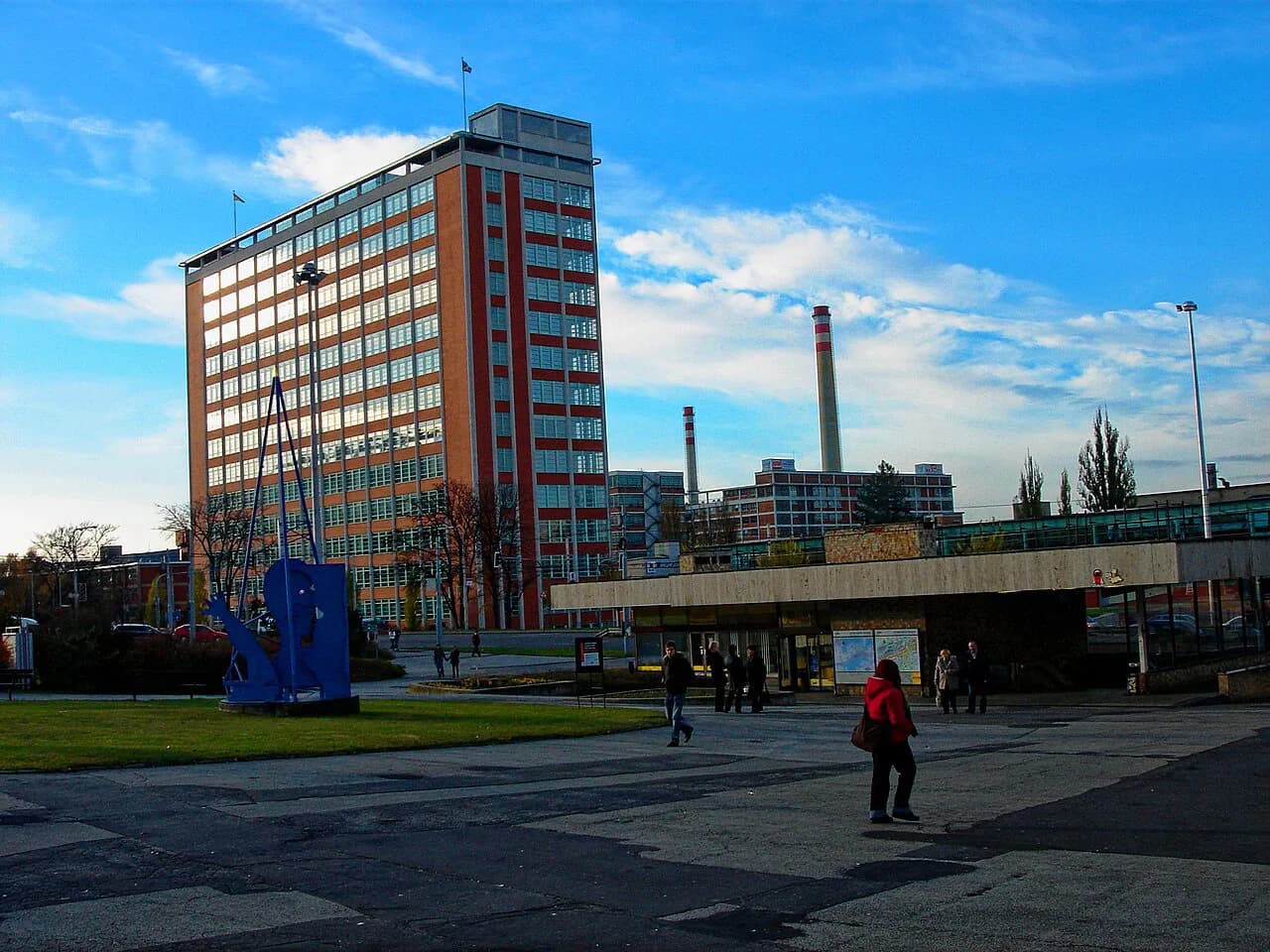
Tomáš Baťa built a shoe empire from a Wallachian valley town, and the skyscraper served as the administrative brain of that empire rather than a decorative flourish. Architect Vladimír Karfík designed it, and it was completed on December 15, 1938, after roughly two years from the laying of the foundations, with a reinforced concrete skeleton raised by 40 workers using four cranes in 160 days. At completion it was the second tallest building in Europe, behind only a bank building in Antwerp at 87 meters; that ranking is history now.
The tower also explains the shape of the city around it. Interwar Zlín was rebuilt in a Functionalist idiom of exposed red brick facades set among parks and greenspace, with František Lýdie Gahura and Vladimír Karfík among the architects who gave the factory complex and the town its new face. Seen in that context, the skyscraper reads as the tallest piece of a planned company town rather than a standalone monument.
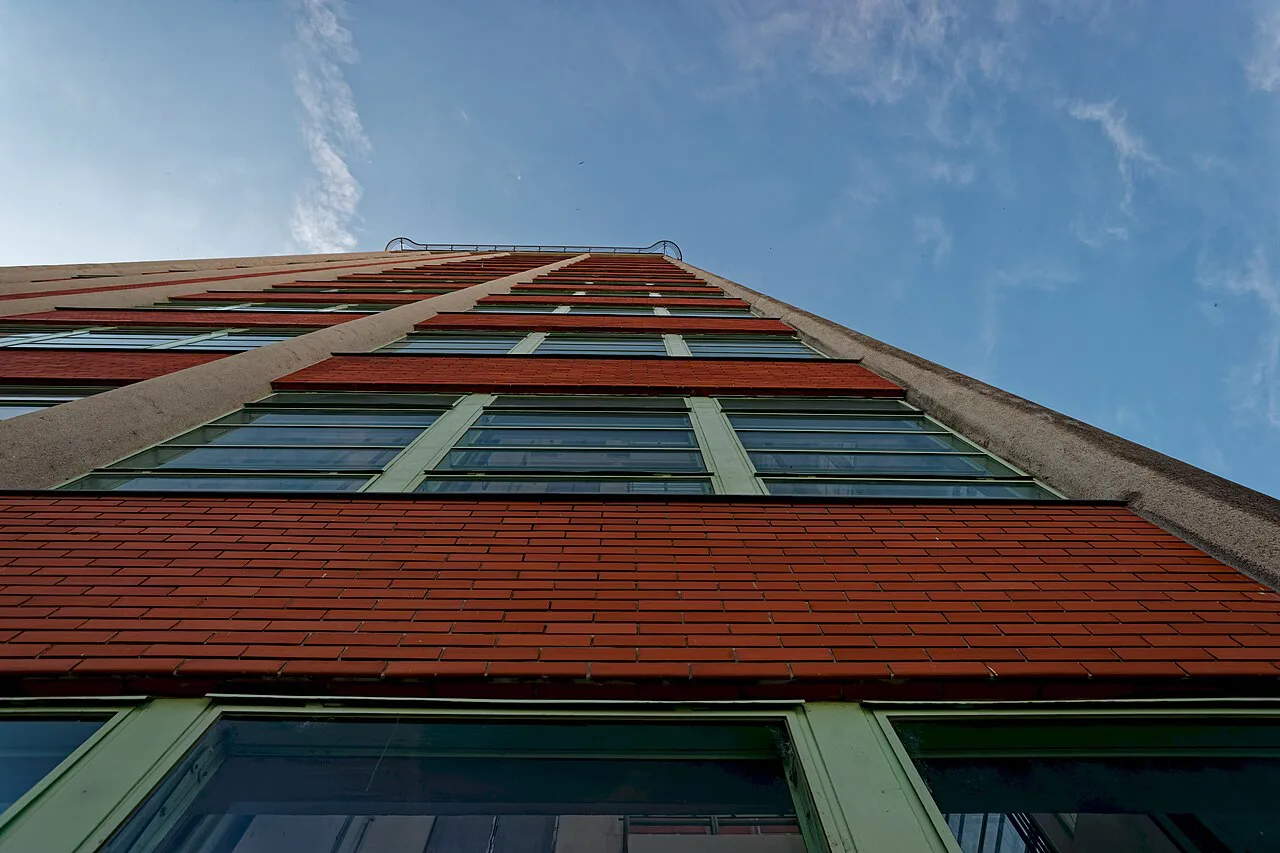
Where Building 21 sits in the red brick factory complex
The tower stands inside a working factory complex, not on a separate museum campus. The first factory buildings went up near the train station at the beginning of the 20th century, and the halls today mix production with cafes, bars, housing and galleries, so you arrive among industrial buildings rather than a landscaped visitor park.
Finding the tower gets easier once you know the site's numbering logic. Buildings closest to the city sit in the first, second and third columns, with rows numbered separately, so Building 21 stands first in the second column. Navigate with the ZAM maps app or a printed map from an information center, and follow the Factory Premises route for the history of the site.
The grid behind the whole layout came from Tomáš Baťa's travels overseas: a 6.15 by 6.15 meter module, equal to 20 by 20 American feet, applied to factory halls and offices alike. The skyscraper uses the same grid, which is why it fits so naturally among the lower halls despite its height.
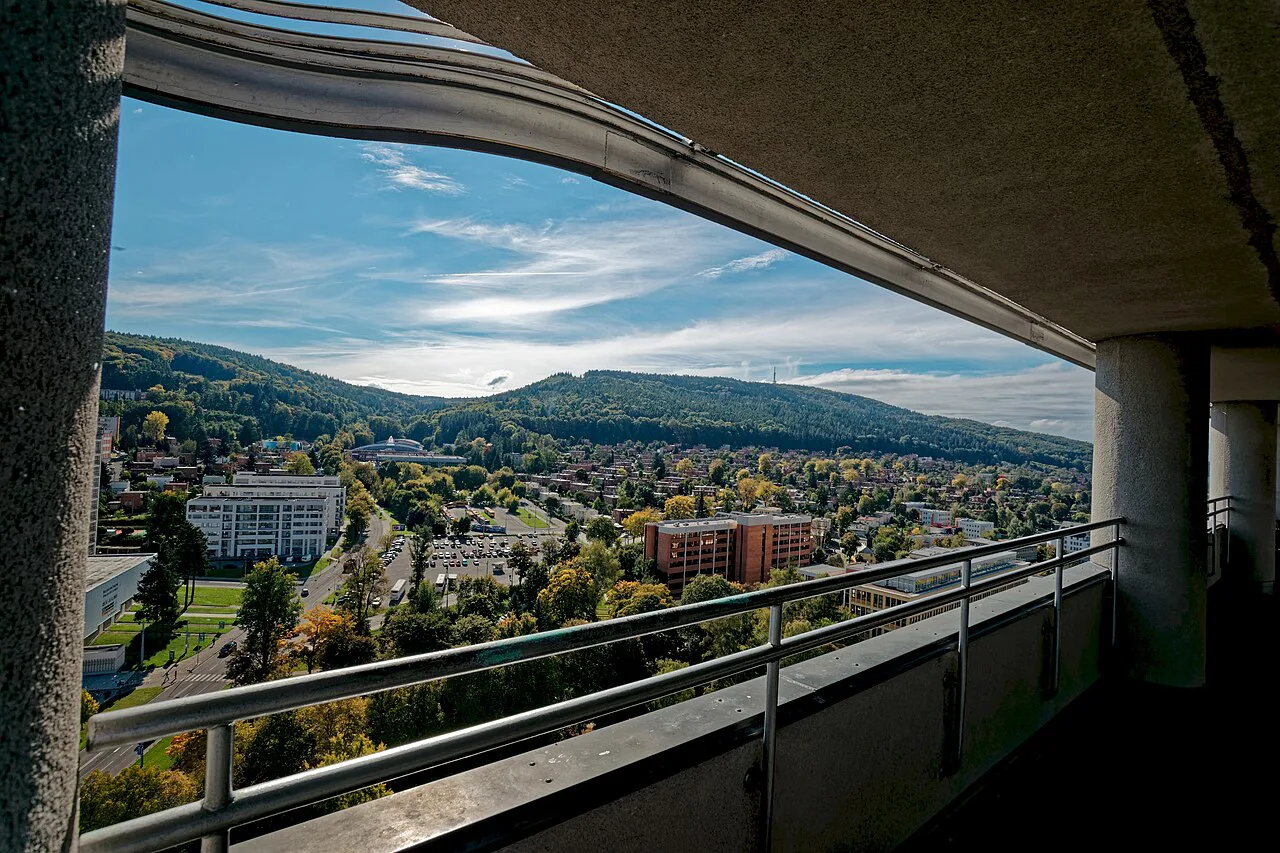
The 1938 building: 77.5 meters, 16 floors, and Vladimír Karfík's design
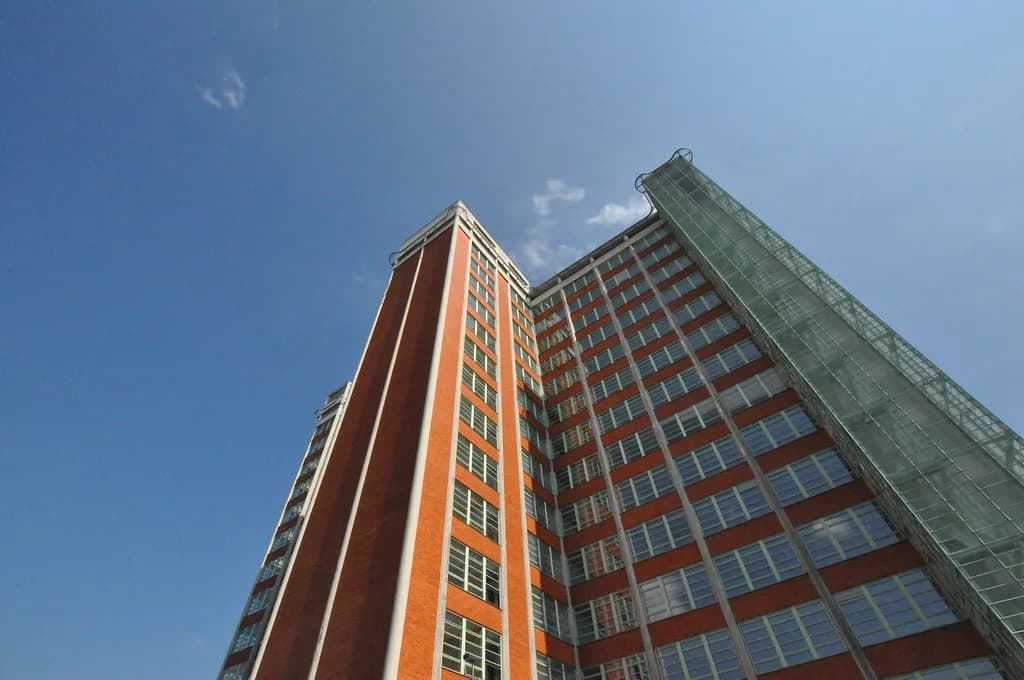
The tower rises 77.5 meters across 16 stories and measures 80 meters long by 20 meters wide. Bricks fill the space between the concrete columns and ceramic cladding covers the outer shell. The first of more than 2,000 Baťa officials took their seats in May 1938 while construction was still under way, once the builders handed over the first three floors.
The offices were laid out for speed and flexibility. Whole floors were single large rooms that could be divided with standardized steel, wood and glass partitions, and staff had elevators, telephones and air conditioning. The eighth floor held plant management, including the top executive.
Below ground sat an archive, a machine room with an electric substation, and two telephone exchanges: an internal automatic switchboard for 3,500 phones and a manual board for long-distance calls. Because the windows could not open, air-conditioning machinery and water tanks went on the roof, and a movable basket on the balcony let cleaners wash the exterior. That engineering is why the tower still works as an office building rather than a hollowed-out shell.
The director's office that moved between floors
One structural column of the tower's cells was built without floors, creating a shaft in which a six by six meter cabin could travel vertically. Inside it, Jan Antonín Baťa had a fully equipped office with air conditioning, a telephone, and a sink with hot and cold water and drainage, so he could visit subordinates on other floors whenever he chose during the workday. Architectural writers keep returning to this detail because it turns a tall box of offices into a machine for managing a company.
Other time-saving devices fit the same philosophy. A paternoster, an elevator office and carefully controlled air were part of the original fit-out, all aimed at cutting the minutes management lost moving around a large site. None of it was decoration; it was the Baťa management system expressed in concrete and steel.
Jan Antonín Baťa did not enjoy the finished building for long. He took over the company after Tomáš Baťa died in a 1932 aircraft accident near Otrokovice and never returned to Czechoslovakia after the German occupation, so the mobile office stayed a signature feature rather than a daily routine.
How the building is used today and what visitors can see
Building 21 came through the 20th century largely intact, escaped damage in a November 1944 bombing that destroyed part of the factory, and gained only a rooftop showroom extension in the late 1950s. A major reconstruction followed in the early 21st century, complete by 2003 and 2004, when the tower became the seat of the regional and financial office. Expect a landmark that is also a working office rather than a fully opened historical interior.
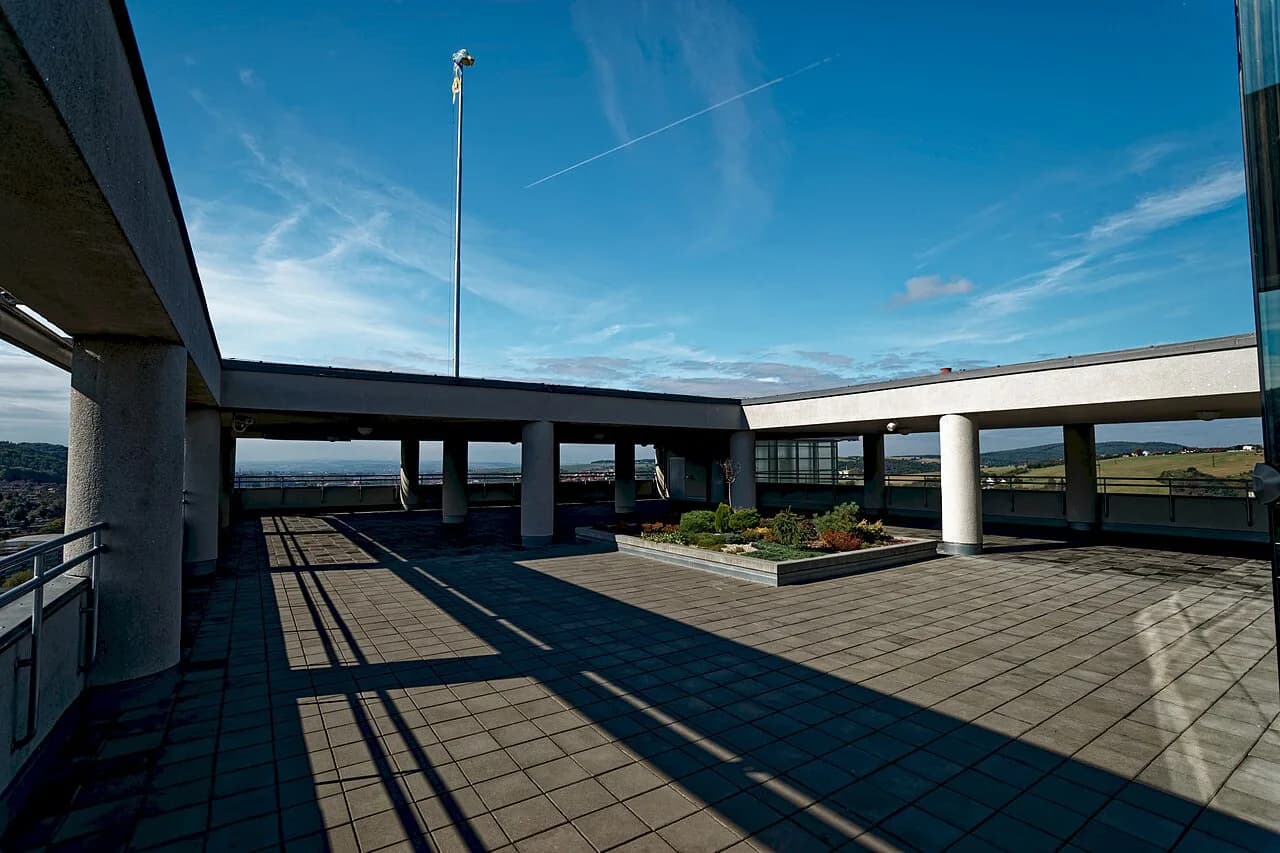
Visitors come for the executive elevator office, the observation deck and an exhibition on Baťa's past. In the park opposite stand statues of the entrepreneurs Tomáš and Jan Antonín Baťa. A comprehensive sightseeing circuit with telescopes on the terrace, a bronze model of old Zlín, an animated film and a more accessible management floor was announced for the following year; since no date or current access is confirmed, treat those elements as plans rather than things you can see now.
How to reach Zlín and how the factory complex is laid out
Zlín sits in southeastern Moravia, and the factory complex is addressed at Jana Antonína Bati 1, 760 01 Zlín, next to the main train station, where the first factory buildings went up at the start of the 20th century. Arriving by rail puts you a short walk from the first column and Building 21, which makes the tower an efficient first stop rather than a detour.
To walk the site, use the ZAM maps app or pick up a printed map at an information center, then follow the Factory Premises route through the history and lesser-known corners of the complex. A guided tour of the Zlín Zone runs every Wednesday and Saturday from May to September, the cleanest way to get context on the halls without reading plaques all afternoon.
The old factory area now holds cafes, bars, housing and galleries as well as production, so you can break up a factory walk without leaving the complex. If you want a second, very different stop in the same town, the Zlín Zoo (Lešná Zoo) is the usual pairing for a full day and sits outside the factory district, so it needs its own transport leg.
For the company town beyond Building 21, start with the guide to Zlín: The Baťa Company Town in Southeastern Moravia, which covers the skyscraper, the villas and the memorial as one itinerary. Baťa factories spread to satellite towns, the nearest in Otrokovice and Napajedla, so the theme can extend along your route.
Trade-offs: a working office building and a landmark among factory halls
The main trade-off is straightforward. Building 21 is a working regional and financial office, so do not expect a museum with every floor open for wandering; the comprehensive sightseeing circuit with telescopes, a bronze model and a more accessible management floor was announced in 2018 for the following year, so treat those elements as plans until the building confirms them. Go for the exterior, the lobby, the exhibition and the elevator office story.
The second trade-off is setting. The skyscraper rises among the factory buildings of the Baťa complex, not a landscaped monument zone, which makes the site memorable but also means the visit takes less time than a castle tour. Pair it with a factory walk or the Zlín Zone tour and the stop earns its place in a day.
Is Building 21 the place to start in Zlín?
Yes, if you want one anchor for the Baťa story, start at Building 21: it is easy to find once you know it stands first in the second column of the complex, and the elevator office gives you a concrete idea to carry through the rest of town. Budget more time for the surrounding halls and the park statues than for the building's public interior.
Pair the tower with the factory walk or the Zlín Zone tour on a Wednesday or Saturday between May and September, and use the guide to Zlín: The Baťa Company Town in Southeastern Moravia to fit the villas and memorial into the same day.
Explore more Zlín guides
Frequently Asked Questions
Which country is Baťa from?
Baťa is a Czech company. The Baťa siblings established their shoe business in Zlín, in southeastern Moravia, before the firm expanded into an international empire with factories outside Czechoslovakia.
Is the Baťa skyscraper the tallest building in the Czech Republic?
No. When it was completed in December 1938, the 77.5-meter tower was the second tallest building in Europe, but the Czech record now belongs to the AZ Tower in Brno at 111 meters. Building 21 is still the landmark that defines Zlín's factory complex.
Sources
Notes for your Czech trip
Optional updates to our Czech town guides.
You might also like
Continue reading
More guides you'll find useful