
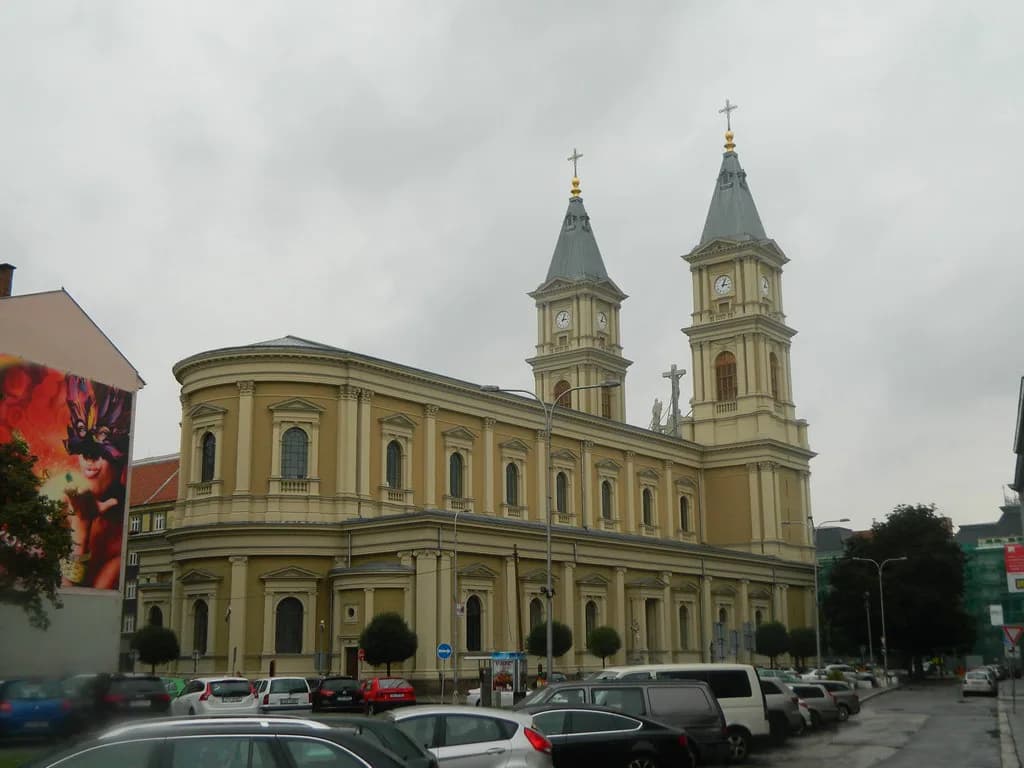
Cathedral of the Divine Saviour (Katedrála Božského Spasitele), Ostrava
The Cathedral of the Divine Saviour is Ostrava's landmark church, a working parish church rather than a ticketed monument, so you fit it around services instead of opening hours. It deserves a 20- to 30-minute stop on a walk through the city center. This guide covers where it stands, how to reach it from the main railway station, what to look for inside and what sits within a few minutes' walk.
Where the cathedral stands in Ostrava
The cathedral stands in Moravian Ostrava, a short walk from the main square, Masaryk Square (Masarykovo náměstí), in the compact historic core. Its scale is the first surprise: the building is described as the second-largest church in Moravia, which reads clearly in the length of the nave and the height of the interior. Treat it as the anchor of a central walk rather than a separate excursion.
Central Ostrava compresses easily. The cathedral, Masaryk Square, the old streets around it and the river embankment sit within a compact area, so you can see the church and still have most of an afternoon for the city's industrial sights. If you are building a day around the center, the Ostrava Attractions: 5 Visitor Guides show how the cathedral slots in beside the museums and the New City Hall.
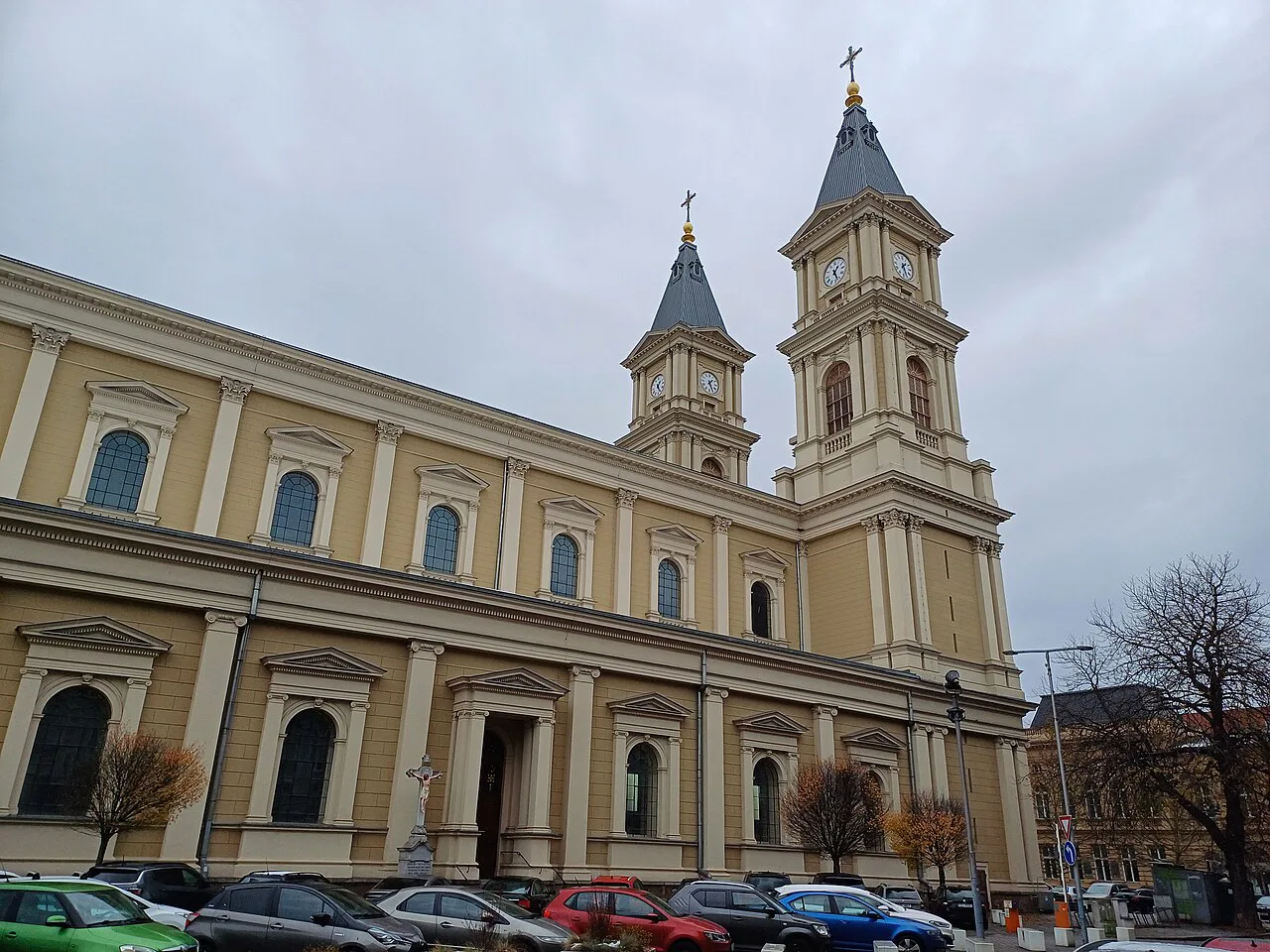

How to reach it from the main railway station and city center
Ostrava's main railway station (Ostrava hlavní nádraží) lies east of the historic core, and the cathedral is a straightforward walk west through the center. Allow roughly 15 to 20 minutes at an easy pace, heading toward Masaryk Square rather than the ring road. Trams run through the center as well, but for this distance walking is simpler and puts the square and the surrounding streets in front of you.
Coming from the Dolní Vítkovice industrial area to the south, trams and buses connect to the center in a short ride, and you can combine the cathedral with the lower city before heading back. The Ostrava overview explains how the industrial heritage, the castle and the center fit into one day, which helps you decide where the cathedral belongs in your sequence.

The neo-Renaissance exterior and the 19th-century organ case
The name to know inside is Max von Ferstel, the Viennese architect who designed the cathedral's neo-Renaissance organ case in the 19th century. The exterior reads as a confident 19th-century statement: a tall front and a roofscape that stands out against the lower streets around it. Walk one full circuit outside before going in, because the building's mass and the detailing of the facade are easy to miss if you enter straight away.
Inside: layout, nave and what to look for
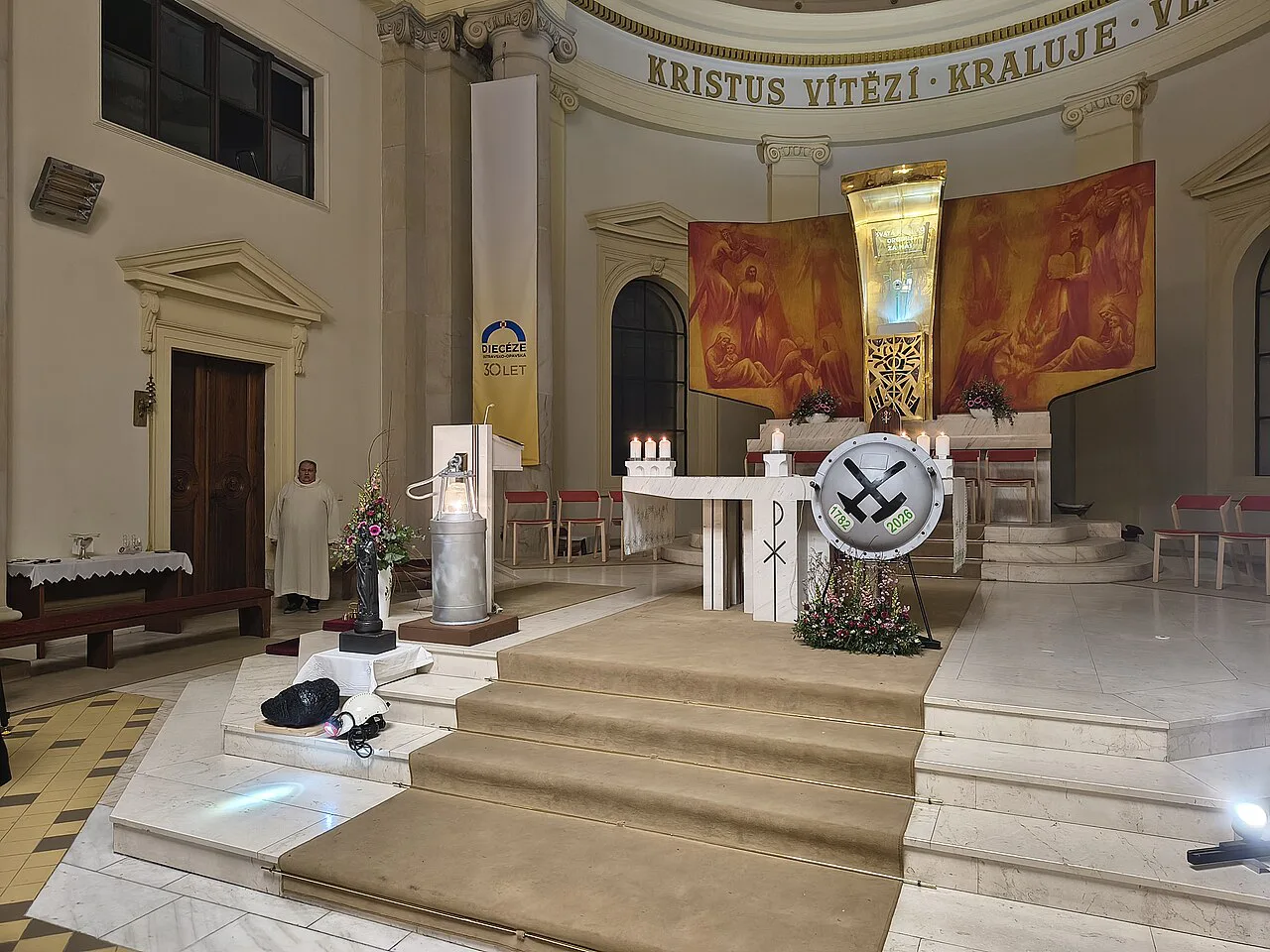
Inside, the nave is wide and high, with the altar at the far end drawing the eye. Stand at the back for a minute to take in the proportions, then move down one side aisle and back up the other so you see the chapels and side altars from different angles. Keep your voice down and stay behind any barrier that marks off the sanctuary; this is an active place of worship, not a museum hall.
The interior is not dense with visitor labels, so bring your own focus: the windows, the stonework, the furnishings and the organ case. If you want a museum-style visit with exhibits and interpretation, the Ostrava Museum (Ostravské muzeum) in the old town hall building is the companion stop, covering the city's history in a way the cathedral does not attempt.
The organ: more than 5,600 pipes in a 19th-century case
The organ is the reason to look up. The instrument has more than 5,600 individual pipes across 94 sounding stops, built by the Dlabal-Mettler workshop into the neo-Renaissance organ case that Max von Ferstel designed for the church in the 19th century. Parts of the instrument had an earlier life in Prague before coming to Ostrava, and the project to rebuild and reinstall it ran for several years.
Because the organ sits high in the gallery, the best view is from the middle of the nave looking back toward the entrance, not from directly underneath. Reporting in July 2026 said the rebuilt instrument was expected to sound in the cathedral that November, once installation was complete; the parish calendar is where the current timetable of services and events is listed.
How much time to allow and when to visit around services
Twenty to thirty minutes covers the cathedral comfortably: a circuit outside, a walk down the nave and a stop at the organ gallery view. Add ten minutes if you want to sit quietly or read the inscriptions. It is not a half-day attraction, and treating it as a short, calm stop leaves time for the rest of central Ostrava.
Visiting works around the Mass schedule rather than set sightseeing hours. The parish publishes its calendar of services, and photographs of cathedral events appear in the parish gallery, which gives a sense of what happens inside beyond the Sunday Mass. If you arrive during a service, wait outside or return later rather than walking through.
The cathedral also closed for a stretch in July 2026 while the organ was moved in and installed, so a building project can interrupt access. The parish calendar is the place to check before making the cathedral the main reason for a trip across town, and that single check protects you from arriving at a locked door.
Nearby in central Ostrava: Masaryk Square, the New City Hall and beyond
Masaryk Square is a few minutes away and gives you the city's civic face: broad paving and the streets that fan out from it. The New City Hall in Ostrava (Nová radnice) is another short walk, a large early-20th-century building with a tower that offers a view back over the center. Both pair naturally with the cathedral on a single loop.
If you want to stretch the walk, Silesian Ostrava Castle (Slezskoostravský hrad) sits outside the old core, a small castle with a history of subsidence and rebuilding that makes a contrast with the cathedral's solid 19th-century confidence. It is a separate stop rather than a next-door neighbor, so plan it as its own leg. The Ostrava guide covers the castle and the industrial sites in more detail.
Practical notes on visiting a working parish church
Entry is not run like a paid attraction: there is no ticket desk or audio guide to budget for, and the building is maintained as a place of worship first, with no shop or turnstiles. Dress as you would for any church in Europe and keep phone use discreet.
The organ was funded through a public collection supported by the city and the region, a reminder that this building is maintained by the community rather than by ticket revenue. That shapes the visit: you are a guest at a service, not a customer on a tour. Sunday mornings and feast days are the busiest, so weekday daytime is the calmest window if you want the nave to yourself.
Is the cathedral worth the stop?
Yes, if you are already in central Ostrava. It costs you half an hour, it stands right where the city's streets converge, and the organ case and the sheer size of the nave give you something to look at that the surrounding buildings do not. Do not build a trip around it alone; build a central walk around it.
Pair it with the square and the New City Hall for a civic loop, or with the Ostrava museum if you want context on the city's history. Either way, check the parish calendar first so a service or a building project does not catch you at the door.
Explore more Ostrava guides
Frequently Asked Questions
Is the Cathedral of the Divine Saviour free to enter?
The cathedral operates as a working parish church rather than a ticketed monument, and nothing published describes an admission fee or a ticket desk. Any donation or entry arrangement would be set locally, so confirm on arrival rather than budgeting a fixed amount.
Can you climb the cathedral tower?
No tower visit is described in the parish's published materials or in reporting on the building. If a tower opening matters to you, ask at the parish or check the calendar before you go; for a view over the center, the New City Hall tower is the better bet.
Are there English-language services at the cathedral?
Services are listed on the parish calendar in Czech, and nothing published indicates a regular English-language Mass. If you want to attend rather than simply look inside, check the calendar for times and expect the liturgy in Czech.
When will the new organ be heard in the cathedral?
Reporting in July 2026 said the rebuilt instrument, with more than 5,600 pipes, was expected to sound in the cathedral that November, once installation was complete. The parish calendar is the place to confirm current services and events.