
Italian Court (Vlašský dvůr) in Kutná Hora: What to See Inside

The Italian Court (Vlašský dvůr) is Kutná Hora's royal mint and palace, and the reason the town became one of the wealthiest in medieval Europe. It sits on Havlíčkovo náměstí, a short walk from the historic center, and combines a courtyard you can walk into with interiors that hold the Audience Chamber, the palace chapel, and the minting workshops. This guide covers what the building is, how to reach it, what each room shows, how long to allow, and where to confirm tickets and tour times.
A royal palace and central mint in one building
King Wenceslas II drove through a monetary reform in 1300 that created a state monopoly on silver, closed the country's existing 17 mints, and concentrated all coin production in one place: the Italian Court in Kutná Hora. The new currency, the Prague groschen, was struck here for the first time in July 1300, and the coin's design lasted almost 250 years. That decision turned a mining settlement into a royal town of European importance.
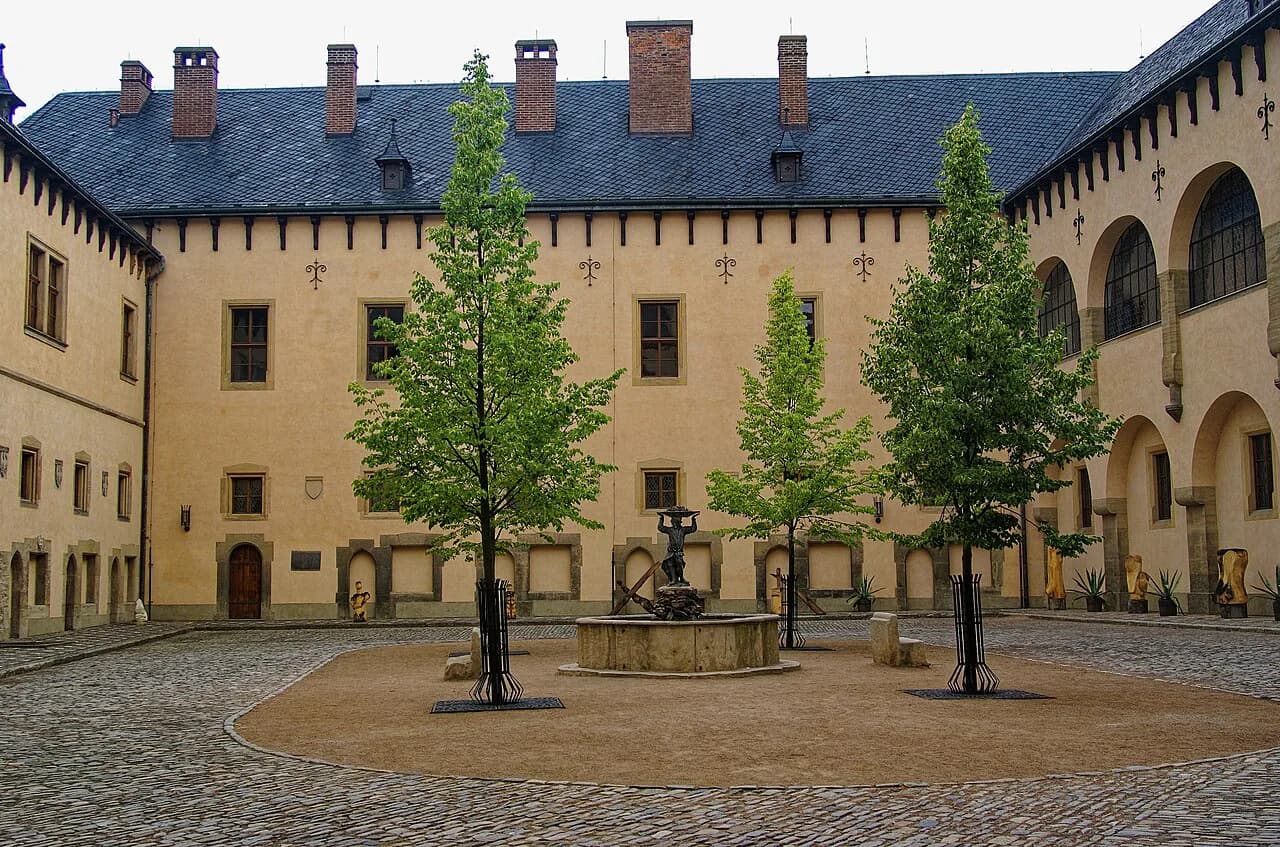
The name comes from the Italian craftsmen and financiers who ran the minting operation, and the complex kept a fortified layout with an irregular ground plan, a square tower, and thick walls. Under Wenceslas IV in the late 14th century the mint was rebuilt as a High Gothic royal residence, and the palace became a place where decisions for the Kingdom of Bohemia were made. What you see today is a mixture of that medieval fabric and a late-19th-century neo-Gothic restoration by architect Ludvík Lábler.
After the groschen were abolished in 1547, thaler coinage took over and the mint kept working as the country's chief mint into the early 17th century, before the building declined and was abandoned in the 18th century. Knowing that arc helps you read the rooms: some are genuine medieval spaces, others are the restored stage set that gives the courtyard its photogenic look.

Where the Italian Court sits and how to reach it
The address is Havlíčkovo náměstí 552/1, on the square of the same name in central Kutná Hora. From the main town squares and the historic core it is an easy walk, and the location puts it within reach of the rest of the town's sights on foot. If you arrive by train from Prague, plan your onward walk or local transport from the station into the center before setting out.
Kutná Hora makes a straightforward day trip from Prague by train, which is the usual way travelers reach it without a car. Once in town, the Italian Court, St. Barbara's Church in Kutná Hora, and the Sedlec Ossuary form the classic trio, spread across the center and the Sedlec suburb. Our Kutná Hora Attractions: 7 Visitor Guides page lays out the individual sights so you can sequence them by location instead of zigzagging.
Allow for the walk between the center and Sedlec, which is the longest leg of the day. If you are building a wider loop through central Bohemia, the town fits naturally between Prague and points east.

The courtyard and four wings: what you see without a ticket
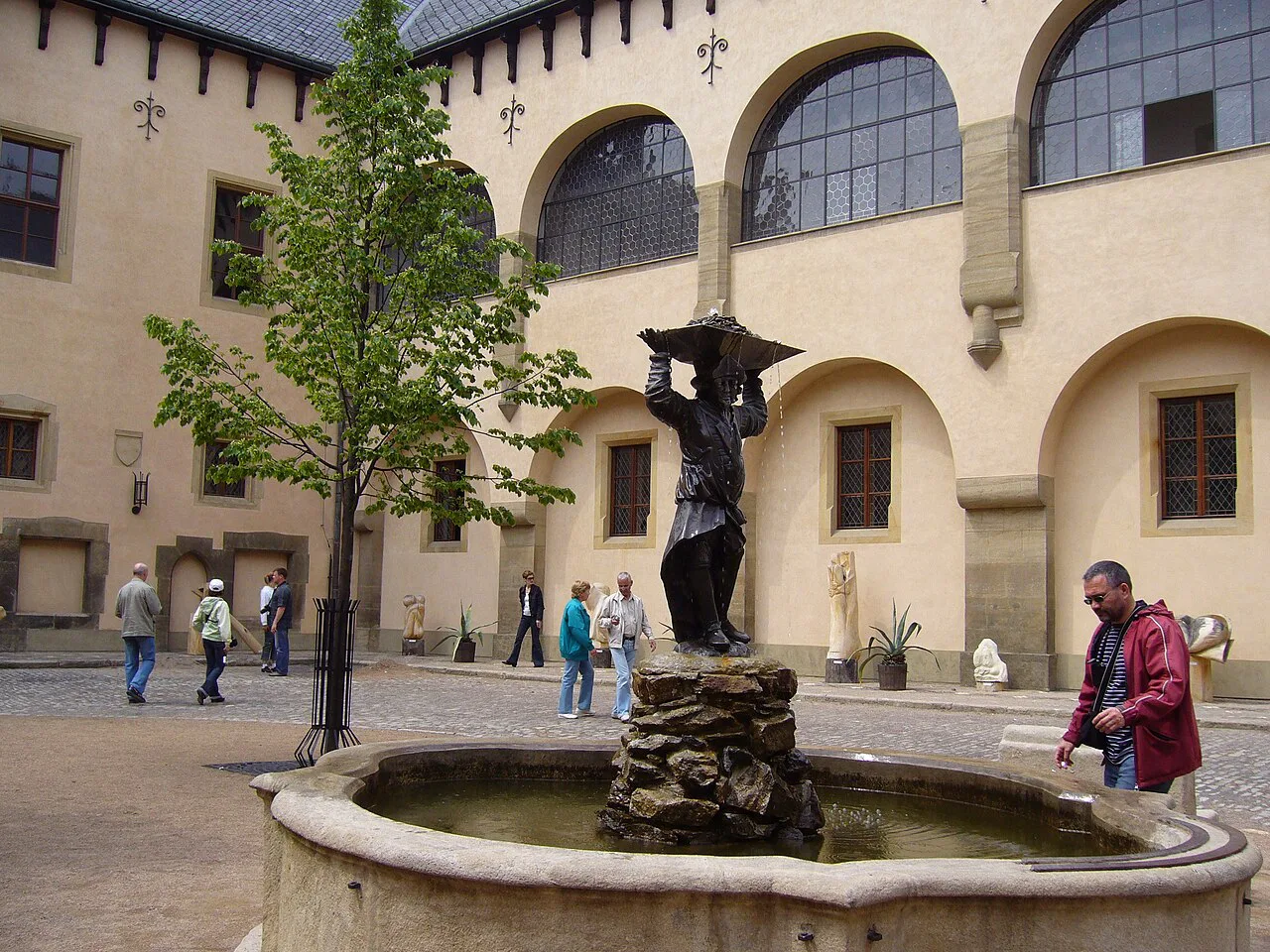
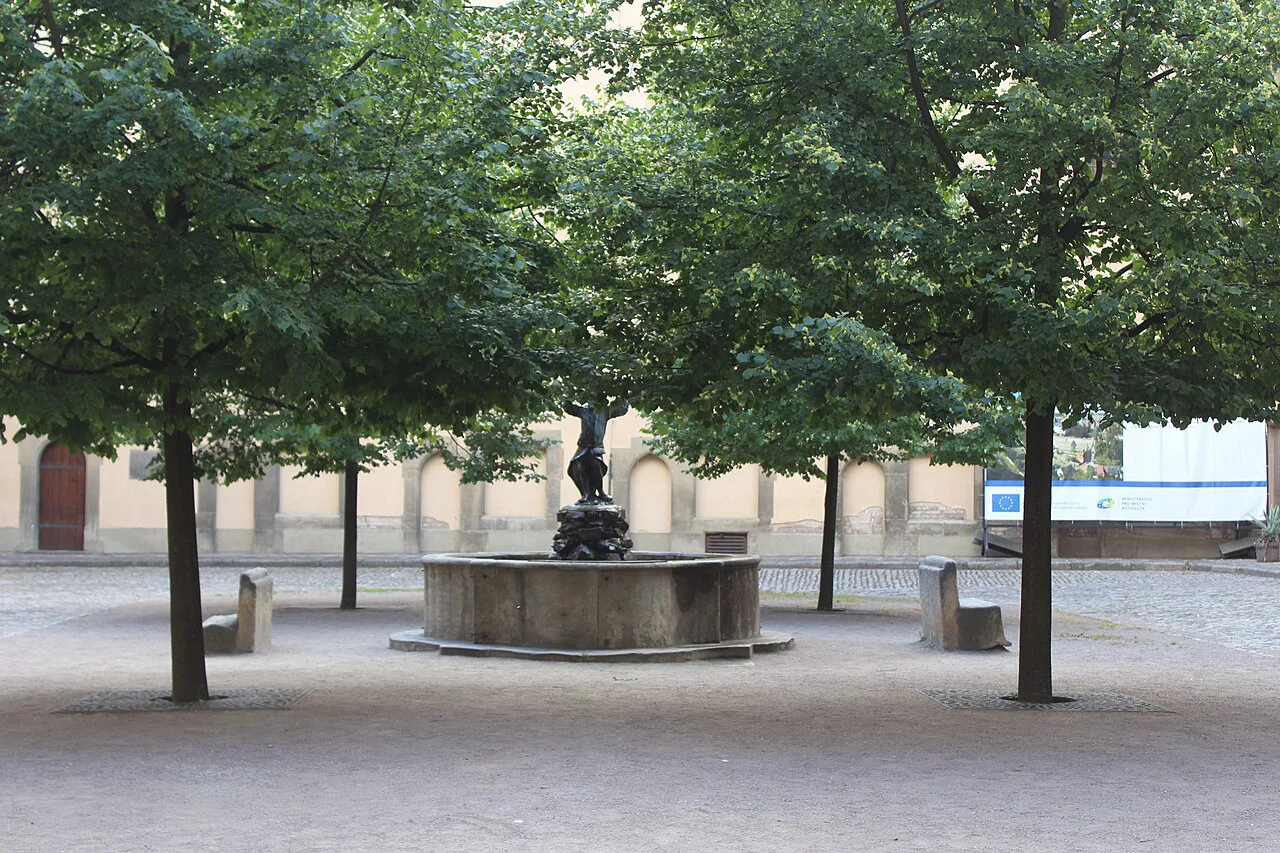
The building wraps around a courtyard in four wings, and stepping through the gate gives you the grandeur of the complex before you commit to any interior visit. Travelers who have passed through describe the courtyard and architecture as very pretty and worth seeing while touring Kutná Hora; some wish they had left time for a guided tour inside. Treat the courtyard as the introduction and the interiors as the core of the visit.
Photographers get the best of the exterior in the morning, before tour groups thicken the square. Because the courtyard is the heart of the complex, build your visit around it even if the interior tour times do not suit you. Check the official site at vlasskydvur.cz for current access arrangements to the courtyard and interiors.
The Royal Audience Chamber
The Royal Audience Chamber is the room that earns the ticket. Its construction dates to the early 15th century, and it served as an official reception space for the mint, hosting events of state importance. The wall paintings you see were restored between 2008 and 2010, and the room's painted wooden ceiling was conserved in the same project.
Two events anchor the room's decoration: the proclamation of the Decree of Kutná Hora on 18 January 1409, which set the voting ratio at Charles University in Prague, and the election of Vladislav Jagello as King of Bohemia in May 1471. Both are commemorated in paintings by Karel Ladislav Klusáček from 1900, so the narrative imagery is turn-of-the-20th-century work rather than medieval fresco. The chamber was also adapted in the late 19th century, which is where its neo-Gothic beamed ceiling and carved wooden benches come from.
Read the room as a piece of national storytelling: a medieval political space reframed in the 19th and early 20th centuries as a shrine to Czech statehood. If you care about the Decree of Kutná Hora specifically, this is the room to linger in.
The Palace Chapel of St. Wenceslas and St. Ladislaus
Wenceslas IV used the Italian Court frequently as a royal residence and commissioned a palace chapel within it, dedicated to St. Wenceslas and St. Ladislaus. The chapel is part of the interior circuit and gives the visit its sacred counterpoint to the minting and political rooms. Its scale is intimate rather than cathedral-like, so it rewards a slower look rather than a quick pass-through.
Because the chapel sits inside the tour-visited part of the building, your chance to see it depends on the day's opening and tour schedule rather than on the courtyard's accessibility. Confirm the current interior access and any tour language options on the official site before you travel.
The minting workshops and the coin-making story
The workshops are where the building's purpose becomes concrete: the striking shop (šmitna) and stamping shop (preghauz) produced the coins that made Kutná Hora rich. The mint also housed the Mint Master and the royal official who managed the proceeds of silver mining, so the complex worked as an administrative machine as much as a factory. Displays here connect the machinery of coin-making to the reform that centralized production in 1300.
For a deeper dive into the mining side, the Czech Museum of Silver in Kutná Hora covers the ore that fed this mint, including the underground workings. Pairing the two gives you the full chain from silver vein to finished groschen. Budget the Italian Court first, then the museum, so the coin story reads in order.
How long to allow
Plan roughly an hour for the Italian Court if you take the interior tour and read the room displays, plus a short stop in the courtyard. If you only want the exterior and courtyard, fifteen to twenty minutes fits it into a packed day. The interiors reward attention more than speed, so do not sandwich them between two other timed tickets.
Kutná Hora as a whole needs most of a day if you include the center, St. Barbara's Church, and the Sedlec Ossuary. Build the Italian Court into the center portion of the day, when you are already on Havlíčkovo náměstí, and leave the Sedlec leg for a separate block. That sequencing saves you a redundant walk across town.
Nearby sights to combine with the Italian Court
The Stone House in Kutná Hora is a short walk from the Italian Court and gives you a contrasting look at a burgher interior with its decorated facade. The Church of St. James in Kutná Hora is another center-town stop that fits between the Italian Court and the main squares. Both work as twenty-minute add-ons rather than headline sights.
GASK in Kutná Hora, the Galerie Středočeského kraje, is the town's contemporary art stop and a good rainy-day alternative to another church interior. St. Barbara's Church, Kutná Hora's most famous building, is the other must-see in the center and deserves its own slot. The Sedlec Ossuary, at the Cemetery Church of All Saints on Zámecká Street, is the third headline sight and sits outside the center.
Tickets, opening seasons, and tour language
Interiors at the Italian Court are seen as part of a tour-visited circuit, and tour language and timing shape what you actually get to see. The official site at vlasskydvur.cz is where current ticket prices in Czech koruna, opening days, and tour times are published. Confirm both the tour schedule and whether an English-language tour runs on your date before you commit to a travel time from Prague.
Is the Italian Court worth the stop?
Yes, if you want the story behind Kutná Hora's wealth rather than just the postcard view. The Audience Chamber and minting workshops make the town's rise legible, and the courtyard is the natural first stop. Skip it only if your day is already full with St. Barbara's Church and the Sedlec Ossuary.
Build the visit around the town center and allow about an hour inside. Then walk on to the Stone House or St. James, and save Sedlec for the end of the day; the wider Kutná Hora guide covers the rest of the route.
Frequently Asked Questions
Can I visit the Italian Court on a day trip from Prague?
Yes. Kutná Hora is a common day trip from Prague by train, and the Italian Court sits on Havlíčkovo náměstí within walking distance of the center. Confirm train times with the carrier and the court's tour schedule on vlasskydvur.cz before you set out.
Do I need a ticket to see the Italian Court's courtyard?
The courtyard is the open heart of the four-winged complex, while the Audience Chamber, chapel and minting rooms are part of the tour-visited interiors. The official site at vlasskydvur.cz publishes current access arrangements and ticket requirements, so check it before you travel.
What was the Italian Court used for?
It was a fortified royal palace and the central mint created by Wenceslas II's 1300 monetary reform, where the first Prague groschen were struck in July 1300. After the groschen were abolished in 1547 it minted thalers and kept working as the country's chief mint into the early 17th century, and it served as a royal residence under Wenceslas IV.